
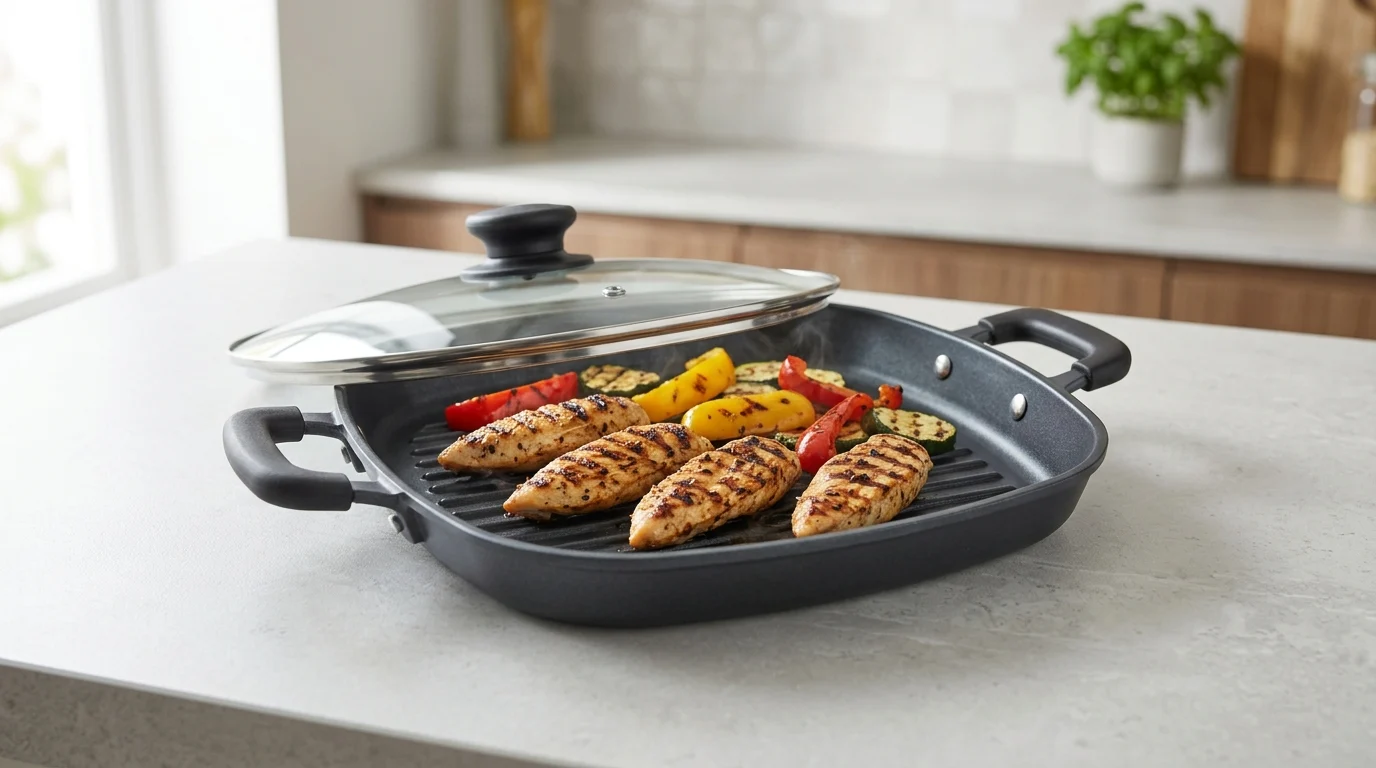
Market Demand and Channel Opportunities
The global market for advanced microwave cookware has evolved significantly, shifting from basic reheating containers to sophisticated, multi-functional culinary tools. At the forefront of this transition is the microwave grill pan, an engineered product designed to deliver oven-quality crispiness and browning at microwave speeds. For B2B wholesale buyers, distributors, and procurement teams, this category represents a high-growth segment driven by increasing consumer demand for rapid, space-saving meal preparation solutions.
Unlike traditional microwave plastics, which hold a stagnant market position and suffer from commoditization, microwave grill pans offer premium positioning. Valued globally at an estimated $1.2 billion and growing at a CAGR of over 6.5%, the specialized microwave cookware sector provides robust margin opportunities for importers willing to navigate the technical and sourcing complexities.
Pain points solved for trade buyers
Procurement professionals frequently encounter high return rates—often between 12% and 18%—when sourcing standard plastic microwave containers due to warping, staining, and the inability to crisp food. Microwave grill pans solve these exact pain points by utilizing advanced susceptor technology and heat-resistant alloys. By converting microwave radiation into conductive heat, these pans eliminate the “soggy bottom” effect that plagues microwaved pizzas, paninis, and proteins.
For trade buyers, stocking these specialized pans reduces warranty claims and customer dissatisfaction. Furthermore, the durability of aluminum alloy construction combined with silicone shielding minimizes the risk of in-transit breakage, a common issue that can erode up to 3% of gross margins in standard glass or rigid plastic cookware categories.
Key foodservice, retail, and private-label channels
The commercial viability of microwave grill pans spans multiple high-volume channels. In the foodservice sector, quick-service restaurants (QSRs) and convenience stores utilize commercial-grade microwave pans to reduce sandwich and pizza prep times from 8-10 minutes in a convection oven to just 2-3 minutes in a commercial microwave, drastically improving throughput during peak hours.
In retail and e-commerce, big-box homeware stores and private-label brands are capturing substantial gross margins, often ranging from 40% to 55%. By partnering with experienced manufacturers like Ningbo Junsheng Daily Commodity Co., Ltd., which brings over 20 years of expertise in kitchen supplies, private-label brands can introduce customized, aesthetically pleasing designs that command premium retail price points between $25.00 and $45.00.
Product Performance and Buying Criteria

Understanding the technical performance of a microwave grill pan is critical for buyers looking to differentiate their assortments. The core value proposition of these products lies in their material engineering, which safely manipulates microwave frequencies to mimic traditional stovetop or oven cooking.
Heating mechanism and cooking results
The heating mechanism relies on a base layer embedded with ferrite or a specialized advanced polymer that absorbs microwave energy. This susceptor base rapidly converts electromagnetic waves into thermal energy, heating the internal aluminum alloy plate to temperatures between 200°C and 220°C (390°F–428°F) within 90 to 120 seconds.
This rapid thermal transfer sears proteins, crisps sandwich bread, and bakes pizza dough evenly. To prevent the microwaves from penetrating the food directly and causing rubbery textures, the pan’s lid and body are shielded with microwave-safe metallic compounds encapsulated in high-grade, heat-resistant silicone. This forces the food to cook purely via conductive and radiant heat.
Construction specs for procurement
When drafting procurement specifications, buyers must focus on three core components: the metal core, the non-stick coating, and the exterior shielding. The primary cooking surface should be constructed from a highly conductive aluminum alloy (typically 1.5mm to 2.5mm thick) to ensure even heat distribution without hot spots.
The non-stick coating is a critical failure point in inferior products. Procurement teams should mandate a minimum of a two-layer, PFOA-free PTFE or ceramic coating, rated for continuous use at 250°C. Exterior components, including handles and latches, must utilize food-grade, BPA-free silicone capable of withstanding prolonged microwave exposure without degrading or emitting odors.
Comparison with alternative cookware
Comparing microwave grill pans to legacy alternatives highlights the stark performance upgrades that justify higher wholesale costs. Buyers must weigh these metrics when positioning the product in retail or commercial catalogs.
| Feature / Metric | Microwave Grill Pan | Standard Microwave Plastic | Traditional Oven Pan |
|---|---|---|---|
| Primary Cooking Method | Conductive / Radiant Heat | Direct Microwave Penetration | Convection / Radiant Heat |
| Max Internal Temp | 220°C (428°F) | 100°C – 120°C (Boiling point) | 260°C+ (500°F+) |
| Average Cook Time | 3 – 5 Minutes | 2 – 4 Minutes | 15 – 25 Minutes |
| Crisping Ability | Excellent | None (Soggy results) | Excellent |
| Est. Wholesale Unit Cost | $6.50 – $14.00 | $0.80 – $2.50 | $4.00 – $9.00 |
Specifications and OEM Customization
Strategic sourcing requires matching product specifications to specific consumer or commercial use cases. The versatility of microwave grill pans allows suppliers to offer a wide array of sizes, shapes, and structural innovations, including collapsible designs that drastically improve logistics and storage.
Size, shape, capacity, and use-case options
Manufacturers offer multiple form factors tailored to regional dietary habits. Standard capacities range from 1.0L for single-serve sandwich makers to 2.5L family-sized pizza pans. A 10-inch round pan is the industry standard for pizzas and omelets, while 8×8-inch square configurations are optimized for paninis and grilled meats.
A major innovation in this category is the collapsible or folding silicone body. Collapsible designs can reduce the product’s vertical footprint by up to 50%, saving critical retail shelf space and appealing directly to consumers in urban environments or RV/camping demographics seeking space-saving cookware.
OEM and private-label customization
For private-label buyers, OEM customization is the primary method for brand differentiation. Top-tier manufacturers like Ningbo Junsheng Daily Commodity Co., Ltd. offer extensive custom product support. This includes Pantone-matched silicone exteriors, laser-etched branding on the aluminum plates, and customized venting systems on smoke-removing pot lids.
Buyers can also specify the type of non-stick coating—upgrading from standard PTFE to premium ceramic coatings can increase the retail price ceiling by 20% to 30%. Custom tooling for entirely new shapes or specialized internal grill ridges typically requires a lead time of 30 to 45 days for mold creation and sampling.
MOQ and quotation comparison points
Minimum Order Quantities (MOQs) and pricing structures vary based on the level of customization. For off-the-shelf designs with custom color packaging, factories generally require an MOQ of 1,000 to 2,000 units. If a buyer requires a completely custom injection mold for the silicone body or a stamped aluminum plate, the MOQ often increases to 3,000 to 5,000 units.
Tooling costs for new molds generally range from $2,500 to $6,000, depending on complexity. When comparing quotations, procurement teams must ensure that the Bill of Materials (BOM) explicitly lists the thickness of the aluminum and the brand of the non-stick coating, as a $0.50 reduction in unit cost often correlates with a dangerous reduction in alloy thickness (dropping from 2.0mm to 1.2mm), which severely impacts heat retention.
Compliance, Packaging, and Logistics
Navigating international trade regulations is non-negotiable when importing food-contact materials. Microwave cookware operates under intense thermal stress, making compliance, rigorous testing, and secure packaging paramount to a successful sourcing strategy.
Food-contact and labeling requirements
Microwave grill pans must pass stringent food-contact material (FCM) regulations. For the US market, components must comply with FDA 21 CFR 175.300 for resinous and polymeric coatings, ensuring no harmful chemicals leach into food at high temperatures. In the European Union, the LFGB standard is required, which mandates rigorous heavy metal migration testing, ensuring lead (Pb) levels remain below 10 mg/kg and cadmium (Cd) below 2 mg/kg.
Additionally, the silicone components must be certified BPA-free and pass volatile organic compound (VOC) emission tests under high-heat microwave conditions. Buyers should demand current, third-party laboratory test reports (e.g., SGS, TÜV, or Intertek) dated within the last 12 months before authorizing mass production.
Packaging for wholesale and export
Packaging must serve the dual purpose of retail display and transit protection. Because microwave grill pans contain heavy metal cores encased in flexible silicone, they are susceptible to crushing or puncturing if improperly packed. E-commerce buyers must specify ISTA 1A or 3A drop-test certified packaging, utilizing 5-ply corrugated brown mailer boxes with custom EPE foam inserts.
For traditional retail, 350g single-copper paper color boxes with UV finishes are standard. A typical master carton holds 10 to 12 units. Buyers should strictly enforce carton weight limits—keeping master cartons under 15 kg (33 lbs)—to comply with warehouse handling ergonomics and reduce transit damage.
Landed cost and freight considerations
Freight efficiency heavily influences the landed cost of microwave pans. A standard rigid 10-inch microwave grill pan yields approximately 8,000 to 9,000 units per 40-foot High Cube (40HQ) container. However, sourcing collapsible variants can optimize the cubic meter (CBM) ratio, allowing up to 15,000 to 18,000 units per 40HQ.
This space optimization can reduce per-unit ocean freight costs from approximately $1.20 down to $0.65 (based on average trans-Pacific rates). Buyers must calculate the total landed cost by factoring in the EXW or FOB unit price, tooling amortization, freight, and import duties (which generally range from 3% to 7% depending on the HS code classification for aluminum cookware).
Supplier Selection and Sourcing Checklist
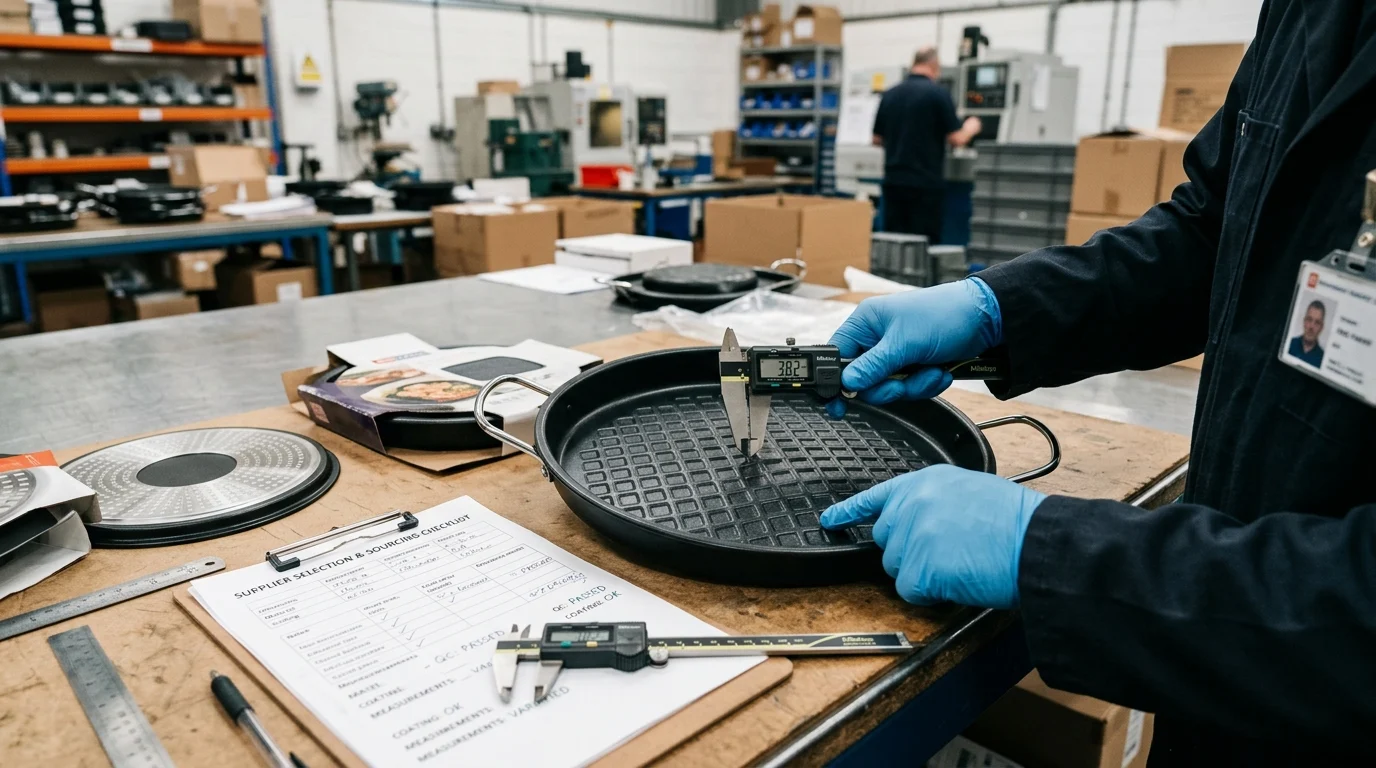
Selecting the right manufacturing partner is the final and most critical step in the procurement process. The complex multi-material construction of microwave grill pans requires a factory with mature supply chain integration, spanning metal stamping, non-stick coating application, and silicone injection molding.
Supplier evaluation criteria
When auditing potential suppliers, buyers should prioritize factories with ISO 9001 quality management certifications and BSCI or Sedex social compliance audits. An experienced manufacturer, such as Ningbo Junsheng Daily Commodity Co., Ltd., which boasts two decades of industry leadership, will have established standard operating procedures for critical control points.
Key evaluation metrics include a documented defect rate tolerance of less than 1.5% and an in-house testing laboratory capable of conducting thermal shock and coating adhesion cross-hatch tests. Standard production lead times should range between 35 and 45 days after deposit and sample approval.
Margin and assortment planning
To maximize profitability, wholesale buyers should adopt a “good-better-best” assortment planning strategy. A basic, rigid 8-inch pan can serve as the entry-level SKU (targeting a 35% margin). A 10-inch collapsible pan with standard non-stick coating acts as the core offering (targeting a 45% margin).
The premium tier can feature customized shapes, ceramic coatings, and integrated multi-function accessories like egg steamers or smoke-removing pot lids, allowing retailers to capture high-end consumers and achieve margins exceeding 50%. This structured margin planning mitigates risk and captures a broader segment of the market.
Final sourcing checklist
Before issuing a Purchase Order, procurement teams should utilize a standardized sourcing checklist to ensure all technical, commercial, and compliance variables are locked in. Overlooking a single specification can result in costly recalls or stalled customs clearances.
| Sourcing Phase | Critical Action Item | Target Metric / Standard |
|---|---|---|
| Supplier Audit | Verify QMS and Social Compliance | ISO 9001, BSCI, <1.5% Defect Rate |
| Specification | Define BOM and Material Thickness | 2.0mm Aluminum, PFOA-Free Coating |
| Compliance | Obtain 3rd-Party Lab Reports | FDA 21 CFR 175.300 / LFGB |
| Sampling | Thermal & Drop Testing | 220°C Heat Resistance, ISTA 1A Drop |
| Logistics | Optimize Master Carton CBM | Max 15kg/carton, Maximize 40HQ load |
Key Takeaways
- Wholesale sourcing and supply-chain implications for Microwave Grill Pan
- Specifications, compliance, and commercial terms buyers should validate
- Actionable recommendations for distributors and procurement teams
Frequently Asked Questions
How does a microwave grill pan make sandwiches and pizza crispy?
It uses a susceptor base to turn microwave energy into high conductive heat, so the pan browns bread and crisps crust instead of just steaming the food.
What foods work best in a microwave grill pan?
Sandwiches, pizza slices, paninis, quesadillas, and small proteins work best because they benefit from direct contact heat and short microwave cooking times.
How hot can a microwave grill pan get?
Quality pans can heat the cooking plate to about 200–220°C within 90–120 seconds, which helps deliver fast browning and a crisper finish.
What should buyers check when sourcing a microwave grill pan from microwave-grill.com?
Check aluminum alloy thickness, a PFOA-free non-stick coating, food-grade silicone parts, and durable microwave-safe shielding for reliable daily use and fewer returns.
Can Ningbo Junsheng support private-label microwave grill pan projects?
Yes. Ningbo Junsheng offers OEM support, practical product customization, and kitchenware manufacturing experience suited for retail, e-commerce, and foodservice brands.


