
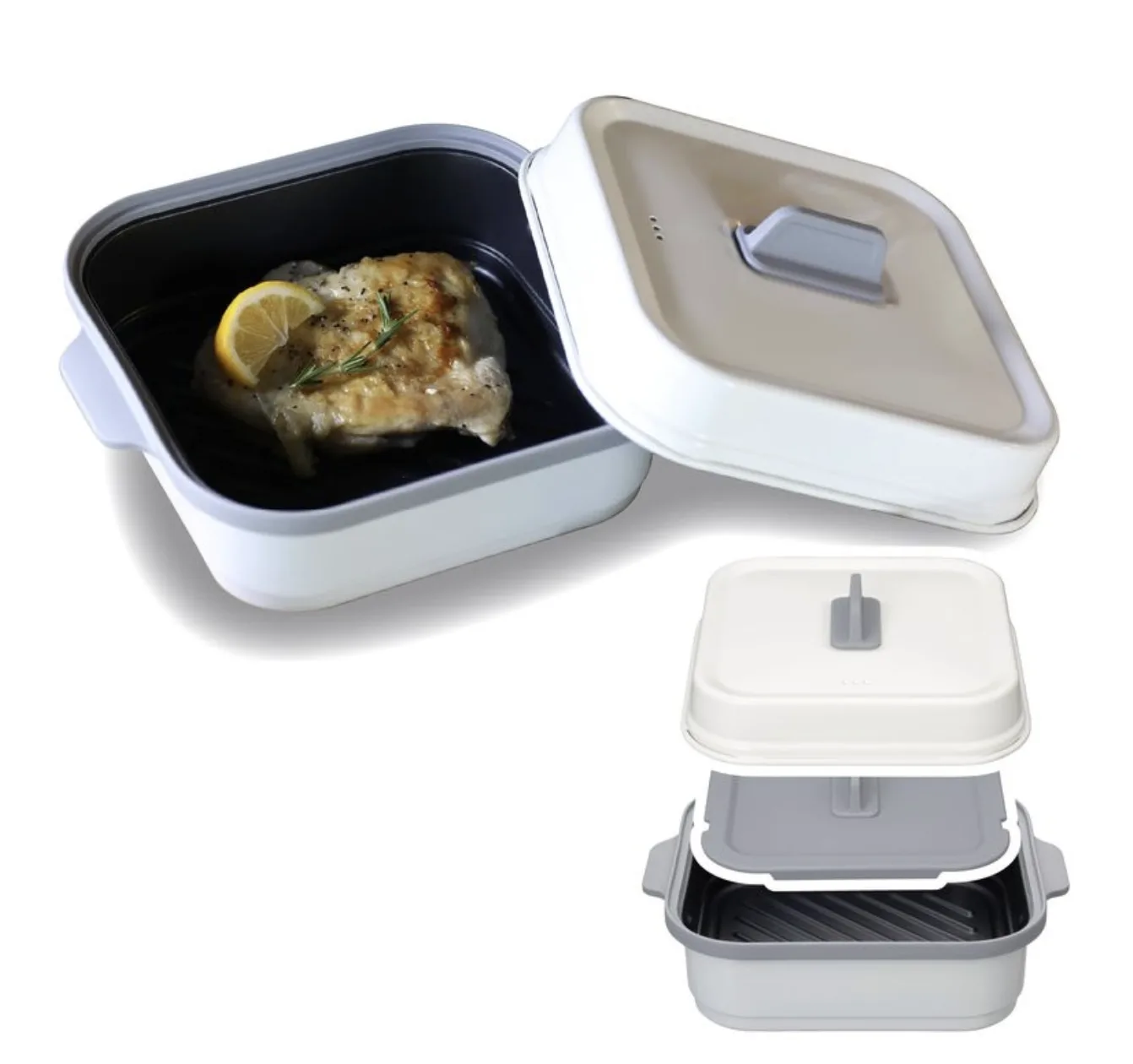
Selecting the right microwave baking pan with a lid requires a balance of thermal conductivity, material safety, and airtight functionality. As microwave cooking technology evolves, specialized cookware has become essential for achieving oven-like results in a fraction of the time. This guide examines the technical specifications and selection criteria for high-performance microwave accessories.
Technical Fundamentals of Microwave Heat Distribution
Microwave radiation operates at a frequency of approximately 2,450 MHz, causing water molecules in food to vibrate and generate heat. Traditional glass or plastic containers often lead to uneven cooking or “cold spots.” A specialized microwave baking pan with lid utilizes susceptor technology or heat-resistant silicone to convert microwave energy into infrared heat. This transformation allows for browning and crisping, which are typically impossible in standard microwave-safe containers.
Modern kitchen statistics indicate a shift toward multifunctional cookware. According to the International Microwave Power Institute (IMPI), approximately 90% of households in developed nations utilize microwave ovens daily, yet only 15% use specialized browning pans. Utilizing a microwave grill pan can reduce moisture loss by up to 30% compared to open-air microwaving. This efficiency is achieved through controlled steam retention provided by a precision-fit lid.
Comparative Analysis of Microwave Cookware Materials
Material selection is the primary determinant of cooking performance and longevity. The three most common materials for microwave baking include borosilicate glass, ceramic, and advanced food-grade silicone. Each material exhibits distinct thermal properties that affect the final texture of baked goods. A non-stick microwave pan usually incorporates a coating that prevents carbonization of sugars and proteins during high-heat cycles.
The table below compares the physical properties of common microwave-safe materials based on data derived from the American Society for Testing and Materials (ASTM):
| Material Property | Borosilicate Glass | Food-Grade Silicone | Coated Aluminum (Shielded) |
| Thermal Shock Resistance | High | Excellent | Moderate |
| Heat Distribution | Even | Focused | Surface-Intensive |
| Non-stick Performance | Low | High | Excellent |
| Max Temperature | 300°C | 240°C | 220°C |
Importance of Steam Regulation in Microwave Baking
The lid of a microwave baking pan serves two functions: heat retention and moisture regulation. Unlike traditional oven baking, which relies on dry air, microwave baking often results in rapid steam escape, leading to “rubbery” textures. A microwave pan with lid creates a micro-pressure environment. This environment ensures that the internal temperature of the food rises uniformly while the exterior remains hydrated.
According to a 2025 technical report on food processing from U.S. Department of Agriculture (USDA) Research, steam-assisted microwave cooking preserves up to 25% more Vitamin C and B-vitamins compared to boiling or standard microwaving. This nutritional density is a direct result of shortened cooking times and reduced oxidation. When selecting a lid, users should prioritize designs with adjustable steam vents to prevent pressure buildup while maintaining the necessary humidity for leavening.
Design Features for Professional Results
Professional-grade microwave baking pans are distinguished by their structural design. High-quality models often feature raised ridges or integrated heating elements within the base. A round microwave baking tray is generally superior to square designs because it prevents the concentration of electromagnetic energy in the corners, which often causes overcooking or burning.
Key design specifications to consider include:
Integrated Susceptor Base: Converts electromagnetic waves into thermal energy for bottom-up heating.
Cool-Touch Handles: Essential for safe extraction after high-temperature cycles.
BPA-Free Certification: Ensures no chemical leaching occurs at temperatures exceeding 100°C.
Stackable Geometry: Maximizes storage efficiency in commercial and residential kitchens.
Using a square microwave griddle is recommended for specific items like sandwiches or protein strips, provided the user rotates the pan manually if the microwave lacks a functioning turntable.
Safety Standards and Regulatory Compliance
Consumer safety in microwave cookware is governed by strict international standards. The U.S. Food and Drug Administration (FDA) mandates that all materials intended for microwave use must undergo rigorous migration testing. This ensures that no harmful substances, such as phthalates or lead, transfer to the food during the heating process. A safe microwave baking set should carry the “Microwave Safe” symbol and specify the maximum operating temperature.
| Regulatory Body | Standard/Certification | Focus Area |
| FDA | 21 CFR 177.2600 | Rubber/Silicone Articles |
| EU | Regulation (EC) No 1935/2004 | Food Contact Materials |
| ISO | ISO 15223-1 | Medical & Safety Symbols |
The integration of metal components in microwave pans is a specialized engineering feat. Only pans specifically labeled as “microwave-safe metal” or “shielded metal” should be used. These products are designed to prevent arcing—a phenomenon where electric current jumps between surfaces—by using rounded edges and specific coating thicknesses.
Maintenance and Longevity of Baking Accessories
The lifespan of a microwave baking pan depends on cleaning protocols and surface maintenance. Abrasive cleaners can damage the non-stick surface of a microwave crisper pan, reducing its ability to brown food effectively over time. Soft sponges and pH-neutral detergents are recommended to preserve the integrity of the heat-converting base.
According to industry data from the National Sanitation Foundation (NSF), improper maintenance of kitchenware leads to a 40% reduction in product efficacy within the first twelve months of use. To maintain the airtight seal of the lid, users should inspect the silicone gaskets for warping or brittleness. Replacing lids that no longer fit securely is vital for maintaining the micro-pressure required for consistent baking results.
Summary of Selection Criteria
The selection of a microwave baking pan is a technical decision influenced by material science and culinary requirements. A high-quality pan must offer thermal stability, safety compliance, and efficient moisture management through its lid design.
Critical conclusions for buyers include:
Prioritize borosilicate glass or high-temp silicone for thermal shock resistance.
Select round configurations to ensure even energy absorption.
Verify FDA or EFSA compliance to guarantee chemical safety during high-heat cycles.
Ensure the lid features a controllable vent for precise steam regulation.
FAQ
What is the difference between a microwave-safe pan and a microwave browning pan?
A standard microwave-safe pan only resists melting or breaking under microwave exposure. A browning pan contains a susceptor material—usually a metal-infused ceramic—that absorbs microwave energy and converts it into high-intensity heat to sear the surface of the food.
Can I use a microwave baking pan with lid in a traditional convection oven?
This depends on the material. Borosilicate glass and most food-grade silicone pans are dual-purpose and can withstand temperatures up to 230°C. However, pans with plastic lids or specialized microwave-only susceptors may melt or ignite in a traditional oven. Always check the manufacturer’s thermal limits.
Why does my microwave baking pan spark during operation?
Sparks, or arcing, occur if the pan has sharp metal edges, if the non-stick coating is scratched deep enough to expose metal, or if the pan is too close to the microwave walls. Ensure the pan is designed for microwave use and is centered on the turntable.
How does a lid affect the baking time of microwave cakes?
A lid traps steam, which increases the internal pressure and temperature slightly. This usually reduces baking time by 10-15% compared to uncovered baking. It also prevents the top of the cake from drying out and becoming tough before the center is fully cooked.
Is it safe to use a microwave pan if it has a small scratch?
If the pan is made of pure glass or silicone, a small surface scratch is usually cosmetic. However, if the pan has a non-stick coating or a metal base, a scratch can lead to peeling or arcing. For safety and performance, pans with compromised surfaces should be replaced.


