
Selecting the correct microwave baking pan with lid size depends on the internal cavity dimensions of the appliance and the specific volumetric requirements of the food being prepared. Capacity is typically measured in liters or quarts, while external dimensions must account for the rotation radius of the microwave turntable. A mismatched pan size can lead to uneven thermal distribution, mechanical interference with the microwave walls, or localized overheating known as “hot spotting.”
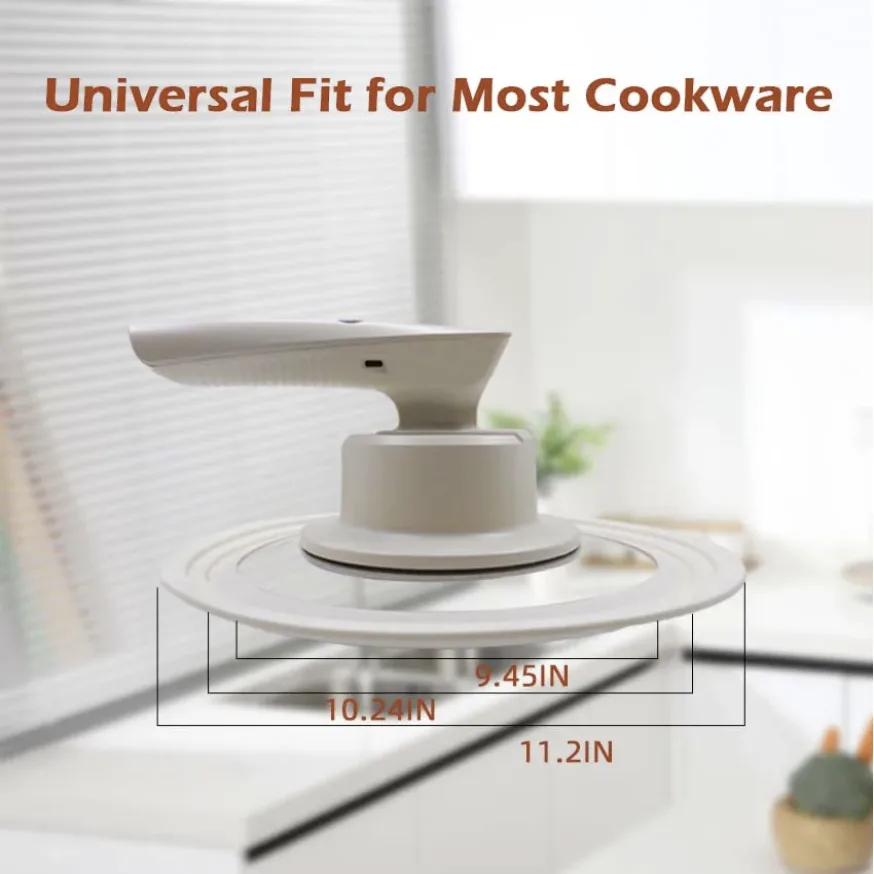
Dimensional Compatibility with Microwave Cavity Volume
Microwave ovens are categorized by their internal capacity, usually ranging from 0.5 to over 2.0 cubic feet. Choosing a microwave baking pan with lid requires verifying that the pan’s diameter or diagonal length is at least 2 centimeters smaller than the turntable diameter. This clearance ensures unobstructed rotation, which is critical for consistent electromagnetic wave exposure. According to the Association of Home Appliance Manufacturers (AHAM), standard mid-sized microwaves average 1.2 to 1.6 cubic feet, typically accommodating pans up to 10 or 12 inches in diameter.
The relationship between cavity size and compatible cookware is standardized across most manufacturers. Large capacity units allow for a multi-purpose microwave grill pan that can handle family-sized portions. Conversely, compact or “dorm-style” microwaves require smaller, specialized vessels to prevent the pan from touching the side walls, which can cause arcing or damage to the magnetron.
Volumetric Efficiency for Different Food Categories
The depth and volume of a baking pan directly influence the rate of heat penetration. For dense items like casseroles or brownies, a shallower pan increases the surface-area-to-volume ratio, allowing waves to reach the center more effectively. A non-stick microwave baking tray with a capacity of 1.5 to 2.0 liters is considered the standard for most consumer recipes. Proper sizing prevents overflow during the leavening process, which is common in high-moisture microwave baking.
Industry research indicates that food thickness is a primary factor in microwave efficiency. A 2026 report from the Institute of Food Technologists (IFT) suggests that for optimal safety and texture, food depth should not exceed 5 centimeters in a microwave environment. Using a microwave steamer pan that is too deep can result in an overcooked exterior while the interior remains below the safe internal temperature of 74°C (165°F), as mandated by the USDA Food Safety and Inspection Service.
Technical Specifications: Size and Material Weight
The physical weight of the cookware, combined with the weight of the food, must stay within the load-bearing capacity of the microwave’s glass turntable and support ring. Heavy ceramic or glass pans can cause mechanical strain on the turntable motor. An ergonomic microwave cake pan made from advanced polymers or shielded aluminum often provides a lightweight alternative without sacrificing thermal mass. Technical data shows that most domestic turntable motors are rated for loads between 2.5 kg and 5.0 kg.
| Microwave Category | Typical Cavity Volume | Recommended Pan Diameter | Max Food Capacity |
| Compact | 0.5 – 0.8 cu. ft. | 8 – 9 inches | 1.0 Liter |
| Mid-Size | 1.0 – 1.6 cu. ft. | 10 – 11 inches | 2.0 Liters |
| Full-Size | 1.8 – 2.2 cu. ft. | 12+ inches | 3.5+ Liters |
Impact of Lid Height on Steam Retention
The vertical clearance of the lid is an often overlooked aspect of size selection. A lid must be high enough to avoid contact with the food surface, particularly for items that rise, such as breads or cakes. A square microwave griddle with lid provides the necessary headspace to maintain a stable steam pocket. This steam pocket is vital for heat transfer via latent heat of vaporization, which is more efficient than air conduction alone.
Engineering specifications for microwave lids emphasize the importance of the seal and vent placement. According to the International Microwave Power Institute (IMPI), a lid that fits too tightly without proper venting can create excessive pressure, whereas a lid that is too small for the pan will allow moisture to escape, leading to dehydration. The height of the lid should ideally add no more than 5 to 8 centimeters to the total height of the pan to ensure it fits comfortably beneath the microwave ceiling.
Standardized Dimensions for Consumer Workflows
Standardization in pan sizing assists in accurate cooking time calculations. Most microwave recipes are developed for 8-inch or 10-inch round containers. Utilizing a professional microwave baking set that includes these standard sizes allows users to follow instructions without adjusting power levels or durations. Consistency in size ensures that the energy density ($W/cm^2$) remains within the expected parameters for the recipe.
The following table outlines standard dimensions for various baking tasks based on 2026 kitchen utility trends:
| Baking Task | Recommended Shape | Common Dimensions | Ideal Depth |
| Personal Meals | Round | 6 – 7 inches | 4 cm |
| Side Dishes | Square | 8 x 8 inches | 5 cm |
| Family Entrees | Rectangular | 9 x 13 inches | 6 cm |
| Breads/Cakes | Ring/Bundt | 9 – 10 inches | 8 cm |
Material Selection Based on Pan Dimensions
Larger pans require materials with higher structural integrity to prevent warping under thermal stress. Large-format silicone pans may require a rigid frame or specialized base to remain stable when full. For larger applications, a microwave crisper pan with a reinforced bottom is preferable. This design ensures that the pan maintains a flat profile, which is necessary for the susceptor material to contact the food evenly and produce a crisp texture.
Data from the American Society for Testing and Materials (ASTM) indicates that different materials have varying rates of thermal expansion. Large glass pans are more susceptible to thermal shock if they are oversized for the microwave, as the temperature differential between the center and the edges becomes more pronounced. Selecting the smallest size that comfortably fits the food portion is a technical best practice for maximizing the lifespan of the cookware.
Summary of Size Selection Principles
Selecting the right size involves more than just fitting the pan inside the appliance. It requires a technical understanding of how volume affects heat penetration and how dimensions interact with the microwave’s mechanical systems.
Key selection conclusions include
Turntable clearance must be at least 1 cm on all sides to allow free rotation.
Pan depth should be minimized to 5 cm or less for optimal center-heating.
Total weight (pan + food) must not exceed the turntable motor’s rated capacity.
Lid height must accommodate food leavening while fitting the cavity’s vertical limit.
FAQ
How do I measure my microwave to ensure a pan will fit?
Measure the diameter of the glass turntable and the height from the turntable to the ceiling. Subtract 2 cm from the diameter and 3 cm from the height. These values represent the maximum safe dimensions for any baking pan and lid combination to ensure rotation and airflow.
Does the shape of the pan affect the size I should choose?
Yes. Round pans are more efficient because they allow for more uniform wave distribution. If choosing a square or rectangular pan, ensure the diagonal measurement does not exceed the turntable diameter. If the pan cannot rotate, you must disable the turntable and manually rotate the pan during cooking.
Why is my 10-inch pan not cooking evenly in my 1.1 cu. ft. microwave?
Even if a pan fits, if it is too large relative to the cavity, it can disrupt the airflow and wave reflection patterns. This often creates “standing waves” that cause uneven heating. Reducing the pan size to 8 or 9 inches often resolves these distribution issues.
What size pan is best for reheating versus actual baking?
For reheating, smaller, individual-sized containers are superior as they prevent moisture loss over large surface areas. For baking, the pan size must match the volume of the batter exactly; a pan that is too large will cause the batter to spread thin and dry out.
Is there a weight limit for pans used in high-power microwaves?
While the microwave power (wattage) does not dictate weight, the mechanical turntable does. Most manufacturers recommend keeping the total weight under 5 kg (11 lbs) for mid-sized units. Overloading can cause the motor to burn out or the rollers to slip, leading to uneven cooking.


