
Introduction
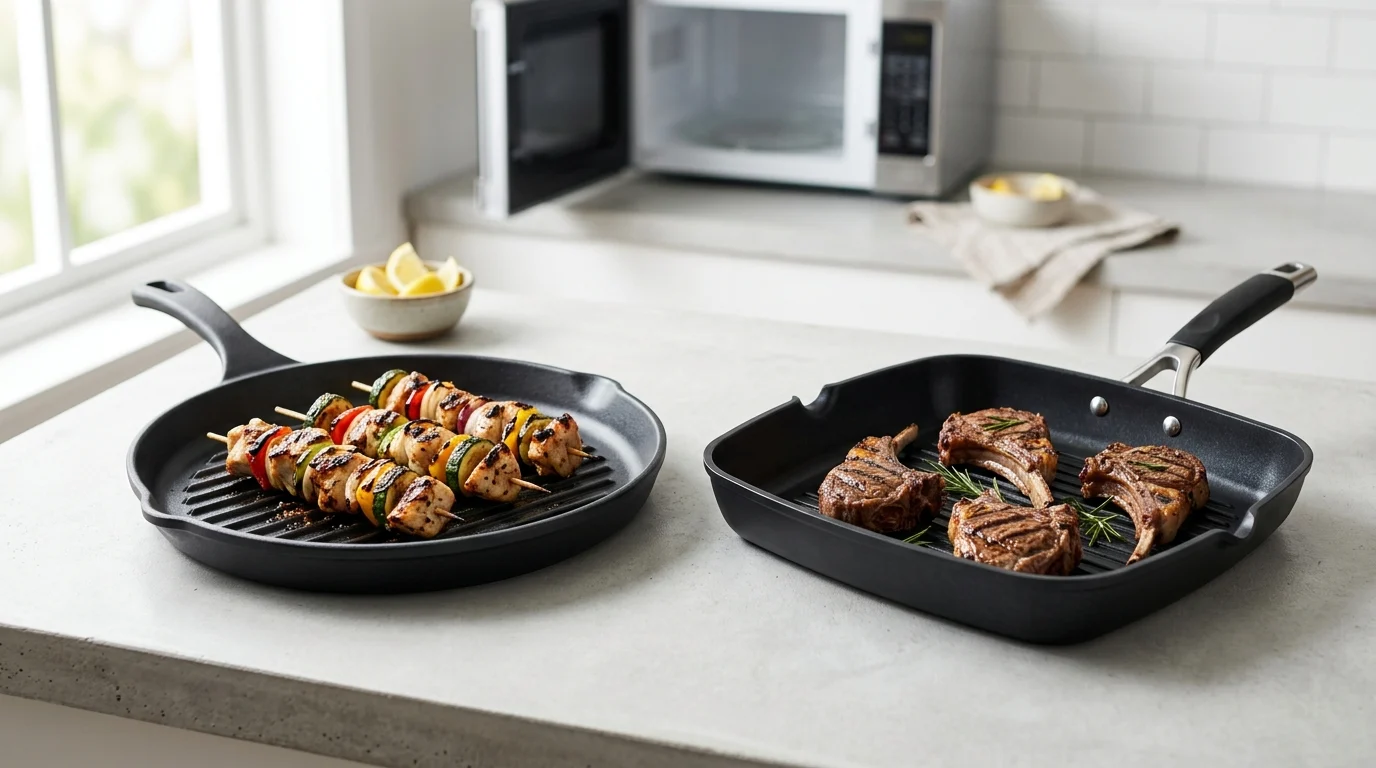
Microwave grill pans are gaining attention because they solve a common kitchen trade-off: speed versus texture. Instead of relying on a microwave only for reheating, these pans use heat-conductive materials to brown, crisp, and sear foods in far less time than a conventional oven or stovetop setup. For busy households, that means faster meals without giving up grilled sandwiches, roasted vegetables, or crisp pizza bases. This article explains what microwave grill pans are, why they fit modern cooking habits, and which practical advantages are driving their rise from niche gadget to everyday cookware.
Why Microwave Grill Pans Are Gaining Popularity
Microwave grill pans are rapidly transforming the landscape of modern kitchenware, shifting the perception of microwaves from simple reheating appliances to capable cooking stations. As consumers increasingly prioritize speed without sacrificing culinary quality, the market for specialty microwave cookware has expanded, exhibiting a projected compound annual growth rate (CAGR) of 7.2% over the next five years.
This surge in popularity is driven by a convergence of material innovation and changing household dynamics. By capturing microwave radiation and converting it into direct heat, these pans allow users to sear, grill, and bake, bridging the gap between microwave convenience and stovetop performance.
Convenience, speed, and everyday use
The primary catalyst for consumer adoption is the unprecedented combination of convenience and speed. Traditional grilling or oven roasting often requires a 10- to 15-minute preheating phase, followed by 20 to 30 minutes of active cooking. In contrast, a high-quality microwave grill pan can reach searing temperatures in just two minutes and cook a standard chicken breast or a personalized pizza in 7 to 10 minutes.
For everyday use, this translates to significant time savings for busy professionals, students, and families. Furthermore, because the cooking process is contained within the microwave cavity, it minimizes smoke, splatters, and the subsequent stovetop cleanup that typically discourages daily grilling.
Why retailers and brands are paying attention
Retailers and housewares brands are paying close attention to this category due to its highly attractive commercial metrics. Microwave grill pans typically yield retail profit margins ranging from 35% to 50%, significantly higher than standard microwave-safe plastics or basic glass storage containers.
Additionally, these items offer excellent cross-merchandising opportunities. Retailers frequently position them alongside conventional microwaves, meal-prep kits, and dorm-room essentials, effectively increasing the average transaction value. As brand recognition grows, manufacturers are capitalizing on this trend by introducing specialized variations, such as panini presses and muffin makers, further expanding their catalog and retail footprint.
What Microwave Grill Pans Are and How They Compare
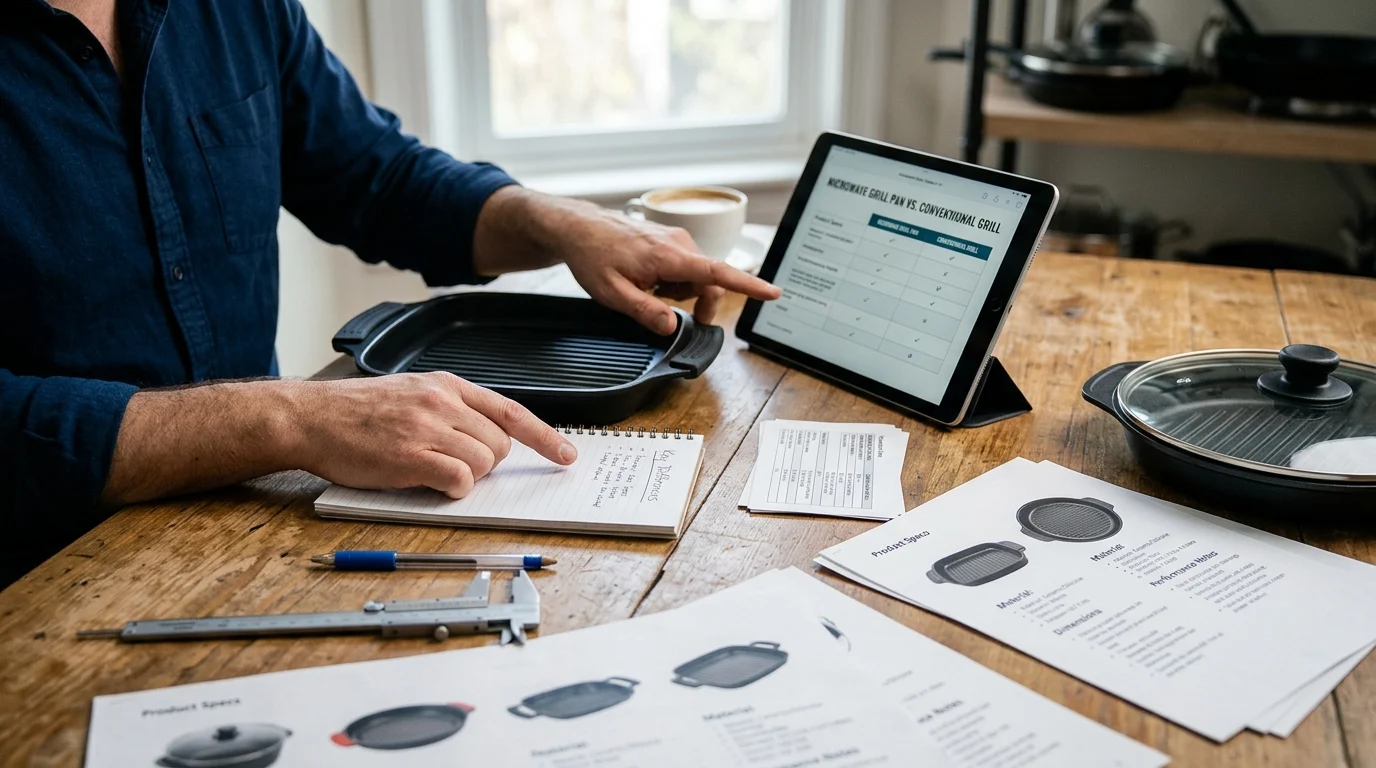
Understanding the mechanics behind microwave grill pans requires a look into advanced material science. Unlike traditional microwave containers that allow electromagnetic waves to pass through and heat the water molecules inside the food, grill pans actively intercept these waves.
By converting microwave energy into intense thermal energy, these pans mimic the conductive heating properties of a cast-iron skillet, fundamentally altering how food cooks inside a microwave cavity.
Materials, heating technology, and key features
The core technology relies on a susceptor material—often a ferrite or specially formulated metal alloy—embedded within the base of the pan. When exposed to microwave frequencies, this layer absorbs the energy and rapidly heats up, commonly reaching temperatures up to 220°C (428°F) in just 2 to 3 minutes.
To ensure user safety and prevent damage to the microwave, the pan's exterior is typically encased in BPA-free silicone or heat-resistant polymers that remain relatively cool to the touch. The cooking surface itself usually features a non-stick ceramic or polytetrafluoroethylene (PTFE) coating. Manufacturers must ensure these food-contact materials adhere to global safety guidelines, often looking to frameworks established by the ISO for material safety, toxicity, and thermal resistance standards.
Comparison with air fryers and other cookware
When evaluating modern kitchen appliances, consumers frequently weigh microwave grill pans against air fryers and traditional cookware. While air fryers excel at convection heating and crisping through rapid air circulation, they require dedicated counter space and operate at higher wattages.
Microwave grill pans, conversely, leverage an appliance the consumer likely already owns, saving valuable countertop real estate.
| Appliance Type | Average Pre-Heat Time | Max Temperature | Counter Space Required | Average Retail Cost |
|---|---|---|---|---|
| Microwave Grill Pan | 2-3 minutes | ~220°C (428°F) | None (uses microwave) | $30 – $80 |
| Air Fryer (Basket) | 3-5 minutes | ~200°C (400°F) | High | $50 – $150 |
| Stovetop Skillet | 5-7 minutes | Variable | Medium (uses stove) | $20 – $100 |
This comparison highlights the grill pan's distinct advantage in spatial efficiency and initial cost, making it an attractive supplementary tool even for households that already utilize air fryers or toaster ovens.
What Is Driving Demand for Microwave Grill Pans
The commercial success of microwave grill pans is deeply intertwined with broader demographic and lifestyle shifts. Urbanization continues to shrink average living spaces, prompting a reevaluation of essential kitchen equipment.
With over 40% of urban apartment dwellers citing limited kitchen space as a primary constraint for home cooking, multifunctional, compact tools have transitioned from niche gadgets to household necessities.
Consumer lifestyle and kitchen space trends
Modern consumer lifestyles, particularly among Millennials and Generation Z, prioritize convenience, health, and minimalism. Micro-apartments, college dormitories, and recreational vehicles (RVs) often lack full-sized ovens or traditional stovetops. In these environments, the microwave is often the sole cooking appliance.
Microwave grill pans empower these demographics to prepare fresh, hot meals—such as grilled vegetables, seared proteins, and toasted sandwiches—without relying on heavily processed microwave dinners or expensive takeout. The ability to achieve Maillard browning in a dorm room or office breakroom effectively democratizes gourmet cooking for space-constrained consumers.
Design features, pricing, and popular use cases
To capture diverse market segments, manufacturers have introduced an array of design features. Premium models frequently include steam-venting lids, silicone handles for safe extraction, and dishwasher-safe components. The pricing architecture is relatively accessible, with entry-level pans starting around $30 and advanced, multi-piece sets reaching up to $80.
Popular use cases heavily influence design choices. For example, some pans feature raised ridges specifically engineered to leave authentic grill marks on steaks and paninis while allowing excess fat to drain away. Others feature deeper basins to accommodate one-pot pasta dishes or casseroles, ensuring the product offers sufficient versatility to justify its purchase and regular rotation in meal preparation.
What Operational and Compliance Factors Matter
Bringing microwave grill pans to market involves navigating a complex landscape of operational logistics and regulatory compliance. Because these products interact with both high-frequency electromagnetic waves and direct food contact, the manufacturing tolerances are exceptionally stringent.
Retail buyers and supply chain managers must rigorously vet suppliers to ensure that performance claims do not compromise consumer safety or appliance integrity.
Manufacturing quality, safety, and labeling requirements
Manufacturing quality control is paramount, particularly regarding the encapsulation of the susceptor material. If the shielding fails, the metal base could cause arcing, potentially destroying the microwave or causing a fire. Consequently, top-tier factories maintain defect rate tolerances strictly below 1.5%.
Compliance requirements dictate that products meet regional food safety standards, such as FDA approval in the United States and LFGB certification in Europe. Labeling must clearly indicate maximum wattage limits (typically capped at 1000W to 1200W) and maximum continuous cooking times to prevent overheating. Referencing international trade data via platforms like TradeMap can help buyers identify regions with the most robust manufacturing ecosystems for these specialized ceramics and silicones.
Packaging, shipping, returns, and sales channels
Packaging and logistics require careful engineering. The ceramic or coated metal plates are susceptible to cracking if dropped, necessitating custom EPS (expanded polystyrene) or molded pulp inserts. A standard retail box dimension of 11 x 11 x 4 inches allows for optimal pallet density, keeping shipping costs manageable in a high-freight-cost environment.
| Operational Metric | Standard Baseline | Premium Tier Expectation |
|---|---|---|
| Minimum Order Quantity (MOQ) | 1,000 – 2,000 units | 500 units (custom branding) |
| Defect Rate Tolerance | < 2.0% | < 1.0% |
| Packaging Drop Test | ISTA 1A Compliant | ISTA 3A Compliant |
| Average Return Rate | 4.5% | < 2.5% |
Return rates can be a challenge if consumers misuse the product by exceeding wattage limits. However, brands that invest in clear, illustrated user manuals and multi-channel sales support (including video tutorials on e-commerce listings) frequently see their return rates drop below 3%.
How Buyers and Sellers Should Evaluate Microwave Grill Pans
For industry professionals and retail buyers, capitalizing on the microwave grill pan trend requires a strategic approach to procurement and assortment planning. The market is becoming increasingly saturated with unbranded imports, making differentiation a critical success factor.
Evaluating these products goes beyond initial aesthetics; it requires a deep dive into functional longevity, supplier reliability, and the overall value proposition presented to the end consumer.
Sourcing, assortment, and decision criteria
When sourcing microwave grill pans, buyers must evaluate supplier capacity and lead times, which typically range from 45 to 60 days for ocean freight from major manufacturing hubs in Asia. Decision criteria should heavily weight the supplier's history with thermal-shock-resistant materials and their ability to provide independent laboratory testing certificates.
Assortment planning should cater to multiple price points. A balanced retail strategy might include a $35 entry-level round pan targeted at students, alongside a $75 rectangular, multi-functional set with steam inserts and glass lids aimed at families and culinary enthusiasts. This tiered approach captures impulse buyers while simultaneously serving high-intent shoppers looking for premium kitchenware upgrades.
Performance, durability, and customer satisfaction
Ultimately, long-term customer satisfaction hinges on performance and durability. The weakest point of any grill pan is often its non-stick coating. Buyers must demand rigorous testing data, aiming for coatings rated to withstand at least 1,500 to 2,000 wash and heat cycles without degrading or flaking.
Performance reviews consistently show that crisping ability is the primary driver of five-star ratings. If a pan can reliably deliver a crispy crust on a leftover slice of pizza or a proper sear on a burger within a 5-minute window, it fulfills its core promise. As material technologies continue to evolve, microwave grill pans are positioned to remain a highly profitable and enduring category in the modern kitchenware sector, offering tangible solutions to everyday culinary challenges.
Key Takeaways
- The most important conclusions and rationale for Microwave Grill Pans
- Specs, compliance, and risk checks worth validating before you commit
- Practical next steps and caveats readers can apply immediately
Frequently Asked Questions
How does a microwave grill pan actually work?
It uses a susceptor layer that converts microwave energy into direct surface heat, letting the pan sear food instead of only warming it from inside.
What can I cook in a microwave grill pan?
You can make chicken breasts, burgers, paninis, bacon, vegetables, and small pizzas quickly, usually with better browning than standard microwave-safe dishes.
Is a microwave grill pan faster than an air fryer?
For many small meals, yes. It usually preheats in 2–3 minutes and can cook items like chicken or personal pizza in about 7–10 minutes.
Are microwave grill pans safe for everyday use?
Yes, if you follow the product instructions. Choose models with heat-resistant handles, BPA-free outer materials, and food-safe non-stick coatings from trusted sellers.
Why are microwave grill pans popular on Microwave-Grill.com?
They fit modern kitchens by saving time, reducing cleanup, and using the microwave you already own instead of adding another bulky countertop appliance.


