
In the fast-paced world of modern culinary technology, the microwave grill pan has emerged as a game-changer for both home chefs and professional kitchens. For years, the microwave was relegated to reheating leftovers or popping corn. However, with the advent of advanced susceptor technology and heat-resistant silicone engineering, “microwaving” has evolved into “grilling.”
This comprehensive guide explores the mechanics, benefits, and strategic advantages of using high-quality microwave grill tools, ensuring you understand why this isn’t just a gadget, but a kitchen revolution.
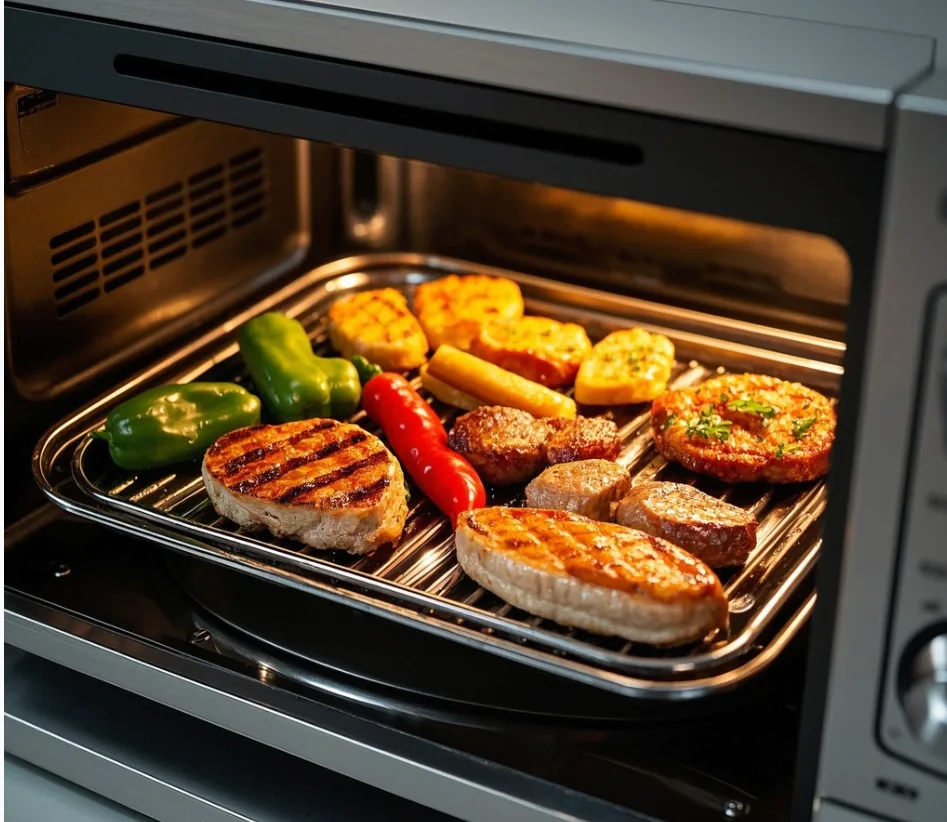
1. What is a Microwave Grill Pan and How Does It Work?
A microwave grill pan is a specialized piece of cookware designed to convert electromagnetic waves into thermal energy for surface searing. Unlike traditional plastic containers, these pans utilize ferrite-loaded materials or susceptors that react to microwave energy by heating up to temperatures exceeding 200°C (392°F).
The Science of “Searing” in a Microwave
Standard microwaves heat water molecules within food through molecular friction. A grill pan, however, intercepts these waves.
- Energy Conversion: The base of the pan absorbs microwave radiation.
- Thermal Conduction: The energy is converted into intense heat on the metal/ceramic surface.
- The Maillard Reaction: This heat allows for the chemical reaction between amino acids and reducing sugars, giving your food that brown, caramelized “grilled” crust that a standard microwave cannot achieve.
| Feature | Standard Microwave Cooking | Microwave Grill Pan Cooking |
|---|---|---|
| Primary Heat Source | Molecular Friction (Internal) | Thermal Conduction (Surface) |
| Food Texture | Soft/Steamed | Crispy/Soured |
| Max Temperature | ~100°C (Boiling point of water) | 230°C+ (Searing capability) |
| Browning (Maillard) | No | Yes |
2. Why Should You Choose a High-Quality Microwave Grill Over Traditional Methods?
When considering your kitchen inventory, efficiency and result quality are paramount. Using a Microwave Grill offers several distinct advantages over traditional charcoal or gas grills.
Time Efficiency and Preheating
Traditional grills require 15-20 minutes to reach optimal temperature. A high-performance microwave grill pan reaches searing heat in under 3 minutes. For B2B clients or busy households, this reduction in “dead time” is a significant value proposition.
Healthier Cooking Profiles
Because the plates are often coated with high-grade non-stick PTFE or ceramic, the need for excess oils and fats is minimized. The ridges on the pan also allow fats to drip away from the protein, mimicking the drainage of an outdoor grill.
3. How to Identify the Best Materials for Microwave Grilling?
Not all “microwave-safe” pans are created equal. To ensure durability and food safety, professional-grade tools must adhere to strict material standards.
Professional Material Breakdown:
- High-Grade Silicone: Used for handles and seals. It must be BPA-free and heat-resistant up to 250°C.
- Ferrite-Coated Aluminum: The “engine” of the pan. The aluminum core provides even heat distribution, while the ferrite coating manages the microwave interaction.
- Non-Stick Coating: Usually a PFOA-free ceramic or reinforced coating that prevents carbonization of food particles.
Expert Insight: “The efficiency of a microwave grill is measured by its thermal inertia. High-quality pans retain heat longer, allowing for a ‘resting’ period for meats, which is crucial for juice retention.” — Culinary Technology Review, 2025.
4. What Are the Step-by-Step Instructions for Perfect Results?
To achieve a “medium-rare” steak or “crispy” chicken skin, one must follow a specific protocol.
Step 1: The Dry-Prep
Ensure the food surface is dry. Moisture is the enemy of the Maillard reaction. Use a paper towel to pat down proteins.
Step 2: Preheating (The Secret Step)
Place the empty Microwave Grill Pan in the microwave for 120-180 seconds. This builds the initial thermal base required to sear the meat instantly upon contact.
Step 3: Searing
Place the food on the bottom plate, lock the lid (if applicable), and set the timer. For a 1-inch steak, 3 minutes per side at 800W is often the “sweet spot.”
Step 4: The Flip
Halfway through the cooking cycle, flip the food to ensure the “grill marks” are consistent on both sides.
5. Which Long-Tail Keywords Define the Future of Microwave Grilling?
For SEO and market positioning, understanding the search intent behind “microwave grilling” is essential. We are seeing a shift toward energy-efficient kitchenware and small-space cooking solutions.
- Eco-friendly microwave cookware: With rising energy costs, using a 1000W microwave for 6 minutes is significantly cheaper than running a 3000W electric oven for 30 minutes.
- Dorm-friendly grilling tools: A massive market segment for students who lack access to full kitchens but desire high-quality protein.
- Non-toxic microwave grill plates: Consumers are increasingly wary of “forever chemicals,” making PFOA-free and lead-free certifications vital.
6. How Do You Clean and Maintain Your Microwave Grill Pan?
Longevity in kitchenware is a result of proper maintenance. While many modern pans claim to be “dishwasher safe,” professional advice suggests otherwise.
- Avoid Abrasives: Never use steel wool or harsh scouring pads. This will compromise the non-stick integrity.
- Degreasing: Use a high-quality dish soap with a soft sponge.
- Storage: If stacking pans, place a felt protector or paper towel between them to prevent the ferrite coating from scratching.
7. What Are the Common Misconceptions About Microwave Metal Safety?
A common hurdle in this industry is the fear of “metal in the microwave.”
The Fact: Arcing occurs when thin, pointed metal (like a fork) creates a concentrated electrical field. However, the smooth, rounded, and specifically engineered aluminum plates in a Microwave Sandwich Maker or grill pan are designed to absorb waves safely. They are enclosed in silicone or positioned in a way that prevents the “antenna effect,” making them 100% safe for intended use.
FAQ: Everything You Need to Know About Microwave Grilling
Is a microwave grill pan safe for all microwave types?
Yes, most microwave grill pans are compatible with standard residential and commercial microwave ovens. However, they should not be used in “Inverter” microwaves at maximum power for extended periods without food, as the rapid heat buildup can stress the susceptor material. Always check the wattage of your unit and adjust timing accordingly—800W to 1000W is the optimal range for most recipes.
Can you get genuine grill marks using a microwave?
Absolutely. Genuine grill marks are the result of high-temperature contact (conduction). Because the ridges on the microwave grill pan reach temperatures well above the boiling point of water, they sear the proteins upon contact. This creates the aesthetic and flavorful charred lines typically associated with outdoor charcoal grilling, all while keeping the interior of the food moist and tender.
How does microwave grilling compare to an air fryer?
While both promote healthy cooking, the mechanism differs. An air fryer uses rapid hot air (convection), which can sometimes dry out the surface of thin meats. A microwave grill pan uses direct contact (conduction), which provides a better “sear” for steaks and sandwiches. For items like grilled cheese or pan-seared salmon, the microwave grill pan typically offers a superior texture compared to the air fryer’s “dried” finish.
Does the pan require special oils or sprays?
No, in fact, we recommend avoiding aerosol cooking sprays. These sprays often contain soy lecithin, which can leave a gummy residue on non-stick surfaces that is difficult to remove and eventually degrades the pan’s performance. Instead, lightly brush your food with a high-smoke-point oil (like avocado or grapeseed oil) before placing it on the pan for the best flavor and longevity.
Is the food “rubbery” like traditional microwave cooking?
The “rubbery” texture associated with microwaves is caused by the steaming of the food’s proteins. Because a microwave grill pan utilizes a lid that presses the food and plates that sear the exterior, it prevents the “steaming” effect. The result is a texture indistinguishable from stove-top cooking, with a crisp exterior and a juicy, properly rendered interior, solving the primary complaint of microwave users.


