
Introduction
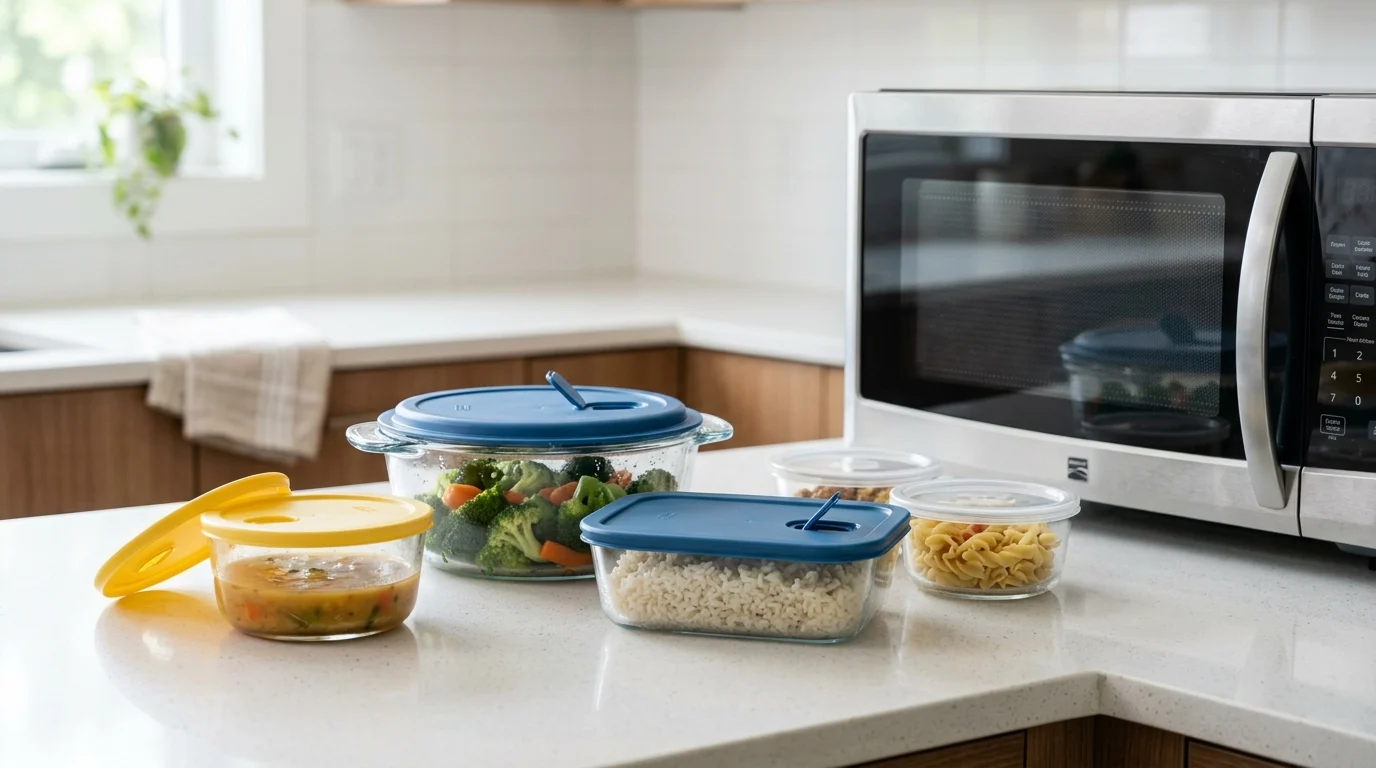
Microwave cookware is moving beyond simple reheating containers and becoming a practical staple in modern kitchens. As households look for faster meal prep, better portion control, and tools that fit smaller living spaces, specialized microwave-safe cookware is gaining attention from both consumers and retailers. New designs now support steaming, cooking grains, and preparing full meals with more consistency than older plastic tubs or generic containers. This article explains the key factors behind that rise in demand, from convenience and health considerations to product innovation and changing buying habits, so readers can better understand why this category is expanding and where it fits in today’s food-preparation routines.
Why Microwave Cookware Is Growing in Popularity
The global transition toward fast, efficient, and health-conscious food preparation has fundamentally altered kitchenware markets. Microwave cookware, once viewed merely as a secondary reheating vessel, has evolved into a primary cooking tool. Driven by urbanization and shrinking residential kitchen footprints, the market for specialized microwave-safe containers and cookers is experiencing robust growth, with industry projections indicating a compound annual growth rate (CAGR) of approximately 5.8% over the next five years. This shift represents a significant opportunity for manufacturers, wholesalers, and retail buyers to capitalize on a category that bridges utility and lifestyle demands.
Convenience, portion control, and faster meal prep
Modern consumers prioritize efficiency without compromising nutritional value. Dedicated microwave cookware reduces average cooking times by 30% to 50% compared to conventional stovetop or oven methods. Advanced designs, such as microwave steamers and pressure cookers, allow users to prepare raw vegetables, grains, and proteins in minutes while retaining water-soluble vitamins.
Furthermore, portion control has become a dominant trend in personal health management. Manufacturers are responding by producing modular cookware sets with precise volumetric capacities, typically ranging from 400ml for single-serve snacks to 1,200ml for batch-cooked meals. These standardized sizes assist end-users in tracking macronutrients while providing predictable heating times, minimizing cold spots and overcooking.
Demand from retailers, meal-prep brands, and commercial kitchens
The surge in microwave cookware adoption extends well beyond residential kitchens. Commercial establishments, including quick-service restaurants and cafes, utilize commercial-grade microwave containers to accelerate service times. In these high-volume environments, cookware must withstand rigorous daily use, prompting commercial buyers to seek out products with minimum lifespans of 1,000+ wash and heat cycles.
Simultaneously, the booming meal-prep industry has created massive B2B demand. Meal-prep companies require durable, microwave-ready containers that can transition seamlessly from blast chillers to consumer microwaves. This sector frequently operates with high volume requirements, placing orders with Minimum Order Quantities (MOQs) exceeding 10,000 units. According to global trade data accessible via platforms like TradeMap, the international flow of specialized food preparation containers has seen double-digit percentage increases, reflecting aggressive inventory expansion by retail and direct-to-consumer brands.
What Defines High-Performance Microwave Cookware
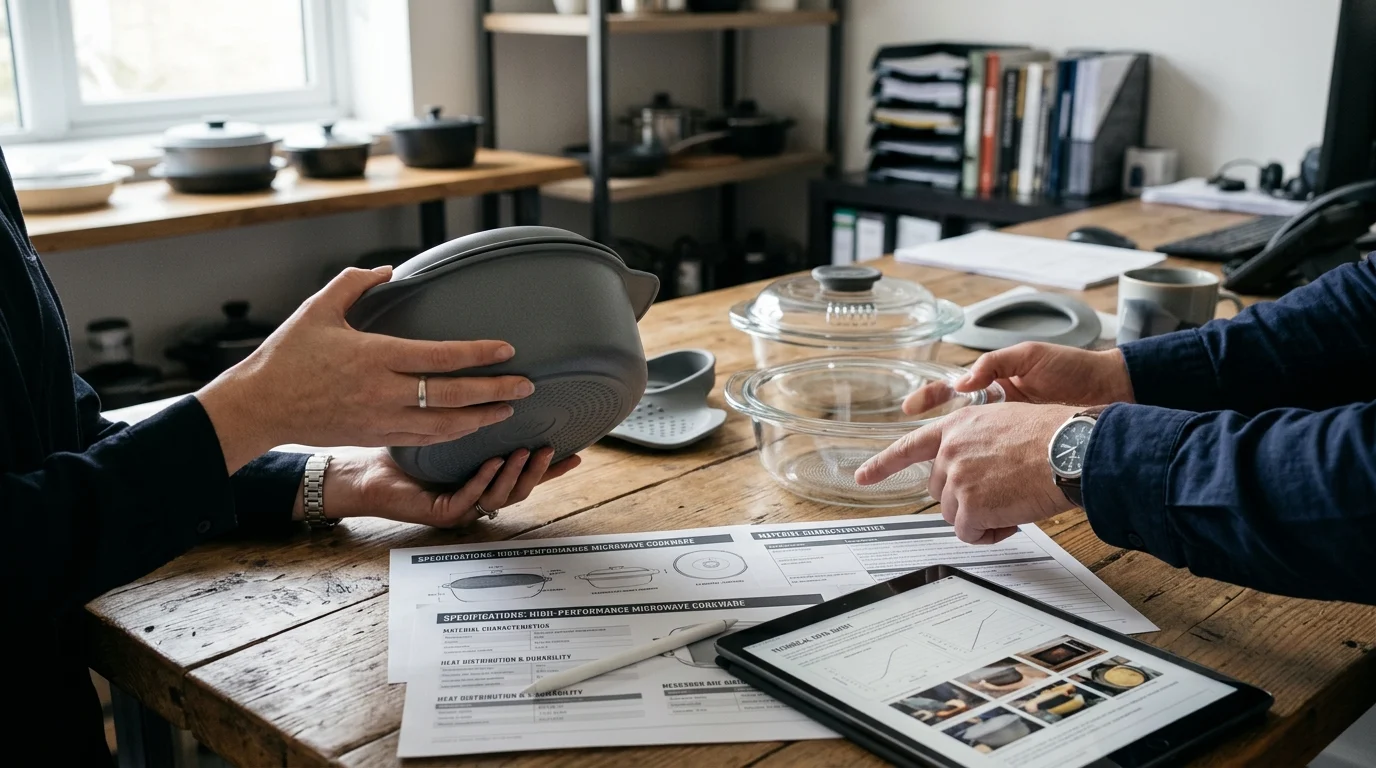
Distinguishing high-performance microwave cookware from basic storage containers requires a technical understanding of material science and thermal dynamics. Premium products are engineered to manage rapid temperature fluctuations, facilitate even energy distribution, and ensure complete chemical stability under electromagnetic radiation.
Key product specifications to evaluate
Evaluating microwave cookware necessitates strict attention to technical specifications. Thermal shock resistance is paramount; high-quality vessels must endure immediate temperature differentials (ΔT) of at least 120°C, allowing them to move from a freezer directly into a microwave without structural failure. Wall thickness is another critical metric. For rigid materials like glass, a minimum uniform thickness of 2.5mm to 3.0mm is required to prevent shattering and ensure even heat retention.
Additionally, venting mechanisms separate premium cookware from budget alternatives. High-performance lids incorporate engineered silicone steam-release valves with precise 2mm to 3mm apertures. These valves automatically regulate internal pressure, preventing dangerous steam build-up and messy explosions while maintaining enough moisture to steam the food effectively.
Silicone, borosilicate glass, ceramic, and BPA-free plastic
The performance of microwave cookware is inherently tied to its material composition. Borosilicate glass is favored for its zero-porosity surface and extreme thermal endurance, though it carries a higher weight penalty. Premium food-grade silicone offers exceptional flexibility, shatterproof safety, and temperature tolerances ranging from -40°C to 230°C. Ceramic options provide aesthetic appeal and excellent heat retention, provided their glazes are strictly free of heavy metals like lead or cadmium.
For buyers seeking lightweight and cost-effective solutions, advanced BPA-free plastics, specifically high-density polypropylene (PP), remain viable. However, these must be explicitly formulated for high-heat applications to prevent warping and degradation over time.
| Material | Max Temperature | Expected Lifespan (Cycles) | Est. Wholesale Cost (USD) |
|---|---|---|---|
| Borosilicate Glass | 230°C (446°F) | 1,000+ | $2.50 – $4.00 |
| Premium Silicone | 220°C (428°F) | 800+ | $1.80 – $3.20 |
| Ceramic (Glazed) | 250°C (482°F) | 1,000+ | $3.00 – $5.50 |
| BPA-Free PP Plastic | 120°C (248°F) | 300 – 500 | $0.50 – $1.20 |
How Microwave Cookware Compares With Conventional Food Containers
A common point of friction in the market is consumer confusion between generic food storage containers and purpose-built microwave cookware. While conventional containers are designed primarily for ambient or cold storage, subjecting them to microwave radiation often leads to premature failure, food contamination, and poor culinary results.
Safety, lifespan, cost, and usability
The primary divergence between these two categories lies in safety and longevity. Conventional thin-walled plastics (often PET or standard polystyrene) can warp, melt, or release chemical plasticizers into food when exposed to temperatures exceeding 80°C. In contrast, dedicated microwave cookware utilizes stabilized polymers or inert materials that guarantee zero chemical migration even at boiling points.
Lifespan and cost also present a stark contrast. A standard takeout container might survive 5 to 10 microwave cycles before degrading, effectively costing the consumer more over time despite a low initial production cost of $0.10 to $0.20. Purpose-built microwave cookware, while commanding a higher wholesale price of $2.00 to $4.00, offers a lifespan of 500 to over 1,000 cycles. This durability dramatically improves the end-user's return on investment and reduces environmental waste.
Comparison criteria for evaluating options
When evaluating options, category managers must weigh functional features against price premiums. Usability factors such as cool-touch handles, splatter-proof vented lids, and non-stick internal geometries are standard in microwave-specific lines but absent in conventional storage. These features directly impact consumer satisfaction and return rates.
| Comparison Metric | Dedicated Microwave Cookware | Conventional Food Storage | Commercial Impact |
|---|---|---|---|
| Thermal Shock Resistance | High (ΔT > 120°C) | Low to Moderate | Reduces breakage returns by 85% |
| Steam Venting | Integrated silicone valves | None or manual lid removal | Prevents pressure explosions |
| Chemical Stability | LFGB/FDA certified at high heat | Risk of plasticizer leaching | Critical for compliance and safety |
| Average Unit Weight | 300g – 600g (Glass/Ceramic) | 50g – 150g (Standard Plastic) | Affects freight costs by up to 30% |
Purchasing, Compliance, and Supply Chain Factors
Procuring microwave cookware at scale introduces a complex matrix of regulatory compliance, quality assurance, and logistical planning. Buyers must navigate stringent international safety standards to protect end-consumers and shield their brands from liability, all while optimizing supply chain efficiencies to maintain healthy profit margins.
Compliance and quality checks for buyers
Compliance is the foremost hurdle in food-contact manufacturing. Products destined for the United States must strictly adhere to FDA 21 CFR regulations regarding indirect food additives. For the European market, compliance with the German LFGB standard is often required; LFGB testing is notoriously rigorous, frequently imposing migration limits that are 20% to 30% stricter than standard FDA requirements.
To ensure consistent quality, buyers should mandate factory certifications such as those provided by the International Organization for Standardization, specifically ISO 9001 for quality management systems. Pre-shipment inspections should utilize standard Acceptable Quality Limit (AQL) metrics, typically targeting an AQL of 1.5 for major defects (such as compromised seals or micro-fractures in glass) and 4.0 for minor aesthetic flaws.
Sourcing, freight, packaging, and inventory considerations
Global trade frameworks established by the World Trade Organization impact the tariff classifications and landed costs of these goods. Buyers must carefully calculate freight economics alongside unit costs. Microwave cookware, particularly rigid glass or ceramic, can be volumetrically inefficient to ship. Sourcing nestable designs—where containers stack neatly inside one another—can reduce shipping volume by up to 40%, allowing buyers to maximize unit counts within a standard 40-foot High Cube (40HQ) shipping container.
Inventory planning must also account for standard manufacturing lead times, which typically range from 30 to 45 days, plus an additional 25 to 35 days for ocean freight. Proper packaging is critical to mitigating transit damage; drop-test certified master cartons with custom EPS or molded pulp inserts are mandatory to keep transit breakage rates below the industry benchmark of 2%.
How Buyers and Category Managers Can Choose the Right Microwave
Successfully integrating microwave cookware into a retail assortment or B2B supply chain requires a strategic approach. Buyers and category managers must align product specifications with their target demographic's specific use cases while maintaining a strict adherence to margin requirements and inventory turnover goals.
Selection steps based on use case
The first step in selection is defining the primary use case. If the target audience consists of office workers seeking portable lunch solutions, buyers should prioritize leak-proof, multi-compartment bento boxes in the 800ml to 1,000ml range, emphasizing lightweight BPA-free plastics or silicone. Conversely, if the demographic is home chefs looking for rapid meal preparation tools, the focus should shift to high-capacity (1.5L to 2.5L) borosilicate glass or ceramic steamers and pressure cookers.
Next, buyers must map out the retail pricing strategy. A premium glass microwave steamer might target a retail price point of $25.00 to $35.00. To achieve a standard gross margin of 60% to 65%, the landed wholesale cost must be strictly negotiated within the $8.75 to $14.00 band. Understanding these thresholds dictates which factories and material grades are economically viable.
Decision criteria for assortment planning
Assortment planning requires a careful balance of SKU breadth and depth. Introducing a new category typically involves launching 6 to 12 distinct SKUs, encompassing 2 to 3 size variants across 3 to 4 trending colorways. This variety provides consumers with personalized options without overwhelming warehouse logistics or tying up excessive working capital in slow-moving inventory.
Finally, decision-makers must evaluate vendor reliability. Beyond competitive pricing, buyers should assess a supplier's capacity for rapid prototyping, their history of on-time delivery, and their willingness to provide comprehensive third-party lab testing reports. By prioritizing data-driven selection criteria and rigorous vendor vetting, category managers can build a highly profitable, compliant, and consumer-friendly microwave cookware portfolio.
Key Takeaways
- The most important conclusions and rationale for Microwave Cookware
- Specs, compliance, and risk checks worth validating before you commit
- Practical next steps and caveats readers can apply immediately
Frequently Asked Questions
What materials are best for microwave cookware?
Borosilicate glass, food-grade silicone, glazed ceramic, and BPA-free PP plastic are the safest common choices. Pick based on use: glass for durability, silicone for flexibility, and PP for lightweight meal prep.
Can microwave cookware go from freezer to microwave?
Yes, if it is designed for thermal shock resistance. Look for cookware that can handle fast temperature changes, especially borosilicate glass or premium silicone products.
How do I choose microwave cookware for meal prep?
Choose stackable containers with clear volume sizes like 400ml to 1,200ml, secure lids, and steam vents. This helps with portion control, predictable heating, and easy storage.
Why are vented lids important in microwave cookware?
Vented lids release excess steam during heating, reducing splatters and pressure build-up. They also help food cook more evenly by keeping moisture inside without causing messy overflows.
Where can buyers source specialized microwave cookware online?
Buyers can explore specialized microwave-safe containers and cookers at microwave-grill.com. Check product specs for temperature limits, material type, and expected wash-and-heat cycle lifespan before ordering.


