
In the modern fast-paced culinary world, the microwave has evolved from a simple reheating tool into a sophisticated cooking appliance. However, the secret to unlocking its full potential lies not just in the machine itself, but in the microwave cooking cookware you use. Two of the most popular innovations in this space are the microwave frying pan and the microwave grill pan.
While they may look similar at first glance, they offer distinct cooking results, textures, and flavor profiles. If you have ever wondered how to achieve a crispy sear or a perfect char without turning on your stove, this comprehensive guide will break down everything you need to know about microwave frying pan vs microwave grill pan technology to help you make the right choice.
Why is selecting the right microwave cooking cookware a game-changer for your kitchen?
For decades, the biggest complaint about microwave cooking was the “soggy” texture. Because standard microwaves heat food by vibrating water molecules, they often steam food from the inside out, preventing the Maillard reaction—the chemical process responsible for browning and that savory, complex flavor we associate with fried or grilled food.
The introduction of specialized microwave safe frying pans and grill pans has changed the narrative. By utilizing advanced material science, these tools convert electromagnetic energy into thermal heat, allowing the surface of the pan to reach temperatures exceeding 400°F (200°C). This allows for:
- Time Efficiency: Prepare a seared steak or crispy bacon in under 10 minutes.
- Healthier Meals: Use significantly less oil than traditional pan-frying.
- Versatility: Ideal for dorms, RVs, offices, or small apartments where a full stove isn’t available.
Choosing the right tool depends on whether you prioritize a uniform golden crust or the iconic, smoky sear marks of an outdoor BBQ.
What is a microwave frying pan and how does it achieve a crisp finish?
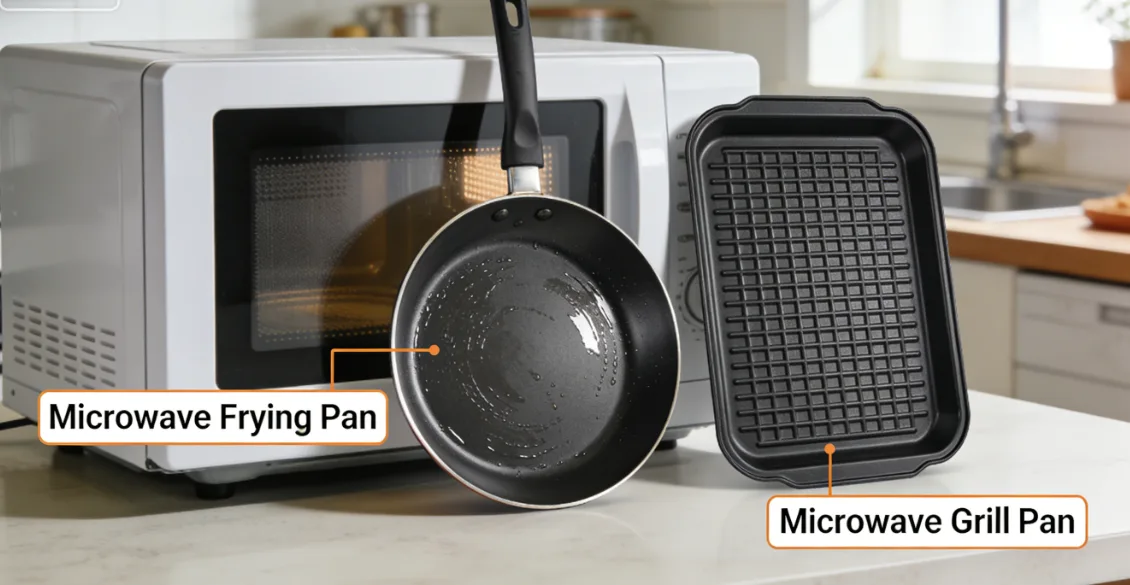
A microwave frying pan (sometimes referred to as a “browning dish” or “crisper pan”) features a flat, smooth cooking surface. Its primary function is to mimic a traditional skillet.
The Mechanism of Action
The base of a high-quality microwave safe frying pan contains a layer of ferrite or other susceptor materials. When exposed to microwaves, these materials absorb the energy and convert it into intense heat. This heat is then transferred to the food via conduction. Because the surface is flat, the entire bottom of your food makes contact with the heated plate, ensuring a uniform, golden-brown finish across the entire surface area.
Best Scenarios for Use
- Fried Eggs: Achieve those crispy edges and a perfectly set white without flipping.
- Pancakes and Crepes: The even heat distribution ensures a consistent color and texture.
- Sautéing Vegetables: Perfect for onions, peppers, and mushrooms where you want a soft interior but a slightly caramelized exterior.
- Reheating Pizza: It revives the crust to its original crunchiness, preventing the dreaded “microwave rubber” texture.
How does a microwave grill pan create restaurant-quality sear marks?
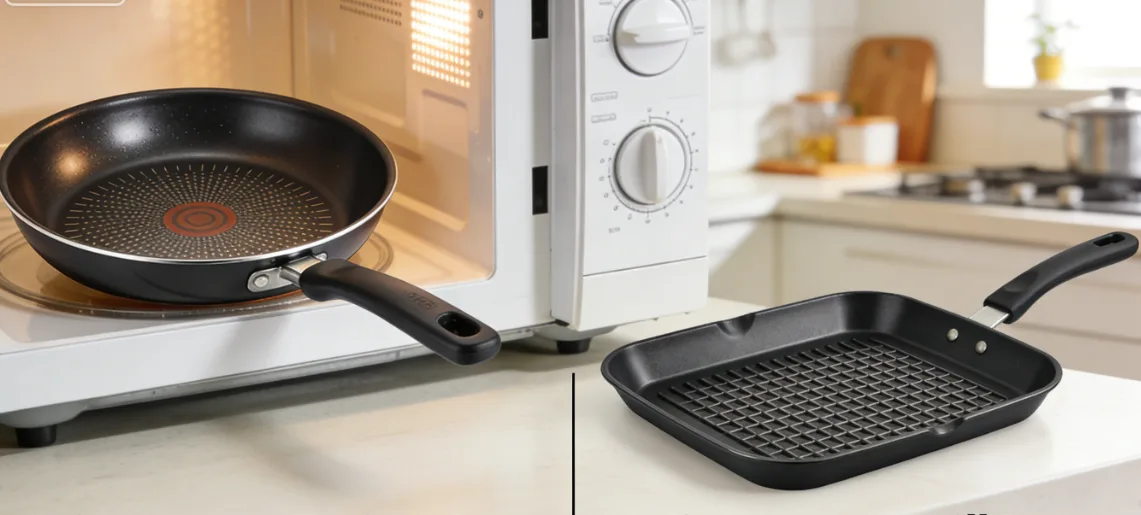
A microwave grill pan is engineered for those who crave the aesthetics and flavor of grilled food. Unlike its flat counterpart, the grill pan features a raised-ridge surface.
Why the Ridges Matter
The ridges serve two critical purposes:
- Searing: The heat is concentrated on the tops of the ridges, which press into the food to create deep, dark sear marks.
- Fat Drainage: The “valleys” between the ridges allow excess fats and juices to drain away from the meat. This prevents the food from “boiling” in its own liquid, which is the main reason microwave-cooked meat often tastes bland and wet.
Flavor Profile
By elevating the food, the grill pan allows for better airflow around the ingredient. This, combined with the intense heat of the ridges, creates a “charred” flavor that is much closer to an outdoor grill or a cast-iron griddle than a standard microwave dish.
Microwave frying pan vs microwave grill pan: what are the primary functional differences?
To help you visualize the choice, here is a technical comparison between these two types of microwave cooking cookware.
| Feature | Microwave Frying Pan | Microwave Grill Pan |
|---|---|---|
| Surface Design | Flat and smooth | Raised ridges with grooves |
| Primary Cooking Goal | Uniform browning and crisping | Searing, charring, and fat reduction |
| Heat Distribution | Constant across the entire base | Concentrated on ridges |
| Fat Management | Food sits in its own oils/juices | Fat drains into the grooves |
| Ideal Foods | Eggs, pancakes, bacon, pizza | Steaks, burgers, chicken breast, paninis |
| Texture Result | Crunchy and evenly golden | Seared outside, juicy inside |
How does susceptor technology make a microwave safe frying pan possible?
You might have been told never to put metal in a microwave. So, how can a microwave safe frying pan be made of materials that get hot enough to fry food?
The Science of Susceptors
The “magic” ingredient is a susceptor. This is a material (often a ceramic-metal composite) that is “tuned” to the frequency of the microwave (usually 2.45 GHz). Instead of reflecting the waves (which causes sparks) or letting them pass through (like glass), the susceptor vibrates at a molecular level, generating thermal energy.
Shielding and Protection
Professional-grade microwave cooking cookware often employs a “shielding” design. The lid is typically made of a material that blocks microwaves from reaching the food directly. This means:
- Bottom-Up Heating: The food is cooked by the heat of the pan, not by the microwaves themselves.
- Texture Control: This prevents the food from becoming “rubbery” or overcooked in the center before the outside is browned.
What are the best foods to cook in a microwave frying pan vs a microwave grill pan?
Understanding the strengths of each will prevent culinary disappointments.
High-Performance Results with a Frying Pan
- The Perfect Grilled Cheese: A microwave frying pan can toast both sides of the bread simultaneously if you use a dual-plate model, or you can flip it halfway through for a buttery, golden crunch.
- Crispy Bacon: The flat surface ensures every inch of the bacon strip is rendered and crisp.
- Frozen Appetizers: Chicken nuggets, spring rolls, and mozzarella sticks lose their “soggy” reputation when prepared on a flat browning plate.
Professional Results with a Grill Pan
- Ribeye or Striploin Steak: Preheat the grill pan for 2-3 minutes, then place the steak. The result is a medium-rare finish with distinct grill marks.
- Salmon Fillets: The ridges keep the delicate skin from sticking and allow the fat to render out, leaving you with a crispy-skinned fish.
- Paninis and Asparagus: The grill pan is excellent for pressing sandwiches or giving vegetables a “char-grilled” appearance without the bitterness of charcoal.
Is a microwave safe frying pan actually healthier than traditional stovetop cooking?
The short answer is yes, for several scientific and practical reasons.
- Reduced Oil Consumption: Because the surfaces of high-quality microwave safe frying pans are coated with advanced non-stick materials (like ceramic or PTFE-free coatings), you need 50-70% less oil or butter to achieve a crisp finish.
- Nutrient Retention: Microwave cooking is faster than stovetop frying. Shorter exposure to heat preserves heat-sensitive vitamins like Vitamin C and B-vitamins that often break down during long simmering or frying sessions.
- Lower Carcinogens: Traditional charcoal grilling can produce Polycyclic Aromatic Hydrocarbons (PAHs) and Heterocyclic Amines (HCAs) due to smoke and flare-ups. A microwave grill pan provides the “grilled” taste without the open flame and smoke, significantly reducing these risks.
How can you ensure your microwave cooking cookware lasts for years?
Investing in quality microwave cooking cookware requires proper maintenance to ensure the susceptor material and non-stick coating remain effective.
Step-by-Step Maintenance Guide
- Never Use Metal Utensils: Even if the pan claims to be scratch-resistant, stick to silicone or wooden spatulas. Scratches on the surface can lead to “hot spots” and degrade the non-stick performance.
- Avoid Thermal Shock: After removing the pan from the microwave, let it cool down slightly before plunging it into cold water. Extreme temperature shifts can cause the ceramic or metal base to warp.
- Clean the Base Thoroughly: Grease buildup on the bottom of the pan (where it touches the microwave turntable) can interfere with heat conduction. Use a mild degreaser if necessary.
- Hand Wash Recommended: While many are labeled “dishwasher safe,” the high-pressure salts and detergents in dishwashers can eventually wear down the ferrite layer.
What safety standards should you look for when buying microwave safe frying pans?
Not all “microwave pans” are created equal. When shopping for a microwave frying pan vs microwave grill pan, look for the following certifications:
- FDA/LFGB Approval: This ensures the silicone and non-stick coatings are food-grade and won’t leach chemicals at high temperatures.
- BPA and PFOA Free: Crucial for health, especially since these pans reach very high temperatures.
- Wattage Compatibility: Ensure the pan is rated for your microwave’s wattage. Using a pan designed for 800W in a 1200W microwave without adjusting the time can damage the cookware.
FAQ: Everything you need to know about microwave frying and grill pans
Can I use a microwave frying pan in a regular oven or on a stovetop?
No, most microwave safe frying pans are designed exclusively for microwave use. The susceptor materials and silicone handles are specifically engineered to react to microwave frequencies. Using them on a stovetop or in a conventional oven can melt the components, ruin the non-stick coating, or even create a fire hazard. Always check the manufacturer’s manual, as some hybrid ceramic models may allow for oven use, but stovetop use is almost universally prohibited.
Does a microwave grill pan produce a lot of smoke while cooking?
One of the primary advantages of a microwave grill pan is that it produces significantly less smoke than a traditional indoor stovetop grill. Because the microwave environment is enclosed and the heating is localized to the pan’s surface, you won’t trigger your smoke alarm. However, some steam and light vapor are normal when cooking high-fat meats like ribeye or bacon. It is always a good idea to use your kitchen’s exhaust fan or ensure proper ventilation in the room.
How long should I preheat my microwave cooking cookware for best results?
Preheating is the secret to a perfect sear. For most microwave safe frying pans and grill pans, a preheat time of 2 to 3 minutes on high power is sufficient. This allows the susceptor material to reach the necessary temperature to sear the food immediately upon contact. Never preheat an empty pan for more than 5 minutes, as excessive heat can eventually damage the internal bonding of the pan’s layers.
Will these pans fit in a small, compact microwave?
Most microwave cooking cookware is designed with standard microwave dimensions in mind. Frying and grill pans typically range from 9 to 11 inches in diameter. Before purchasing, measure the depth of your microwave and the diameter of your glass turntable. Ensure there is enough clearance for the pan to rotate freely; if the pan hits the walls of the microwave and stops the turntable from turning, it can lead to uneven heating and potential damage to the microwave’s magnetron.
Why does my microwave grill pan have a lid if I want to grill food?
The lid in professional microwave cooking cookware serves two purposes. First, it acts as a “microwave shield,” preventing the waves from hitting the top of the food directly, which keeps it from drying out. Second, it creates a “mini-oven” effect, trapping the heat generated by the pan to cook the food from both sides (conduction from the bottom, convection from the top). For the crispiest results, some recipes suggest removing the lid for the final minute of cooking to allow any remaining moisture to evaporate.


