
Modern kitchens in 2026 are defined by efficiency and the integration of multifunctional appliances. Among these, the microwave grill pan has emerged as a revolutionary tool for urban dwellers and healthy eaters, bridging the gap between rapid microwave heating and the savory sear of a traditional grill. However, as these devices become more technologically advanced, understanding the top causes of microwave grill pan wear and failure is crucial for maintaining kitchen performance.
In this comprehensive guide, we will explore why these specialized pans fail, the science behind their “magic,” and how you can extend the life of your indoor grilling equipment.
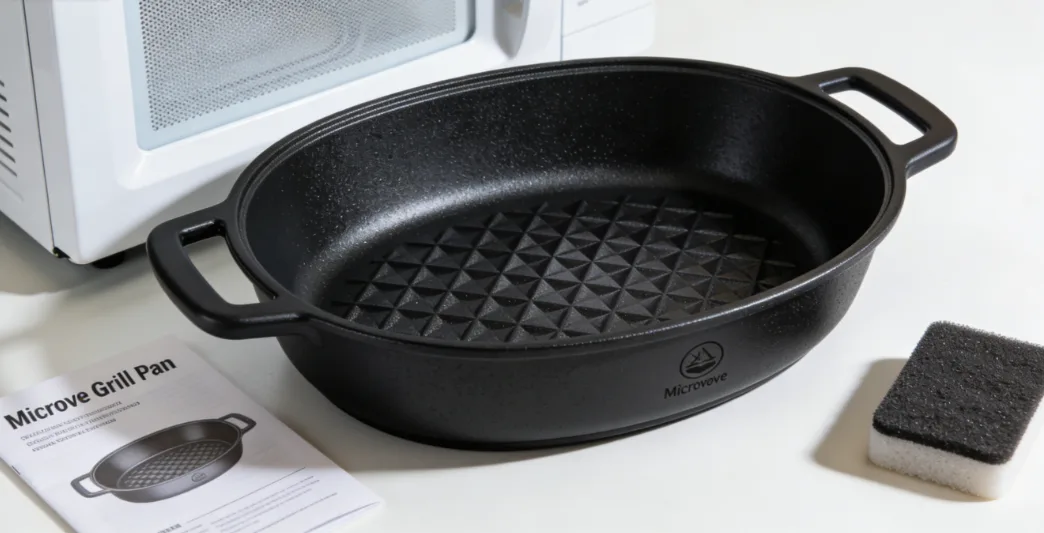
How Does a Microwave Grill Pan Work?
Before diagnosing failure, one must understand the underlying physics. Unlike a standard microwave dish, a microwave grill pan utilizes Susceptor Technology.
The Science of Susceptor Materials
A susceptor is a material that converts electromagnetic energy into thermal energy. In a microwave grill pan, the base contains a thin layer of metallic or ceramic-composite material. When microwaves strike this layer, it heats up rapidly (often exceeding 200°C or 400°F) through a process of dielectric heating and conduction.
Dual-Heating Mechanism
| Feature | Traditional Microwave Heating | Microwave Grill Pan Heating |
|---|---|---|
| Energy Source | Microwaves (2.45 GHz) | Microwaves + Conductive Heat |
| Cooking Method | Water molecule vibration | Surface searing & conduction |
| Effect on Food | Soft, steamed texture | Crispy, charred exterior |
| Requirement | Microwave-safe container | High-heat susceptor base |
What Are the Top Causes of Microwave Grill Pan Failure?
In 2026, user data indicates that most grill pan failures are not due to manufacturing defects but rather “operational fatigue” or improper maintenance. Below are the primary culprits.
A. Thermal Shock and Rapid Temperature Fluctuations
One of the most frequent top causes of microwave grill pan degradation is thermal shock. This occurs when a pan is subjected to extreme temperature changes too quickly—for example, taking a searing hot pan and placing it under cold running water. In 2026 models, which use advanced ceramic coatings, this can cause the coating to crack (crazing) or delaminate from the base.
B. Degradation of the Susceptor Layer
The susceptor material has a finite lifespan. Over hundreds of cycles, the efficiency of the microwave-to-heat conversion may drop. High-wattage microwaves (above 1100W) can accelerate this degradation if the pan is used on maximum power for extended periods without sufficient food to absorb the energy.
C. Improper Cleaning and Abrasive Damage
Many 2026 grill pans feature PFAS-free ceramic non-stick coatings. While safer for health, these are more susceptible to physical scratching than older Teflon models. Using metal spatulas or steel wool is a leading cause of failure, as it exposes the underlying metal, leading to potential “arcing” (sparking) inside the microwave.
Why Does the Non-Stick Coating Peeling Happen?
The integrity of the non-stick surface is vital for the Maillard reaction—the chemical reaction between amino acids and reducing sugars that gives grilled food its distinctive flavor.
Chemical Breakdown of Coatings
- Overheating: If the pan is “dry-heated” (preheated for too long without oil or food), the coating can reach its critical failure temperature.
- Carbonized Oil Buildup: Incomplete cleaning leads to a thin layer of carbonized fat. When reheated, this layer expands differently than the pan, causing the coating to flake off.
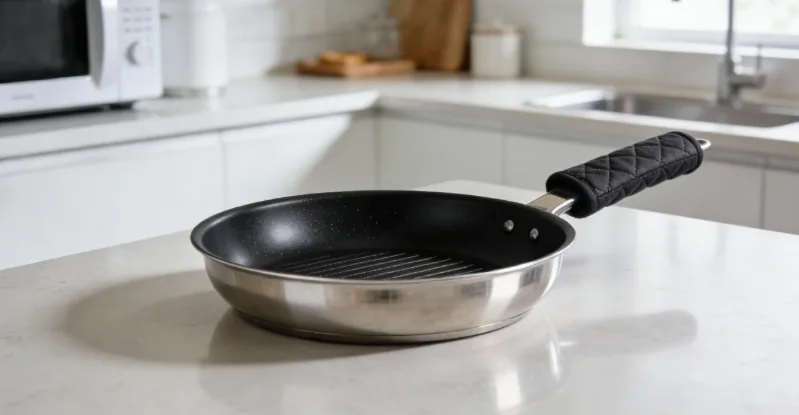
How to Prevent Arcing and Sparking in Your Microwave?
Arcing is the most dangerous form of failure. It occurs when electromagnetic fields become concentrated at sharp metal points or exposed areas where the coating has worn away.
Prevention Steps:
- Inspect for Scratches: Regularly check the bottom and ridges of the pan for any exposed metal.
- Avoid Edge Contact: Ensure the grill pan does not touch the interior walls of the microwave.
- Use Specific Microwave Modes: In 2026, many smart microwaves have a “Grill Mode” or “Combi Mode.” Using standard high-power microwave settings for 15+ minutes can be detrimental to the pan’s structural integrity.
Is Your Microwave Wattage Killing Your Pan?
There is a significant correlation between high-wattage inverter microwaves and the lifespan of grill pans.
Expert Note: “Most microwave grill pans are optimized for 800W to 1000W. Using a 1250W high-output microwave at 100% power can cause the susceptor to overheat beyond its design parameters within 3 minutes.” — Kitchen Tech Review 2026
Recommended Power Settings
- Preheating: 600W – 800W for 2 minutes.
- Searing Meat: 800W for 5-7 minutes.
- Vegetables: 600W for 4-5 minutes.
How to Extend the Life of Your Microwave Grill Pan?
To ensure your investment lasts through 2026 and beyond, follow these professional maintenance steps.
Step-by-Step Cleaning Guide
- Cool Down: Allow the pan to reach room temperature naturally (approx. 15 minutes).
- Deglaze: Use a small amount of warm water to loosen burnt-on juices.
- Soft Scrub: Use a silicone sponge or a soft cloth with pH-neutral detergent.
- Dry Thoroughly: Moisture trapped in the ridges can lead to oxidation of the base over time.
Comparison: 2026 Top Brands vs. Generic Models
When looking at the top causes of microwave grill pan issues, quality of manufacturing plays a role.
| Brand Type | Typical Lifespan | Coating Material | Failure Risk |
|---|---|---|---|
| Premium (e.g., Jean Patrique) | 3-5 Years | Advanced Ceramic | Low (Thermal Stress) |
| Mid-Range (e.g., Whirlpool) | 2-3 Years | Multi-layer Susceptor | Medium (Coating Wear) |
| Budget/Generic | 6-12 Months | Single-layer Film | High (Arcing/Peeling) |
FAQ: Common Questions About Microwave Grill Pan Failures
Why does my microwave grill pan stop getting hot after a few months?
This is typically due to Susceptor Fatigue. The internal material that converts microwaves to heat can lose its ability to respond to electromagnetic waves if it has been consistently overheated or used in a microwave with an uneven magnetron distribution.
Can I use a metal scrub brush to clean the grill ridges?
No. Using metal brushes is one of the top causes of microwave grill pan failure. It destroys the non-stick coating and the protective barrier, which can lead to rusting of the base or sparking during the next use. Use a nylon brush or a specialized silicone scraper.
Is it safe to use a grill pan if the coating is scratched?
If the scratch is deep enough to reveal the base metal, it is no longer safe. Exposed metal in a microwave can cause “arcing,” which may damage your microwave’s magnetron or even start a fire. If you see silver metal through the black or grey coating, it is time for a replacement.
Why do I see smoke when using my microwave grill pan?
Smoke usually indicates carbonized residue from previous cooking sessions or that the oil used has a low smoke point. For microwave grilling in 2026, it is recommended to use high-smoke-point oils like Avocado oil or Grapeseed oil rather than extra virgin olive oil.
Does the “Grill” function on my microwave affect the pan differently?
Yes. If your microwave has a built-in heating element (Grill Mode), the pan receives heat from both the microwave waves and the radiant heat from above. This dual-source heating is more efficient but requires the pan to be rated for “Combi-Cooking” to avoid warping the handles or lid.


