
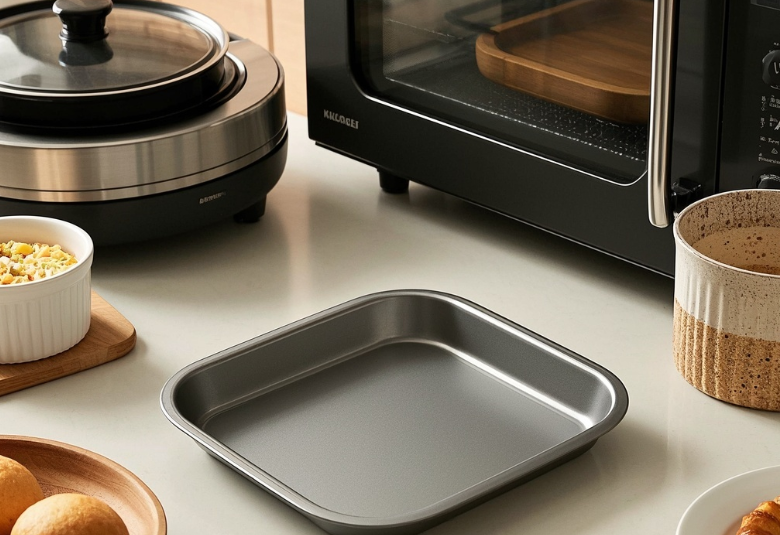
Finding a reliable Microwave Frying Pan Manufacturer demands a systematic approach. Businesses must identify critical elements of manufacturer reliability for their operations. This includes understanding production capabilities and quality control. Navigating the Chinese manufacturing landscape requires careful attention to quality and trust. A quality microwave oven frying pan ensures consumer satisfaction. Consider manufacturers who produce a durable microwave safe grill pan. For example, a Junsheng microwave frying pan demonstrates a commitment to innovation. Understanding why use a microwave frying pan helps in selecting the right partner. Reliable manufacturers also address concerns like does microwave frying pan damage microwave.
Key Takeaways
- Start your search for manufacturers on big online business sites like Alibaba. Also, ask people in your industry for their ideas.
- Check a manufacturer’s papers and certificates. Look for ones like ISO 9001 and food safety rules like EU laws. This shows they make good products.
- Ask for product samples. Test them to see if they work well and are strong. This helps you check the quality before you buy a lot.
- Talk clearly with manufacturers. Use simple words and write down all agreements. This helps avoid mistakes and builds trust.
- Always check the factory. This makes sure they make products well and treat workers fairly. It helps you find a good partner.
Defining Reliability and Initial Manufacturer Research

Key Characteristics of a Reliable Microwave Frying Pan Manufacturer
A reliable manufacturer consistently delivers high-quality products. They maintain transparent communication channels. Such a company possesses robust production capabilities. They adhere to international quality standards. Ethical business practices are also paramount. A reliable partner offers consistent product quality. They meet delivery deadlines. This ensures a smooth supply chain for your business.
Starting Your Search for Microwave Frying Pan Manufacturers Online
Begin your search for a Microwave Frying Pan Manufacturer on reputable B2B platforms. Websites like Alibaba, Global Sources, and Made-in-China host numerous suppliers. Filter results by product type and location. Review company profiles carefully. Look for detailed product descriptions and certifications. Many manufacturers also maintain their own professional websites. These sites often provide deeper insights into their operations and product lines. Initial online research helps identify potential partners.
Leveraging Industry Networks for Manufacturer Recommendations
Industry networks offer valuable insights. Attend relevant trade shows and exhibitions. These events provide direct access to manufacturers. Speak with other businesses in your sector. They can offer recommendations based on their experiences. Professional organizations and forums also serve as excellent resources. Referrals from trusted sources often lead to more reliable partnerships. These connections provide a layer of vetting. They help you find a manufacturer with a proven track record.
In-Depth Vetting of Potential Microwave Frying Pan Manufacturers
Evaluating Manufacturer Credentials and Certifications
Thoroughly evaluating a manufacturer’s credentials and certifications is crucial. These documents confirm a company’s adherence to industry standards and regulatory requirements. For instance, manufacturers of food contact materials, such as microwave frying pans, must comply with specific regulations. The EU Framework Regulation (EC) No 1935/2004 sets fundamental rules for food contact materials in the EU. It ensures these materials do not transfer harmful substances to food or alter its composition, taste, or odor. This regulation also mandates Good Manufacturing Practice (GMP), a Declaration of Compliance, and traceability. Furthermore, EU Regulation (EU) No 10/2011 specifically addresses plastic food contact materials, listing authorized substances and setting specific migration limits to prevent harmful substance transfer. The Good Manufacturing Practice (GMP) Regulation (EC) No 2023/2006 ensures consistent production and quality control for food contact materials. It requires manufacturers to implement effective quality assurance and control systems to prevent contamination.
Beyond regulatory compliance, look for certifications like ISO 9001, an international standard for quality management systems. This standard helps manufacturers meet customer and regulatory requirements, ensuring consistent product quality through systematic production processes. HACCP (Hazard Analysis Critical Control Points) provides a preventive food safety approach. It identifies and controls physical, chemical, and biological hazards during material sourcing, production, and packaging to prevent contamination.
BRCGS (Brand Reputation through Compliance Global Standards) is a global standard for packaging materials, ensuring the safety, legality, and quality of food contact packaging. ISO 22000 offers a comprehensive food safety management system, providing a framework for managing food safety risks across the food chain.
Verifying the authenticity of these credentials is also essential. Manufacturers often provide methods for verification. You can verify the validity of issued credentials via a Certifier’s Open API using a unique credential link. An Issuer KYC (Know Your Customer) procedure verifies the issuer’s identity, ensuring trust and legitimacy. A foolproof UUID-based system guarantees the uniqueness and authenticity of credentials.
Blockchain technology secures credentials, making them tamper-proof and forgery-resistant, similar to cryptocurrencies. When issued, credentials are encrypted and recorded on the blockchain with a unique digital signature created by the issuer’s private key. Each credential links to a Decentralized Identifier (DID) for added security and authenticity. This allows for instant online verification, eliminating delays.
Tamper-proof security ensures credentials cannot be forged or altered, with a unique digital fingerprint proving authenticity. Digital portability means credentials store in a digital wallet, accessible anywhere, and shareable instantly. The technology adheres to World Wide Web Consortium (W3C) standards for consistent functionality across platforms. When shared, the system automatically checks the blockchain to confirm genuineness and lack of tampering.
Employers can verify credentials by scanning a QR code or clicking a link for instant authentication. Credentials can also be revoked directly through the blockchain, immediately updating their status to prevent verification.
Assessing Production Capabilities and Quality Standards
Evaluating a manufacturer’s production capabilities and quality standards provides insight into their operational excellence. Assess the waste and emissions generated during manufacturing processes. For example, metal extrusion involves hydraulic fluids, lubricants, oils, and particulate matter like metal oxides and organic compounds. Steel painting and curing processes, such as electro-deposition, can result in volatile organic compound (VOC) and hazardous air pollutant (HAP) emissions, smoke, and odor. Manufacturers should have treatments in place to meet air discharge standards. Plastic molding, particularly injection molding, also releases VOC, HAP, and particulate matter, and can cause thermal degradation of additives. Electronic components and circuit board manufacturing involve chemical substances in wastewater (copper, organic matter, ammonia) and significant electricity consumption, contributing to greenhouse gas emissions.
Consider the release of butanone from capacitor production. Manufacturers typically test assembled products for 50-100 hours continuously and conduct extensive measurements to meet federal regulations, which also contributes to greenhouse gas production.
A reliable Microwave Frying Pan Manufacturer prioritizes safe and reliable material selection. They use food-grade silicone, high-quality aluminum alloy, and nontoxic nonstick coatings. This ensures no harmful substances release during microwave heating or stovetop use.
Evaluate key product advantages that enhance user convenience. These include microwave compatibility, multifunctionality, space-saving collapsible designs, and smoke-removing and odor-eliminating capabilities. Look for strict company certifications like FDA and LFGB, which indicate adherence to international food safety and quality standards. Assess the overall design and manufacturing quality, including non-stick surfaces and dishwasher-safe components for easy cleaning. Innovative designs, such as 2-in-1 steamer cookers, also demonstrate a manufacturer’s commitment to quality and user experience.
Requesting and Evaluating Samples from Microwave Frying Pan Manufacturers
Requesting samples is a critical step in the vetting process. Samples allow you to physically inspect the product quality, materials, and craftsmanship. You can test the microwave frying pan for its intended use, assessing its durability, functionality, and ease of cleaning. This hands-on evaluation helps confirm if the manufacturer’s claims align with the actual product. The typical lead time for receiving samples from a microwave frying pan manufacturer is 7-15 days. Plan this into your sourcing timeline. Evaluate multiple samples from different potential suppliers to make an informed comparison. Pay attention to packaging, labeling, and any accompanying documentation. This provides a holistic view of the manufacturer’s attention to detail and professionalism.
Effective Communication and Negotiation with Manufacturers
Establishing Clear Communication Protocols with Your Manufacturer
Establishing clear communication protocols with a Microwave Frying Pan Manufacturer is paramount for a successful partnership. Businesses leverage applications like WeChat for strengthening business liaisons. They ensure agreements are clear, unambiguous, and mutually agreed upon to detect misinterpretations early. Making information verification a standard practice prevents misunderstandings and errors. Patience and persistence foster respect and create lucrative opportunities. Providing comprehensive technical drawings, material specifications, and tolerances ensures accurate translation using international standards. Hiring translators or bilingual staff avoids sole reliance on machine translations for technical terms.
Establishing schedules for monitoring project progress and addressing issues early uses video calls, emails, and messaging apps. Being explicit in requirements, avoiding vague language, and confirming understanding prevents ambiguity. Setting achievable deadlines and discussing lead times, production capabilities, and flexibility upfront sets realistic expectations. Building strong relationships, known as Guanxi, is crucial. Visiting suppliers in person, using WeChat video calls, and sending regular messages builds trust and rapport.
Suppliers who trust you often go the extra mile. Documenting everything, including agreements and specifications, in both English and Chinese, is essential.
Negotiating Pricing and Payment Terms for Microwave Frying Pans
Negotiating pricing and payment terms requires careful consideration. Businesses should seek clear pricing structures, including unit costs, tooling fees, and shipping expenses. They establish payment schedules, often involving an upfront deposit, progress payments, and a final balance upon completion or shipment. Exploring volume discounts and long-term partnership incentives benefits both parties. Understanding Incoterms clarifies responsibilities for shipping, insurance, and customs duties. This ensures transparency and avoids unexpected costs.
Understanding and Finalizing Manufacturing Contracts and Agreements
Finalizing manufacturing contracts and agreements demands meticulous attention to legal details. Drafting contracts in Chinese is crucial for clarity and accurate interpretation within the local legal framework. This minimizes misunderstandings and prevents manipulation by unknown translators. Adapting contracts to comply with Chinese law aligns terms with specific legal requirements and business practices, reducing legal risks. Assigning jurisdiction within China for contracts makes dispute resolution more accessible and effective. Utilizing NNN (Non-Disclosure, Non-Use, Non-Circumvention) agreements is vital for protecting proprietary information and preventing IP misuse. Proactively securing patents and trademarks is important due to China’s first-to-file system, ensuring legal rights and protection against IP infringements.
Ensuring Quality Control and Building Long-Term Partnerships

Implementing Robust Quality Assurance for Microwave Frying Pans
A reliable Microwave Frying Pan Manufacturer implements robust quality assurance protocols. They begin by understanding material standards and certifications. This ensures materials like food-grade aluminum, carbon steel, and ceramic meet strict industry standards. These materials must be free from harmful chemicals. Suppliers provide documentation for certifications such as 21 CFR Part 177 for plastics, 21 CFR Part 175 for coatings, and ASTM C1607-12 for ceramicware. Manufacturers also evaluate supplier testing protocols. Robust testing verifies material integrity and product performance.
This includes checks for durability, heat resistance, and chemical leaching. Suppliers conduct regular internal testing and utilize third-party laboratories for independent verification. Finally, assessing regulatory compliance and safety standards is crucial. Suppliers adhere to all relevant safety standards in target markets.
Examples include Good Manufacturing Practice (GMP) under Regulation (EC) No 2023/2006 in the EU, with a Declaration of Compliance (DoC) for regulations like (EU) No 10/2011. In the US, state-specific regulations like Vermont’s Bill H.152, which bans PFAS, and New York’s Bill A.6932, requiring BPA warning labels, must be followed.
Conducting Factory Audits of Your Chosen Microwave Frying Pan Manufacturer
Conducting factory audits provides essential insights into a manufacturer’s operations and commitment to quality. Businesses perform these audits to verify production capabilities, assess quality management systems, and ensure ethical labor practices. An audit team typically inspects production lines, examines quality control checkpoints, and reviews documentation related to materials and processes. They also evaluate worker conditions and safety protocols.
Audits can occur at various stages: pre-production audits confirm a factory’s readiness, in-process audits monitor ongoing quality during manufacturing, and pre-shipment inspections verify the final product before dispatch. Engaging independent third-party auditors often provides an unbiased assessment, ensuring transparency and adherence to international standards.
This proactive approach helps mitigate risks and confirms the chosen Microwave Frying Pan Manufacturer meets all specified requirements.
Fostering a Sustainable Relationship with Your Manufacturer
Fostering a sustainable relationship with a manufacturer offers numerous advantages. This collaboration drives product and service innovation through shared R&D and idea exchange, leading to faster time-to-market. It also helps manage and reduce risks by enhancing collaboration for risk assessment, mitigation, and contingency planning, safeguarding against disruptions. Businesses achieve better compliance with regulatory requirements by automating tasks and ensuring all partners adhere to necessary standards, avoiding fines and reputational damage. A strong partnership creates better customer experiences by equipping distribution and sales partners with tools and training for consistent, high-quality service. It enables expansion into new markets by streamlining partner onboarding and training in new territories, allowing faster market entry. Manufacturers gain data-driven insights through advanced analytics tools, providing intelligence on partner interactions, market trends, and customer behavior.
This approach drives scalable growth by providing the infrastructure to efficiently manage an expanding network of partners while maintaining relationship quality. Supply chains become optimized by ensuring inventory visibility and streamlining operations, leading to reductions in time and operational costs.
Quality control improves across partners by establishing and communicating high-quality standards, reducing defects and recalls. Closer collaboration with suppliers and distributors also reduces costs by identifying savings opportunities and negotiating better terms. Beyond business metrics, these partnerships help achieve sustainability goals through shared commitments and values, such as emissions reduction strategies and circular economy principles.
They optimize the supply chain for sustainability by gaining end-to-end visibility, making environmentally conscious supply decisions, and implementing waste diversion programs. Partners access best practices and expertise across industries, allowing for the integration of sustainable design, packaging, and logistics.
This collaboration drives industrial decarbonization by optimizing product design with low carbon footprint materials, recycled content, and increased recyclability.
Despite these benefits, maintaining a long-term manufacturing partnership in China presents common challenges. Businesses often face rising costs, including wage inflation and increased operational expenses. Supply chain disruptions and logistics issues can also impact operations. Compliance and regulatory uncertainty, encompassing stricter manufacturing and trade regulations, as well as global trade compliance, pose significant hurdles. Intellectual property (IP) and quality control risks, such as IP theft, counterfeiting, and material substitutions, also require constant vigilance.
Securing a reliable Microwave Frying Pan Manufacturer demands a systematic approach. Businesses must assess manufacturing capabilities, design support, and strict quality control, including ISO 9001 and HACCP certifications. Thorough due diligence ensures material quality and adherence to safety standards like EU Regulation (EC) No 1935/2004. This process leads to efficient logistics and scalable operations, crucial for a resilient supply chain. Diversified sourcing and responsive communication build successful, long-term partnerships.
FAQ
What certifications should a reliable microwave frying pan manufacturer possess?
A reliable manufacturer holds certifications like ISO 9001 for quality management. They also comply with food safety regulations such as EU Framework Regulation (EC) No 1935/2004. Specific standards like EU Regulation (EU) No 10/2011 for plastics are also important.
How can businesses ensure the quality of microwave frying pan samples?
Businesses physically inspect samples for material quality and craftsmanship. They test durability, functionality, and ease of cleaning. This hands-on evaluation confirms if manufacturer claims match the actual product.
Why is clear communication vital when working with Chinese manufacturers?
Clear communication prevents misunderstandings and errors. It ensures accurate translation of technical specifications. Establishing schedules and documenting agreements in both English and Chinese fosters trust and smooth project progress.
How do businesses protect their intellectual property in China?
Businesses use NNN (Non-Disclosure, Non-Use, Non-Circumvention) agreements. They proactively secure patents and trademarks due to China’s first-to-file system. This protects proprietary information and prevents IP misuse.


