
Microwave cooking has evolved far beyond simply reheating leftovers. With the introduction of specialized cookware like the microwave grill pan, home cooks can now achieve textures and flavors previously reserved for outdoor grills or stovetop searing. This guide provides a deep dive into the technology, selection criteria, and professional techniques required to master this versatile tool.
What Is a Microwave Grill Pan and How Does It Work?
A microwave grill pan is a specialized piece of cookware designed to convert microwave energy into thermal heat. Unlike standard microwave-safe glass or plastic, these pans utilize susceptor technology.
A susceptor is a material (often integrated into a ferrite-based bottom or a silicone-encased metal plate) that absorbs electromagnetic waves and generates intense heat on the pan’s surface. This allows the pan to reach temperatures exceeding 200°C (400°F) , enabling the Maillard reaction—the chemical process responsible for the browning and distinct flavor of grilled food.
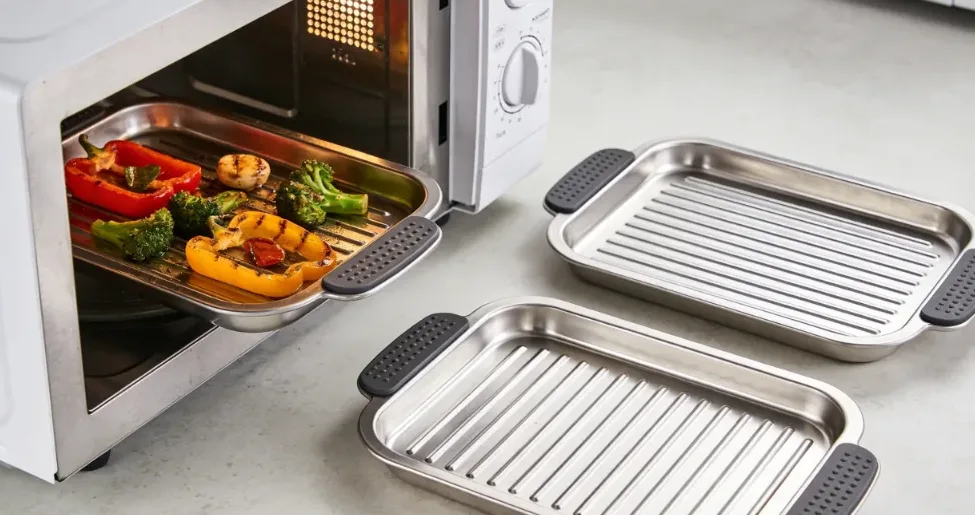
Key Components of a High-Quality Grill Pan
| Component | Material/Function | Purpose |
|---|---|---|
| Base Plate | Ferrite or Carbon Steel | Converts microwaves into radiant heat. |
| Coating | Non-stick PTFE or Ceramic | Prevents food sticking and eases cleaning. |
| Ridges | Raised Aluminum or Steel | Creates grill marks and lifts food away from fats. |
| Lid | Microwave-shielding Metal/Silicone | Presses food for even contact and prevents splatters. |
Why Should You Use a Microwave Grill Pan Instead of a Traditional Grill?
For many, the primary barrier to grilling is the setup time and weather dependence. The microwave grill pan bridges the gap between convenience and culinary quality.
- Speed and Efficiency: Preheating takes roughly 2–3 minutes, and most meats cook in under 10 minutes.
- Healthier Results: The raised ridges allow excess oils and fats to drain away from the protein, reducing the overall calorie count.
- Consistent Results: Unlike charcoal, which can have “hot spots,” microwave grill pans provide a uniform heating surface for predictable cooking times.
- Easy Cleanup: Most modern pans are dishwasher safe or require a simple wipe-down due to high-grade non-stick coatings.
How Do You Choose the Best Microwave Grill Pan?
Selecting the right pan involves more than just picking a brand. You must consider the specific requirements of your microwave and your cooking habits.
Consider the Size and Shape
Measure the internal dimensions of your microwave, specifically the turntable diameter. A pan that is too large will hit the walls, preventing rotation and causing uneven heating or “arcing.” Common shapes include:
- Round: Best for standard turntables and pizzas.
- Square/Rectangular: Ideal for pressing sandwiches (paninis) or grilling multiple kebabs.
Evaluate the Material Safety
Ensure the product is BPA-free and uses PFOA-free non-stick coatings. High-end models often use food-grade silicone handles that remain cool to the touch, preventing burns when removing the pan from the microwave.
Press vs. Open Plate
- Double-sided (Press): Features a heavy lid that acts as a second grill plate. Perfect for paninis, steaks, and burgers as it grills both sides simultaneously.
- Single-sided (Crisper Plate): A simple flat or ridged plate. Good for frozen snacks, bacon, or pizza.
What Are the Essential Steps to Use a Microwave Grill Pan Correctly?
To achieve professional-grade results, you must follow a specific operational sequence. Skipping the preheating phase is the most common mistake made by beginners.
Step-by-Step Operating Procedure
- Preheat the Pan: Place the empty grill pan (or both plates if it’s a press) in the microwave. Run it on high power for 2 to 3 minutes. This builds the thermal energy needed for an instant sear.
- Prepare the Food: While the pan heats, pat your meat or vegetables dry. Moisture is the enemy of browning; excess water leads to steaming rather than grilling.
- Lightly Oil: Brush a small amount of high-smoke-point oil (like avocado or grapeseed oil) directly onto the food rather than the pan.
- The Sizzle: Place the food on the hot pan. You should hear an immediate sizzle. If using a press, lock the side clips or place the top lid firmly.
- Cook in Intervals: Microwave in short bursts (e.g., 3 minutes, then flip or check). This prevents overcooking and allows you to monitor the “doneness.”
- Resting Time: Just like traditional grilling, let meat rest for 2 minutes on the pan after removing it from the microwave to allow juices to redistribute.
Which Foods Perform Best in a Microwave Grill Pan?
Not every dish is suitable for this method. Focus on items that benefit from high-heat, short-duration cooking.
- Proteins: Chicken breasts, thin-cut ribeye steaks, salmon fillets, and shrimp.
- Vegetables: Asparagus, sliced zucchini, bell peppers, and corn on the cob.
- Sandwiches: Gourmet grilled cheese, turkey paninis, and cubanos.
- Frozen Goods: Frozen pizza, breaded chicken nuggets, and potato wedges (the pan eliminates the “soggy” texture typical of microwaved frozen food).
What Are the Most Common Mistakes to Avoid?
Even with the best equipment, certain errors can ruin your meal or damage your appliance.
- Using Metal Utensils: Never use forks or metal spatulas on the pan surface. This scratches the non-stick coating and ruins the susceptor’s effectiveness. Use heat-resistant silicone or wood.
- Overcrowding the Pan: Leaving space between items allows steam to escape. If the pan is crowded, the temperature drops, and the food will boil in its own juices.
- Washing While Hot: Drastic temperature changes (plunging a hot pan into cold water) can cause thermal shock, leading to warping or cracking of the coating.
- Neglecting the Turntable: Always ensure the turntable is on. If the pan remains stationary, the microwave “hot spots” will heat only one section of the susceptor, potentially melting the silicone components.
FAQ
Can I use a microwave grill pan in a regular oven?
Most microwave grill pans are specifically engineered for microwave energy and should not be used in conventional ovens or on stovetops unless explicitly stated by the manufacturer. The silicone components and specific susceptor materials may degrade or release fumes under the ambient heat of a traditional oven.
Do microwave grill pans actually create real grill marks?
Yes, if preheated correctly. The raised ridges reach temperatures high enough to caramelize sugars and proteins on contact. For the best marks, ensure the food is pressed firmly against the ridges using the weighted lid provided with most professional-grade grill pans.
How do I clean a microwave grill pan without damaging it?
Wait for the pan to cool completely. Use warm, soapy water and a soft sponge. Avoid abrasive scouring pads. For stubborn burnt-on grease, soak the pan in warm water with a tablespoon of baking soda for 15 minutes before gently wiping it clean.
Is it safe to use a metal grill pan in the microwave?
Standard metal pans are unsafe, but specialized microwave grill pans are designed with “shielded” metal or rounded edges that prevent arcing. Always ensure the pan is marketed specifically for microwave use and check that it does not touch the interior walls of your microwave.
How long does it take to cook a steak in a microwave grill?
After a 3-minute preheat, a 1-inch thick steak typically takes 4 to 6 minutes for medium-rare. It is recommended to cook for 3 minutes, flip the steak (if using a single-sided pan), and then cook in 1-minute increments until the desired internal temperature is reached.