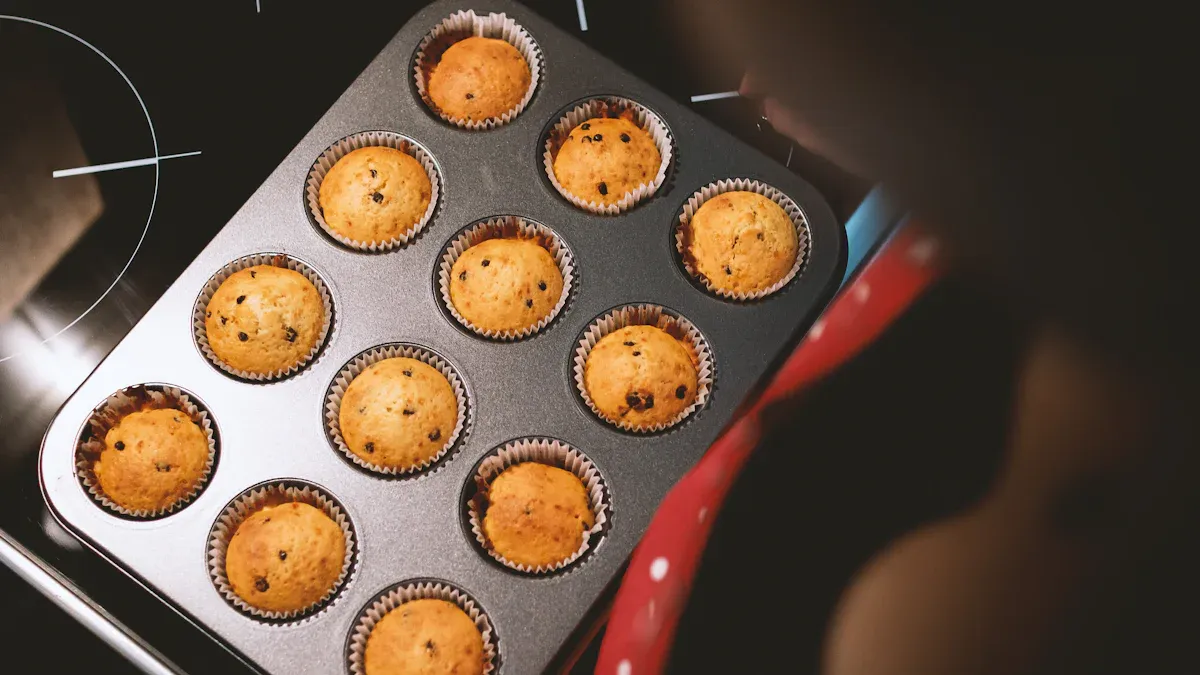
Can a Microwave Baking Pan Replace a Traditional Oven Baking Tray? Many people ask this. A microwave oven baking pan generally cannot fully replace a traditional oven baking tray for most conventional baking tasks. Microwaves and ovens cook food in fundamentally different ways, leading to distinct results. While a microwave safe baking pan offers convenience for specific uses, it lacks the ability to consistently brown, crisp, or evenly bake food like an oven. Even specialized items like a Microwave Grill Pan serve different purposes. Understanding these differences is key when considering "Silicone or Ceramic Microwave Baking Pan: Which One Should You Buy?"
Key Takeaways
- Microwave baking pans cannot fully replace traditional oven baking trays. They cook food differently.
- Microwaves do not brown food or make it crispy. They heat water molecules, which steams the food.
- Traditional ovens use dry heat. This creates golden crusts and complex flavors through chemical reactions.
- Microwave pans are good for reheating food. They are also good for melting ingredients and cooking specific microwave recipes.
- Always check if a pan is safe for the microwave or oven. Not all materials work in both appliances.
Understanding the Fundamental Differences in Cooking Methods
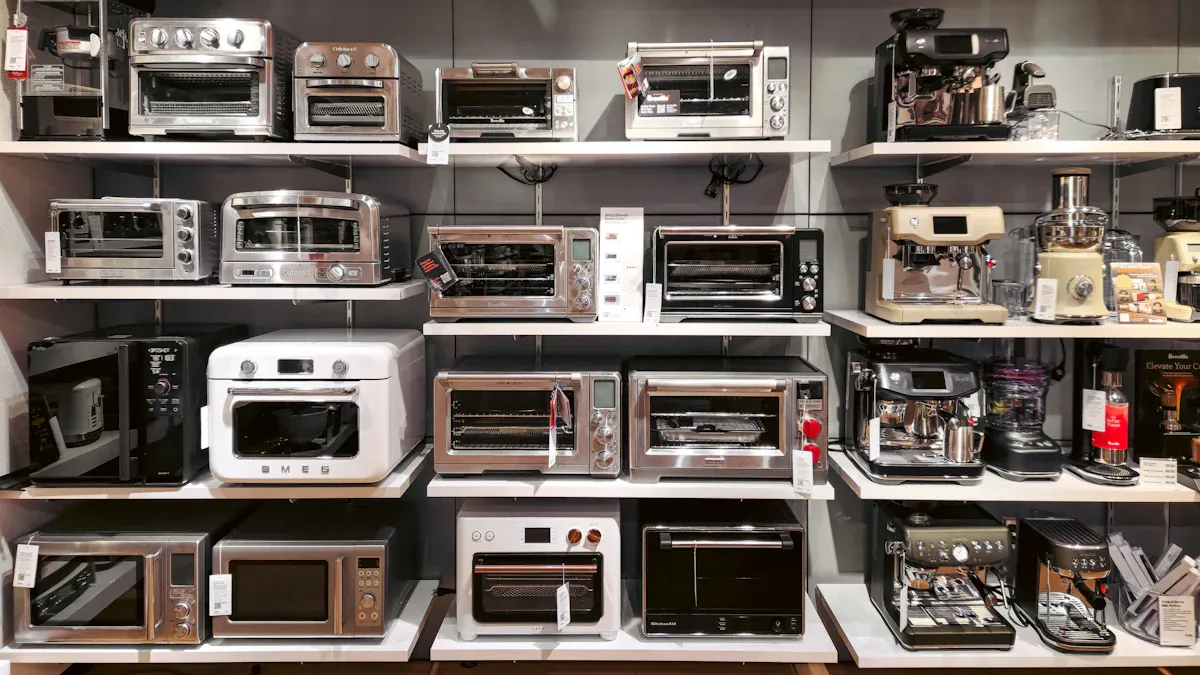
How Microwave Ovens Cook Food
Microwave ovens cook food in a unique way. They primarily heat food through a process called dielectric heating. This method involves the absorption of microwave energy by water molecules inside the food. These water molecules have a V-shaped structure. They act like tiny magnets. When exposed to the high-frequency electrical field of the microwaves, these molecules rotate and vibrate intensely. This rapid movement and friction between the vibrating molecules create heat. This process quickly raises the food’s temperature. Another way microwaves heat food is through resistive heating. The electric fields of microwaves also make electrons move in foods that conduct electricity, even if poorly. Foods with dissolved salts, for example, have some electrical conductivity. As these currents flow through the food, they meet electrical resistance. This resistance generates heat, similar to how a light bulb filament heats up.
How Traditional Ovens Cook Food
Traditional ovens use different methods to cook food. They rely on three main ways to transfer heat: convection, conduction, and radiant heat. Conduction happens when heat moves directly from one item to another that it touches. For instance, heat transfers from the oven walls to a baking pan, and then to the food. Convection involves heat moving through a fluid, like air. In ovens with a fan, hot air circulates for more even and faster cooking. Radiation is when heat transmits through electromagnetic waves. In traditional ovens, radiant heat from gas burners or heating elements penetrates the food, cooking it from the inside out.
Impact of Cooking Method on Food Texture and Browning
The cooking method greatly affects food’s texture and how it browns. Microwave baking often struggles to create a crispy texture. For crisping, a conventional oven or toaster oven works best. You can also pre-toast ingredients before microwaving them. Microwave baking can also dry out goods if cooked for too long. Adding a cup of water for steam or using moist ingredients like yogurt can help. Microwave-baked items, like biscuits, often have a paler surface compared to those from a traditional oven. Traditional oven-baked biscuits show much more color. Microwave baking can also lead to higher moisture content in some products, like French fries, compared to traditional frying. Biscuits can become harder with longer microwave times and higher power settings.
Limitations of Microwave Baking Pans for Conventional Baking
The Absence of Maillard Reaction and Browning
Microwave baking pans face a significant hurdle when people try to use them for conventional baking: they cannot create the rich browning and deep flavors that come from a traditional oven. This happens because microwaves do not trigger the Maillard reaction or caramelization. The Maillard Reaction is a key process for flavor development in cooking. It creates rich and complex tastes in browned foods. This chemical process happens when proteins and sugars in food are exposed to heat. It leads to a series of reactions that produce new compounds. These compounds are responsible for distinct aromas and deep flavors in foods like baked bread.
Browning in bakery products primarily comes from non-enzymatic chemical reactions: the Maillard reaction and caramelization. The Maillard reaction involves reducing sugars and amino acids, proteins, or other nitrogen-containing compounds heated together. Caramelization is a complex group of reactions. It results from direct heating of carbohydrates, especially sucrose and reducing sugars. While both reactions cause browning, the Maillard reaction specifically requires the presence of both sugars and proteins in foods. These reactions typically proceed rapidly in food at temperatures ranging from approximately 140 to 165 °C (280 to 330 °F). Microwave ovens simply do not reach these high surface temperatures. This means foods cooked in a microwave baking pan often come out pale and lack the complex flavors a traditional oven provides. The types of Maillard reaction compounds formed are also influenced by the cooking temperature and duration, as well as the specific sugars and proteins involved.
Texture Discrepancies: Steamed Versus Crispy Results
Another major limitation of microwave baking pans involves texture. Microwaves heat food by exciting water molecules. This process often leads to a steaming effect. This means foods cooked in a microwave baking pan tend to be soft or chewy, rather than crispy. Crispness is a crucial sensory attribute. It features brittle fracture and a semi-rigid sponge-like crust. This crust forms during frying due to water evaporation and molecular interactions. Microwave cooking can lead to a loss of crispness in pre-fried foods. This happens because of oil absorption and water migration.
Achieving a truly crispy texture in a microwave is challenging. Microwaves convert electromagnetic energy into thermal energy. This process differs from conventional oven heating, which uses hot air. While some microwave-safe accessories like crisper trays or grill pans can help, they do not fully replicate the dry heat environment of a traditional oven. People can try to arrange food in a single layer on microwave-safe plates to ensure even heating. They can also use higher power settings for crispier results, adjusting cooking time accordingly. However, the fundamental way microwaves heat food makes it difficult to achieve the desired crispiness that many baked goods require.
Challenges with Even Heat Distribution and Hot Spots
Microwave baking pans also struggle with even heat distribution. Microwave ovens often create "hot spots" and "cold spots" within the food. This means some parts cook faster or more thoroughly than others. The internal electric field distribution causes temperature differences. This distribution is influenced by the relative position of the food and the microwave oven waveguide during rotation. The metal walls of the microwave oven reflect microwaves. This generates standing waves and results in a multi-mode electric field distribution. This leads to an uneven distribution of the electric field on the food’s surface.
Different ingredients in a meal absorb microwave energy at different rates. Foods with higher water content, like berries, absorb energy more efficiently than those with lower water content, like pie crust. This leads to hot spots and cold areas. This happens because of the dipole nature of water molecules and their interaction with the oscillating electromagnetic field. The complex oscillating pattern of electromagnetic waves inside the oven creates standing waves. These waves result in a checkered pattern of high and low electric field intensity spots. This causes certain areas to heat more intensely (hot spots) and others less so. Microwaves typically penetrate food only to a depth of about 1 to 1.5 inches. For thicker foods, this limited penetration means heat must conduct from the outer layers to the inner regions. This can be slow and lead to a hot exterior and cold interior, especially in foods with low thermal conductivity like potatoes. Engineers address this with turntables or mode stirrers to scatter microwaves and promote even heating, but unevenness often remains a challenge.
Material Constraints: Microwave-Safe vs. Oven-Safe Pans
The materials used in baking pans create another big difference between microwave and traditional oven cooking. Not all bakeware works in both appliances. People must always check labels to ensure a pan is safe for the microwave or the oven. Using the wrong type of pan can cause damage to the appliance, the pan, or even create a fire hazard.
Microwave-safe pans need to allow microwaves to pass through them or absorb them safely without melting, sparking, or leaching harmful chemicals into food. Many materials fit this description.
- Ceramic plates often work well in microwaves if they have a "microwave-safe" label. They do not have metallic decorations, cracks, or damage. Ceramic can absorb microwaves and become very hot, so people should handle them carefully. Some glazes on ceramic might contain metals, making them unsafe.
- Glass is another common microwave-safe material. Most microwave glass, like tempered and borosilicate glass (think Pyrex), handles microwave energy well. It is non-porous and heat-resistant. Glass typically does not leach chemicals into food. People should avoid thin or delicate glassware and always check for cracks or chips before use.
- Silicone bakeware is highly heat-resistant and flexible. It is generally microwave-safe. Silicone does not leach chemicals and can withstand a wide range of temperatures. This makes it a popular choice for microwave baking.
- Plastic plates can be microwave-safe, but people need to be careful. Plastics labeled #5 (polypropylene) or CPET (#1) often withstand higher temperatures. BPA-free plastics offer a safer option. However, single-use plastics, like margarine tubs or takeout boxes, are usually not microwave-safe. They can melt or leach toxins into food when heated.
- Paper plates without coatings are generally safe for short reheating times at lower power levels. People should avoid paper plates with plastic or wax coatings. These coatings can melt or release harmful substances. Paper plates are not suitable for extensive cooking.
- Cardboard without plastic or wax linings can sometimes be used for very short reheating. However, it is not designed for microwave use. Cardboard can become soggy, warp, or even burn. It is generally best to avoid using cardboard in the microwave.
- Disposable plastic containers vary greatly in their microwave safety. Many single-use plastic plates can melt, warp, or leach chemicals when heated.
Traditional oven baking trays, on the other hand, often use metal. Metal pans conduct heat efficiently and help with browning. However, metal is strictly forbidden in a microwave oven because it reflects microwaves, causing sparks and potential damage. This fundamental difference in material compatibility means a pan designed for an oven cannot simply go into a microwave, and vice versa, without careful consideration of its material properties.
Microwave-safe materials allow microwaves to pass through or absorb them safely. Oven-safe materials can withstand high, direct heat for conduction and radiation. Always check labels! 🏷️
When Microwave Baking Pans Are a Practical Solution
Microwave baking pans, despite their limitations for traditional baking, offer great convenience for many kitchen tasks. They shine in specific situations where speed and efficiency are more important than browning or crisping. People find them very useful for everyday cooking needs.
Ideal for Reheating and Melting Ingredients
Microwave baking pans are perfect for reheating leftovers. They quickly warm up food without drying it out too much. People also use them often for melting ingredients like butter, chocolate, or cheese. The microwave heats these items fast and evenly, making them ready for recipes in no time. This saves time and effort compared to using a stovetop or oven.
Excelling in Microwave-Specific Recipes
Some recipes are actually designed for microwave cooking. These dishes turn out great in a microwave baking pan. For example, people can make a delicious tuna noodle casserole with vibrant artichokes and zesty capers. They do not even need to pre-cook the pasta. Other popular microwave-specific meals include chicken marsala casserole, one-dish lasagna, or "baked" ziti without boiling the pasta. Creamy beef stroganoff also cooks well in the microwave. These recipes often focus on moist, tender results rather than crispy textures. Even a specialized Microwave Grill Pan can help achieve some browning for certain dishes.
Quick Cooking of Certain Vegetables and Grains
Microwave baking pans are excellent for quickly cooking vegetables and grains. People can steam broccoli, carrots, or green beans in minutes. This method helps vegetables keep their nutrients and bright colors. Grains like rice or quinoa also cook faster in the microwave compared to a stovetop. This makes meal preparation much quicker, especially on busy days.
Exploring Specialized Microwave Bakeware
While standard microwave baking pans have limitations, specialized microwave bakeware offers enhanced capabilities. These items bridge the gap between microwave convenience and traditional oven results for specific tasks.
The Functionality of a Microwave Grill Pan
A Microwave Grill Pan is a clever tool that brings grilling effects to your microwave. This pan uses special technology to absorb microwave energy and quickly convert it into heat. This eliminates the need for preheating and speeds up cooking times. The pan features a square design. This design optimally fits microwave interiors, accommodating elongated foods like fish and baguettes. This promotes uniform heating. A high-quality non-stick interior ensures easy cleanup, requiring only a wipe or quick rinse. People can use a Microwave Grill Pan for various cooking methods beyond just frying. It supports gratin and baking, allowing for diverse dishes like vegetable baked rice and mini pizzas. The Microwave Grill Pan also incorporates smooth, rounded edges to prevent cuts or burns. Many models include heat-resistant handles for safe handling.
Benefits of Convection Microwave Ovens for Baking
Convection microwave ovens offer more than just reheating. They integrate a heating element and a fan to circulate heat throughout their interior. This mechanism transforms the appliance into a miniature convection oven. It enables baking, grilling, and roasting functions in addition to standard microwave operations. Unlike traditional microwaves that use electromagnetic waves for cooking, convection microwaves incorporate an additional heating element and a fan. This allows for the circulation of heat within the cavity. It makes them suitable for baking, broiling, or roasting smaller food portions. A convection microwave operates in at least two modes: a standard microwave mode and a convection mode. In convection mode, it functions like a convection oven, utilizing a heating element and a fan to evenly distribute heat. This dual capability allows for baking, roasting, broiling, and even air frying. Users can alternate between modes for faster cooking.
Versatility of Microwave-Safe Bakeware in Other Appliances
Many types of microwave-safe bakeware also offer versatility in other kitchen appliances. For instance, silicone baking molds or glass dishes often work well in both a microwave and a traditional oven. This multi-functionality means you can prepare a dish in the microwave for quick cooking or reheating, then transfer it to a conventional oven for browning or crisping if needed. This saves space in your kitchen and reduces the number of specialized dishes you need to own. Ningbo Junsheng crafts quality baking pans, pot lids, and OEM solutions. Their focus on innovation means they develop products that are both practical and aesthetically pleasing, often designed for multi-purpose use.
Key Differences in Final Baking Results
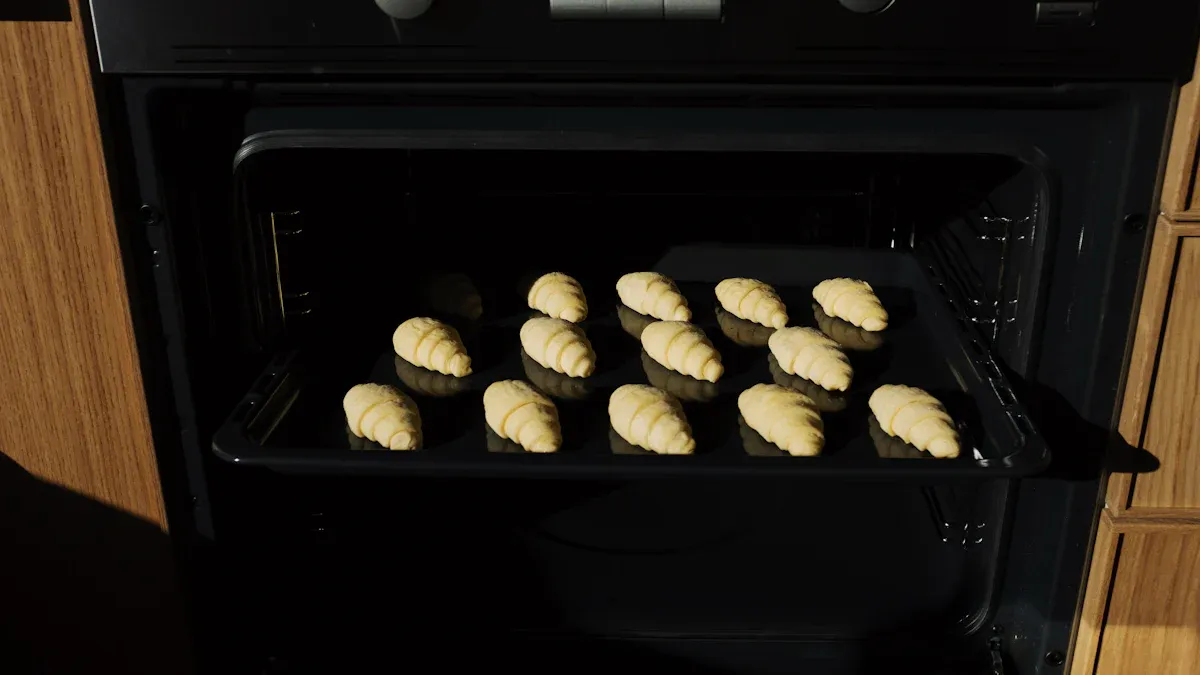
When you bake food, the final product’s look, feel, and taste depend a lot on how you cook it. Microwave baking pans and traditional oven baking trays produce very different results. Understanding these differences helps you choose the right tool for your cooking needs.
Visual Appeal: Golden Crusts Versus Pale Surfaces
One of the most noticeable differences lies in how food looks. Traditional ovens create beautiful golden-brown crusts on baked goods. This happens because the oven’s high, dry heat triggers chemical reactions like the Maillard reaction and caramelization. These reactions give bread, cookies, and casseroles their appealing color and rich aroma.
Microwave baking pans, however, do not achieve this browning. Microwaves heat food by exciting water molecules, which does not create the high surface temperatures needed for the Maillard reaction. As a result, items baked in a microwave often come out with a pale, unappetizing appearance. They lack the deep, golden crust you expect from oven-baked foods.
Textural Qualities: Crispy, Chewy, or Soft
The texture of your baked goods also varies greatly between the two methods. Traditional ovens excel at creating a range of textures, from crispy to chewy. The dry heat removes surface moisture, allowing crusts to form and interiors to develop a specific chewiness. Think of a perfectly crispy pizza crust or a chewy cookie.
Microwave baking, on the other hand, tends to produce softer, often steamed-like textures. Microwaves heat the water inside the food, which can lead to a moist, sometimes rubbery, result. For example, microwave-baked bread often loses more water and has a more porous crumb structure compared to bread baked in a conventional oven. This greater water loss means the bread can become firmer and have an uneven texture. Studies show that even in methods with faster, more intense heat transfer, like air fryers (which share some characteristics with microwave heating), higher baking temperatures can lead to lower moisture content and increased moisture loss in cakes. This suggests that microwave-baked items often have less internal moisture and a more open, porous structure.
Flavor Development: Depth from Browning Versus Simpler Profiles
Flavor is another area where ovens and microwaves diverge. Traditional ovens develop deep, complex flavors through the browning process. The Maillard reaction, in particular, creates hundreds of new flavor compounds, giving foods like roasted meats and baked bread their rich, savory, or sweet notes.
Microwave cooking, while not achieving browning, can still enhance certain flavors. Microwaves promote the creation and absorption of taste compounds. This happens through processes like the Maillard reaction (even without visible browning), lipid oxidative degradation (which produces alcohols and organic acids), and protein hydrolysis. Specific compounds like pyrrole, pyrazine, and sulfur compounds can form through microwave-promoted Maillard processes. Microwaves also change protein structures, which increases sites for volatile chemicals to bind, boosting taste absorption. For instance, microwave cooking can enhance the umami flavor in mushrooms by increasing aspartic and glutamic acid. It can also reduce astringency by decreasing organic acids. Some studies even show microwave-cooked beef slices have higher flavor scores than those made with conventional methods. However, the lack of browning remains a key disadvantage. This can lead to a pale look and sometimes an unsatisfactory flavor, often described as "warmed over" for reheated meats, because the crucial Maillard reactions do not occur at low surface temperatures.
Practical Considerations for Your Kitchen
When people choose kitchen tools, they often think about more than just cooking results. Practical aspects like energy use, space, and safety play a big role. Microwave baking pans and multi-functional appliances offer some clear advantages in these areas.
Energy Efficiency and Speed of Microwave Baking
Microwave ovens can be quite efficient. They generally use less energy than larger kitchen appliances like electric ranges and dishwashers. They also tend to be more efficient than coffee machines and convection ovens. This efficiency often translates to faster cooking times. For baked goods, people can often decrease the cooking time by about 25% when using a microwave compared to a traditional oven. This speed makes microwave baking pans a great choice for quick meals or snacks.
Space-Saving Aspects of Multi-Functional Appliances
Many modern kitchens benefit from appliances that do more than one job. Multi-functional microwave ovens, especially convection models, combine several cooking methods in one unit. This saves valuable counter and cabinet space. Instead of needing a separate oven and microwave, people can have one appliance that handles both tasks. This is particularly helpful in smaller apartments or homes where space is limited.
Safety and Durability of Microwave Baking Pans
Safety is always important in the kitchen. When people use aluminum containers or foil in a microwave, they must follow specific guidelines. They should use new, smooth foil and cover no more than 1/4 of the food’s surface. People must mold the foil smoothly around the food and keep it at least one inch away from the microwave oven walls. They should avoid metal shelves or turntables if the microwave has them. It is always best to use glass, ceramics, and plastics labeled "microwave-safe." Only use aluminum containers or special non-reactive microwavable foil explicitly designed for microwave use. Never completely cover food with aluminum foil.
Durability also matters for baking pans. Undurable pans often cook food unevenly, leading to burnt spots or undercooked sections. Food sticks easily, making removal difficult and damaging presentation. Cheap pans break down quickly under the demands of a busy kitchen, requiring frequent replacements. Pan failures during critical moments disrupt cooking processes, causing delays. Lesser pans are prone to dents and warps from mishandling. Inferior non-stick coatings cause food to stick stubbornly, making cleanup difficult. These coatings wear out quickly, chipping or losing non-stick properties after only a few uses.
A microwave baking pan cannot fully replicate the results of a traditional oven baking tray for most conventional baking. It fundamentally lacks the ability to brown, crisp, and provide the even heat of an oven. While excellent for specific tasks and quick cooking, it does not offer the same versatility. For true baking results, especially those requiring browning and specific textures, a traditional oven and its trays remain indispensable. However, specialized microwave options offer valuable alternatives for certain needs.
Remember, choose the right tool for the job! An oven delivers that perfect golden crust, while a microwave offers speed and convenience for other tasks.
FAQ
Can people bake a cake in a microwave baking pan?
People can bake a cake in a microwave baking pan. However, it will not have a golden crust. The texture will be softer and more steamed. For a traditional cake, an oven works best. 🍰
Why does food not brown in a microwave?
Microwaves do not create the high surface temperatures needed for browning. The Maillard reaction and caramelization require intense dry heat. Microwaves heat water molecules. This results in a steaming effect instead.
Are all microwave-safe pans also oven-safe?
No, not all microwave-safe pans are oven-safe. Metal pans are oven-safe but not microwave-safe. Always check the label on the pan. This ensures it can handle the specific heat of each appliance.
What is a microwave grill pan used for?
A microwave grill pan helps achieve grilling effects in a microwave. It absorbs microwave energy and heats up quickly. This allows some browning and crisping for foods like sandwiches or small portions of meat. 🔥