
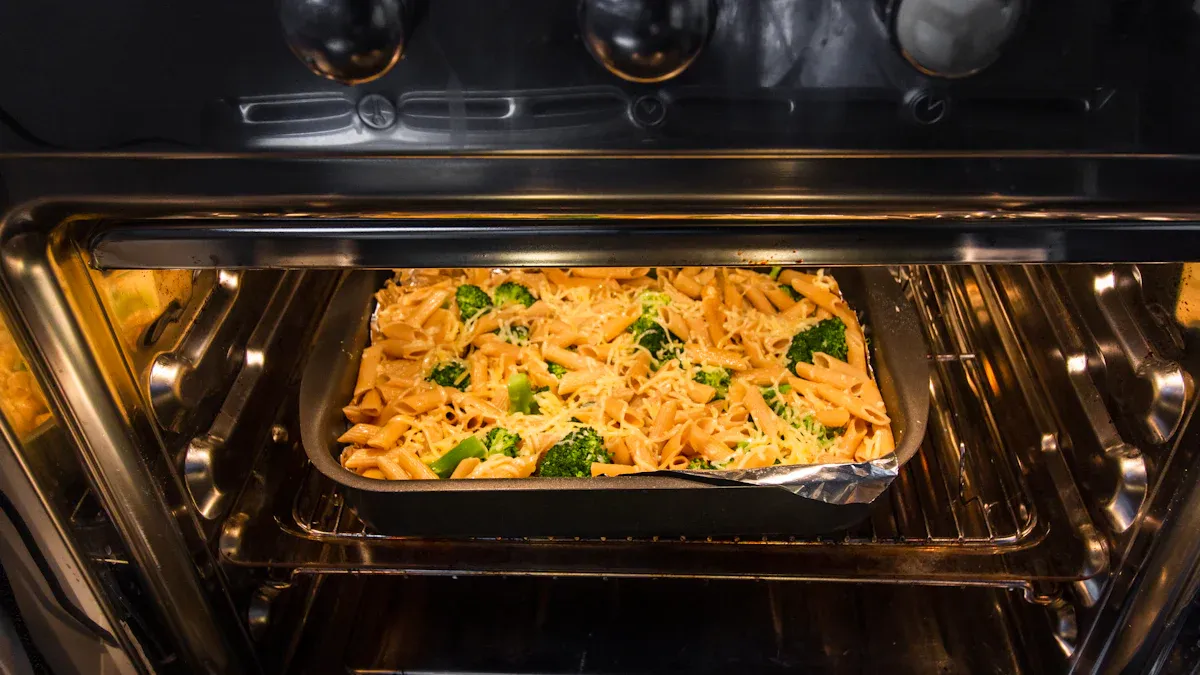
Selecting the ideal microwave baking pan significantly enhances culinary outcomes. Many cooks experience frustration with food that is scalding hot on the outside but cold within, or burnt around the edges and soggy in the center. Traditional containers often trap steam, leading to unpalatable surfaces. Poor thermal conductivity in some materials concentrates heat on the surface, preventing proper penetration. A good microwave baking pan addresses these common issues, preventing “hot spots” and “cold spots.” This comparison examines silicone, glass, and ceramic materials. It evaluates key factors: heat distribution, safety, durability, and cleaning. For example, a quality multi-functional microwaveable baking pan with lid can offer versatility. Consumers often ask, “Are microwave grill pans safe for daily cooking?” This guide helps answer such questions, ensuring users choose the best BPA-free microwave cookware for their needs. A microwave grill pan or microwave food grill pan provides specific functionalities.
Key Takeaways
- Silicone pans are flexible and non-stick. They are good for muffins and easy food release, but they do not brown food well.
- Glass pans let you see your food cook. They heat evenly, but they can break easily and are heavy.
- Ceramic pans look nice for serving food. They keep food warm for a long time, but they are heavy and can chip.
- Each material has different strengths. Choose a pan based on what you cook most often and what features are important to you.
Silicone Microwave Baking Pans: Flexibility and Convenience
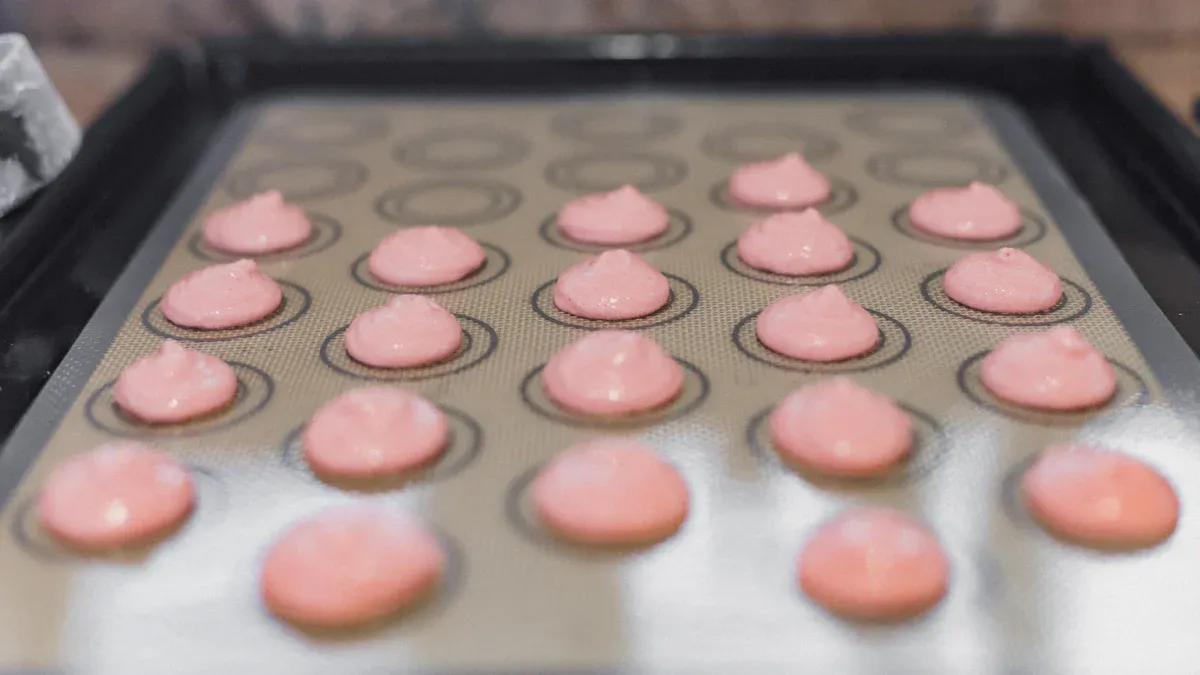
Silicone microwave baking pans offer a distinct set of characteristics that appeal to many home cooks. Their unique material properties provide both significant advantages and some specific limitations, making them suitable for particular culinary tasks.
Advantages of Silicone Microwave Baking Pans
Easy food release and natural non-stick properties.
Silicone bakeware naturally prevents food from sticking. This inherent non-stick quality means users often do not need to grease pans, simplifying preparation and cleanup. Food slides out effortlessly, preserving the shape of delicate items.
Lightweight and space-saving for storage.
Silicone pans are remarkably lightweight. Their flexible nature allows for easy folding or collapsing, which saves valuable storage space in smaller kitchens. This characteristic makes them a practical choice for those with limited cabinet room.
Ideal for delicate baked goods.
The flexibility of silicone makes it perfect for removing delicate baked goods without damage. Items like muffins or cupcakes pop out easily, maintaining their form and presentation. Food-grade silicone can safely withstand temperatures between -40°F to 450°F (-40°C and 232°C) without melting or decomposing, ensuring safety during microwave use. Many products also carry FDA approval and NSF-51 certification, confirming their safety and freedom from harmful chemicals.
Limitations of Silicone Microwave Baking Pans
Poor browning capabilities for certain dishes.
Silicone does not conduct heat in the same way as metal or glass. This often results in a lack of crispness or browning on the exterior of baked goods, which some recipes require for optimal texture and flavor.
Potential for uneven heating and stability concerns.
While generally safe, silicone can sometimes lead to uneven heating in a microwave. Its flexible structure also means it requires a stable surface, such as a microwave-safe plate, for support when filled with batter or liquid.
Susceptibility to absorbing food odors over time.
Over extended use, silicone can absorb strong food odors. This can transfer unwanted flavors to subsequent dishes if not cleaned thoroughly. Regular and proper cleaning helps mitigate this issue.
Optimal Uses for Silicone Microwave Baking Pans
Muffins, cupcakes, and quick breads.
Silicone excels in baking individual portions like muffins and cupcakes. Its non-stick surface and flexibility ensure easy removal and perfectly shaped treats. Quick breads also benefit from its even, gentle heating.
Dishes where flexibility and non-stick are paramount.
Any dish requiring easy release and minimal cleanup finds an ideal home in a silicone microwave baking pan. Its properties make it a go-to for recipes where preserving the item’s form is crucial.
Glass Microwave Baking Pans: Visibility and Even Cooking
Glass microwave baking pans offer distinct advantages, particularly for cooks who prioritize visual monitoring and consistent results. These pans are a staple in many kitchens due to their reliability and straightforward nature.
Benefits of Glass Microwave Baking Pans
Excellent heat distribution for uniform cooking.
Glass materials, especially borosilicate glass, distribute microwave energy effectively. This property helps ensure food cooks evenly throughout. Borosilicate glass, created by adding boron to the glass mixture, has a low coefficient of thermal expansion. This makes it resistant to sudden temperature changes. Pyrex is a well-known brand of heat-resistant glass cookware and bakeware.
Clear visibility to monitor cooking progress.
The transparent nature of glass allows users to observe food as it cooks. This clear visibility helps prevent overcooking or undercooking, enabling precise timing adjustments.
Non-reactive with acidic foods and scratch-resistant.
Glass does not react with acidic ingredients, preserving the true flavor of dishes. Its hard surface also resists scratches, maintaining its aesthetic and hygienic qualities over time.
Drawbacks of Glass Microwave Baking Pans
Fragility and heavy weight.
Glass pans are inherently fragile. They can chip, crack, or shatter if dropped or subjected to sudden impacts. They also tend to be heavier than silicone or ceramic options, which can be a consideration for handling.
Risk of localized hot spots and thermal shock.
While glass generally distributes heat well, localized hot spots can still occur, especially with certain food types. Glass is also susceptible to thermal shock. This happens when a cold pan encounters extreme heat or vice versa, potentially causing it to break. Borosilicate glass is more thermal shock-resistant and expands less when heated or cooled, making it resistant to cracking. Soda-lime glass, the most common type, is less resistant to thermal shock.
| Feature | Borosilicate Glass | Soda-Lime Glass |
|---|---|---|
| Thermal Shock | Highly resistant to thermal shock; withstands rapid temperature changes | Not as resistant to thermal shock; prone to cracking/shattering |
| Composition | Created by adding boron oxide, which reduces expansion/contraction | Most common type of glass in household items |
| Microwave Use | Ideal for tasks with sudden temperature changes (e.g., heating soups) | Suitable for everyday applications like reheating leftovers |
| Durability | Preferred for applications requiring thermal resistance | Less durable under thermal stress |
Not a great conductor of heat, leading to potential over-baked edges.
Glass does not conduct heat as efficiently as some other materials. This can sometimes result in edges of food cooking faster or becoming over-baked before the center finishes.
Ideal Applications for Glass Microwave Baking Pans
Casseroles and baked dishes.
Glass pans are excellent for preparing casseroles and other baked dishes in the microwave. Their even heating properties ensure thorough cooking.
Reheating leftovers requiring even heating.
Users often choose glass for reheating leftovers. The material’s ability to distribute heat uniformly helps prevent cold spots, ensuring a satisfying meal. This makes a glass microwave baking pan a versatile tool.
Ceramic Microwave Baking Pans: Aesthetics and Heat Retention
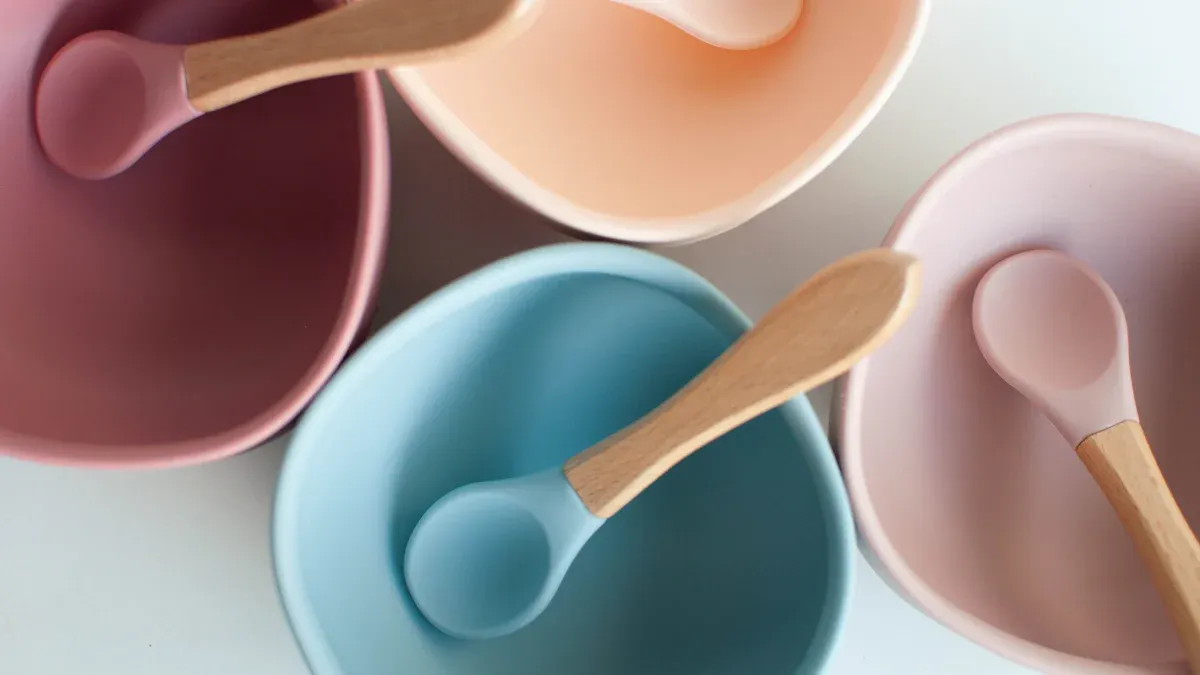
Ceramic microwave baking pans offer a blend of functionality and visual appeal. They bring a distinct character to the kitchen, often serving as both cooking vessel and serving dish.
Strengths of Ceramic Microwave Baking Pans
Attractive presentation for oven-to-table serving.
Ceramic bakeware often features elegant designs and vibrant glazes. This makes it ideal for serving dishes directly from the microwave or oven to the dining table. The attractive appearance enhances the overall dining experience.
Superior heat retention for keeping food warm.
Ceramic materials excel at retaining heat. This property keeps food warm for extended periods after cooking. It proves particularly useful for meals served buffet-style or when guests arrive at different times.
Versatility for various cooking methods.
Users can employ ceramic pans in microwaves, conventional ovens, and even for broiling. This versatility makes them a valuable addition to any kitchen, accommodating diverse cooking needs.
Challenges with Ceramic Microwave Baking Pans
Heavy weight and susceptibility to chipping or breaking.
Ceramic pans are generally heavier than silicone or glass alternatives. Their rigid nature also makes them prone to chipping or breaking. Extreme temperature changes, such as moving a cold dish into a hot microwave or placing a hot dish on a cold surface, can cause cracks or breakage. Rough handling during washing or stacking also contributes to damage.
Generally higher cost compared to other materials.
Ceramic bakeware often carries a higher price tag than silicone or basic glass options. This reflects the craftsmanship and material quality involved in its production.
Potential for uneven heating if not designed for microwave use.
Microwave-safe ceramics, including earthenware, stoneware, and porcelain, are typically poor heat conductors. Factors like trapped moisture in the ceramic or minerals in porous, unglazed, or dark-glazed ceramics can absorb microwave energy, causing the dish to heat unevenly. High-fired ceramics, such as porcelain, are generally microwave and dishwasher-safe due to their resistance to temperature changes. Low-fired ceramics, especially those with ornamentation, may be unsafe for microwave use. Emerson Creek Pottery confirms their glazes are lead-safe, non-toxic, and microwave-safe, meeting safety standards.
Best Scenarios for Ceramic Microwave Baking Pans
Gratins and small roasts.
Ceramic pans are excellent for preparing gratins, small roasts, and other dishes that benefit from even, gentle heating. The material helps achieve a desirable texture and crust.
Dishes requiring good heat retention for serving.
For meals where keeping food warm is a priority, ceramic pans are an optimal choice. They maintain the food’s temperature, ensuring a pleasant eating experience.
Transitioning from microwave to table for aesthetic appeal.
When presentation matters, ceramic pans allow for a seamless transition from cooking to serving. They elevate the visual appeal of any meal, making them perfect for entertaining. This makes a ceramic microwave baking pan a great choice for many home cooks.
Direct Comparison: Choosing Your Microwave Baking Pan
Heat Distribution and Cooking Performance
How each material handles microwave energy.
Each material interacts differently with microwave energy, influencing cooking outcomes. Silicone allows microwaves to pass through it, heating the food directly. Glass also permits microwave energy to penetrate, but its density can sometimes lead to slower heating compared to other materials. Ceramic, depending on its composition and glaze, can absorb microwave energy, which then transfers to the food. This absorption can contribute to faster heating of the dish itself.
Impact on cooking uniformity and browning.
The way materials handle microwave energy directly impacts cooking uniformity and browning. Silicone, while excellent for non-stick properties, often results in less browning because it does not retain or conduct heat to the food’s surface effectively. Glass provides good uniformity, but its slower heat conduction can sometimes lead to overcooked edges before the center finishes. Ceramic, with its heat-absorbing properties, can promote more even cooking and better browning, especially in dishes where the ceramic itself gets hot.
Ceramic heats faster than glass in a microwave.
Ceramic generally heats faster than glass in a microwave. This occurs because ceramic materials often absorb microwave energy more readily than glass. This absorption allows the ceramic dish to heat up quickly, transferring that heat to the food. This characteristic makes ceramic a good choice for dishes requiring rapid heating and consistent warmth.
Durability and Safety Considerations
Lifespan and resistance to thermal shock.
The lifespan and resistance to thermal shock vary significantly among these materials.
| Material | Typical Lifespan (Regular Use) |
|---|---|
| Ceramic | 1 to 5 years |
| Silicone | Long service life (if properly maintained) |
| Glass | N/A (durability characteristics mentioned, but no specific lifespan) |
| Glass and ceramic pans resist scratches and do not absorb odors or flavors, contributing to their longevity. Silicone pans are flexible and resist breaking or chipping, withstanding extreme temperatures. Borosilicate glass, a specific type of glass, offers excellent thermal shock resistance due to its low thermal expansion coefficient. It handles rapid temperature changes, such as moving from a freezer to a microwave, without breaking. This material distributes stress evenly, minimizing breakage and extending its longevity. Its smooth, non-porous surface also resists stains and odors. |
Material inertness and food-grade safety (borosilicate, food-grade silicone).
Material inertness and food-grade safety are paramount for microwave bakeware. For polypropylene (PP) used in food contact applications in the United States, the Food and Drug Administration (FDA) governs these materials under Title 21 of the Code of Federal Regulations (21 CFR), specifically 21 CFR 177. This regulation ensures that PP materials are safe for food use and do not leach harmful substances. In European markets, the LFGB standard, originating from Germany, is generally considered to have more comprehensive and stricter testing requirements than the FDA. LFGB testing includes sensorial examinations for odor or taste transfer to food, as well as plastic migration tests to ensure chemical substances do not leach above permissible limits. It also has stricter limits for certain substances compared to FDA, ensuring a higher level of safety for European consumers.
For glass fiber microwave baking pans with a silicone coating, both FDA and LFGB standards apply. The FDA regulates the silicone component in the United States, requiring rigorous testing for chemical migration under various temperature conditions to ensure no harmful substances leach into food during microwave heating. The LFGB certification, a stricter European standard, applies comprehensive testing to the silicone coating, scrutinizing it for a broader range of potential contaminants and including sensory evaluations to prevent undesirable taste or odor transfer. LFGB compliance for these products often indicates a higher quality, typically platinum-cured silicone, offering superior purity and enhanced stability under repeated microwave exposure. Manufacturers must ensure both the glass fiber and the silicone coating meet these demanding standards for safety and durability.
| Feature | LFGB Standard | FDA Standard |
|---|---|---|
| Testing Scope | Heavy metals, PAHs, VOCs, odor/taste transfer, extractable chemical substances | Chemical composition, curing conditions, migration of substances |
| Strictness | More comprehensive & strict | Standard safety testing |
| Market Application | Germany, France, EU markets | USA, Australia, widely used globally |
| Quality Indication | Often labeled as “Platinum Silicone” | Standard food-grade quality |
| Cost | More expensive due to strict testing | More affordable and widely available |
Breakability of glass and ceramic versus flexibility of silicone.
Glass and ceramic are rigid materials, making them susceptible to breaking or chipping if dropped or subjected to sudden impacts. This fragility requires careful handling and storage. Silicone, conversely, offers superior flexibility. It resists breaking or chipping, making it a more durable option against accidental drops. This flexibility also allows for easier storage, as users can often fold or collapse silicone pans.
Cleaning and Maintenance of Microwave Baking Pans
Ease of cleaning and dishwasher compatibility.
The ease of cleaning and dishwasher compatibility varies among the materials. Silicone pans are generally easy to clean due to their non-stick surface and are almost always dishwasher safe. Glass pans also clean easily and are typically dishwasher safe. Ceramic pans, especially those with a glazed finish, are usually dishwasher safe and simple to clean.
Specific care instructions for each material.
Each material requires specific care instructions to maintain its integrity and performance.
- For general hand washing of silicone, use a mild dish detergent and a non-abrasive sponge.
- For deep cleaning stubborn stains and odors from silicone, create a paste with baking soda and water.
- Alternatively, for deep cleaning silicone, soak the bakeware in a mixture of equal parts white vinegar and water. For glass and ceramic pans with baked-on food, a different approach proves more effective:
- Fill the pan with enough water to completely cover the baked-on food.
- Add approximately 1 tablespoon of liquid or powdered dishwasher detergent.
- Let the pan soak for at least an hour, or overnight for particularly stubborn food.
- After soaking, the baked-on food should easily wipe away with a sponge or cleaning cloth.
- For any remaining bits, a gentle scrub with a sponge or soft brush will suffice. When faced with baked-on food, soaking with dishwasher detergent is a more effective and easier method compared to scrubbing with a sponge or steel wool. While scrubbing requires significant effort and time, soaking loosens the food, allowing it to be wiped away with minimal effort. Dishwasher detergent is found to be more effective than regular dish soap or specialty soaking products, and also more cost-efficient.
Non-stick properties of silicone and glazed ceramic.
Silicone inherently possesses excellent non-stick properties, often eliminating the need for greasing. This natural non-stick surface ensures easy food release and simplifies cleanup. Glazed ceramic also offers non-stick qualities, especially when the glaze is smooth and intact. However, its non-stick performance may not be as pronounced as silicone’s, and some dishes might still benefit from light greasing.
Cost-Effectiveness and Value of Microwave Baking Pans
Analyzing price point versus longevity and versatility.
Consumers often consider the initial purchase price when selecting microwave bakeware. However, a comprehensive evaluation includes longevity and versatility. Silicone pans typically offer the lowest entry point, making them an attractive option for budget-conscious buyers. Their flexibility and non-stick properties provide good value for specific tasks like baking muffins or quick breads. Glass bakeware usually falls into a mid-range price category. Its durability, transparency, and even heating capabilities make it a reliable choice for casseroles and reheating. Glass often lasts for many years with proper care, offering excellent value over time. Ceramic bakeware generally represents a higher initial investment. For instance, a high-quality ceramic baking dish is available for $40. This higher cost reflects its aesthetic appeal, superior heat retention, and versatility for oven-to-table serving. While ceramic may be more prone to chipping than silicone, its ability to keep food warm and present beautifully often justifies the price for those prioritizing presentation and sustained warmth.
Long-term investment in quality bakeware.
Investing in quality bakeware extends beyond the initial price tag. The true value of a microwave baking pan emerges from its performance, durability, and safety over many years of use. Manufacturers of high-quality bakeware, like Ningbo Junsheng, prioritize these aspects, ensuring products meet rigorous standards. Several factors contribute to the long-term value of microwave bakeware:
- Total Cost of Ownership: The actual cost of bakeware includes more than just the purchase price. It encompasses shipping, potential customs duties, and any expenses arising from quality issues. A reliable manufacturer minimizes these hidden costs by consistently delivering high-quality products.
- Strong Manufacturer Relationship: A reputable manufacturer acts as a partner. They offer consistent product quality, reliable service, and support for new product development. This partnership helps businesses innovate and grow, ultimately benefiting the end consumer through better products.
- Quality Control and Assurance: Manufacturers must use safe materials and conduct thorough product testing. This includes evaluating durability, heat resistance, and chemical leaching. Adherence to strict industry standards and regulations protects both customers and brand reputation.
- Regulatory Compliance: Manufacturers must meet all relevant safety standards in target markets. This includes material standards, such as specific regulations for food-grade materials, and adherence to broader regulations like GMP in the EU or state-specific chemical bans in the US. Compliance ensures the product is safe and legally marketable.
Choosing quality bakeware means selecting products that offer consistent performance, safety, and durability. This approach ensures a satisfying cooking experience and a wise long-term investment.
Ultimately, the ideal microwave baking pan aligns with individual cooking habits and priorities. Silicone offers flexibility and easy release, though it lacks browning capabilities. Glass provides clear visibility and even heating, but users must handle its fragility carefully. Ceramic excels in aesthetics and heat retention, despite its weight and cost.
Consider these points for selection:
- Silicone: For delicate items needing easy release.
- Glass: For casseroles and dishes requiring visual monitoring.
- Ceramic: For oven-to-table presentation and superior heat retention.
This ensures you select the most suitable microwave baking pan for your kitchen.
FAQ
Can I use any ceramic dish in the microwave?
Not all ceramic dishes are microwave-safe. Some ceramics, especially those with metallic glazes or certain decorative elements, can cause arcing or overheating. Always check for a “microwave-safe” label on the dish. This ensures safe use and prevents damage.
Why does silicone not brown food well in the microwave?
Silicone does not conduct heat effectively. It allows microwave energy to pass through directly to the food. This means the pan itself does not get hot enough to create a browned or crispy surface on the food.
Is borosilicate glass always safe for microwave use?
Borosilicate glass is highly resistant to thermal shock, making it generally safe for microwave use. However, extreme temperature changes can still cause issues. Avoid placing a very cold borosilicate dish directly into a hot microwave or vice versa.
How can I prevent my silicone bakeware from absorbing food odors?
To prevent odor absorption, clean silicone bakeware thoroughly immediately after use. For stubborn odors, soak the item in a solution of white vinegar and water. Baking soda paste also effectively neutralizes absorbed smells.