
In the fast-paced modern culinary landscape, the intersection of speed and quality has birthed a revolutionary tool: the microwave frying pan. Once dismissed as a gimmick, this kitchen essential is now a cornerstone of the convenience cooking market. But what exactly is driving this surge in demand, and how does a microwave frying pan manufacturer transform a standard microwave’s electromagnetic waves into the searing heat required for a perfect crust?
This guide explores the engineering, safety standards like microwave frying pan BPA free certifications, and practical applications—from achieving a golden sear on a microwave frying pan for chicken to the importance of a microwave frying pan with lid.

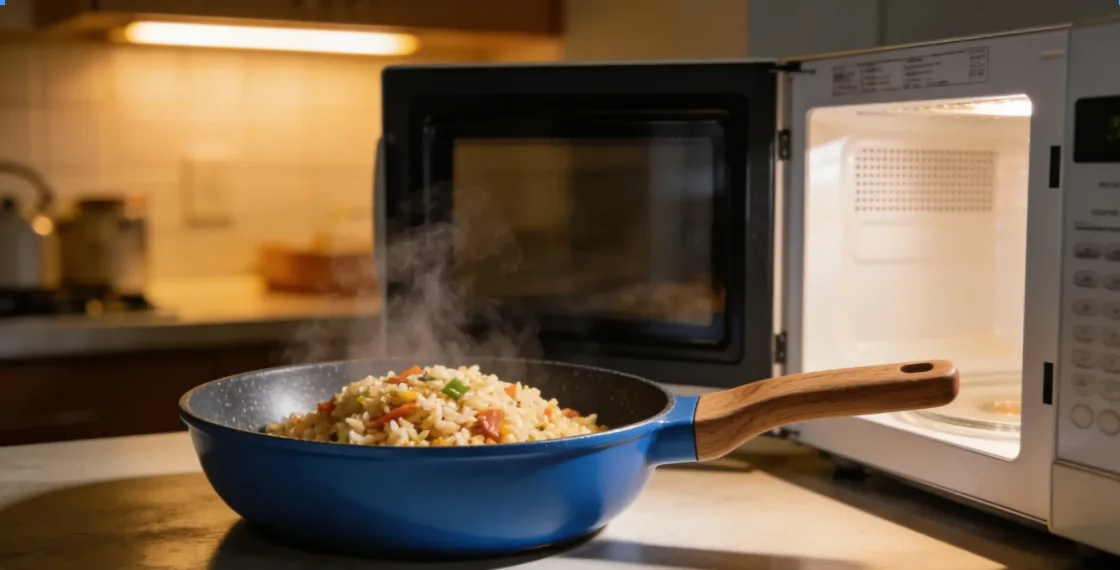
What Is a Microwave Frying Pan and How Does It Work?
To understand the popularity of these devices, we must first define the technology. A microwave frying pan is not a standard plastic container; it is a sophisticated piece of cookware designed to convert microwave energy into thermal heat.
The Physics of Susceptor Technology
Traditional microwaving works by vibrating water molecules in food (dielectric heating). However, this often leaves food soggy. A high-quality microwave frying pan utilizes susceptor materials—usually ceramic or metal alloys embedded in the base—that absorb microwaves and heat up to temperatures exceeding 400°F (204°C).
| Feature | Traditional Microwave Container | Professional Microwave Frying Pan |
|---|---|---|
| Heat Mechanism | Water molecule vibration | Conduction + Susceptor thermal heat |
| Surface Result | Steamed/Soggy | Crispy/Seared |
| Max Temperature | Limited to boiling point of water | Can reach $230^\circ\text{C}$ ($450^\circ\text{F}$) |
| Best For | Reheating liquids | Frying, Searing, Grilling |
Why Is the Demand for Microwave Frying Pans Skyrocketing in 2025?
1. The Urbanization and “Micro-Living” Trend
As living spaces shrink in metropolitan areas, “compact kitchens” are becoming the norm. Many apartments now lack full-sized ovens or gas ranges. A microwave frying pan serves as a multi-functional replacement, offering the ability to “fry” without a stovetop.
2. Energy Efficiency and Sustainability
Using a 1200W microwave for 5 minutes to sear a chicken breast is significantly more energy-efficient than preheating a 3000W electric oven for 20 minutes. Consumers are increasingly looking for ways to reduce their carbon footprint without sacrificing meal quality.
3. Safety and Health: The “BPA Free” Movement
Health-conscious consumers are wary of plastic leaching. Leading microwave frying pan manufacturers have responded by using food-grade silicone and heat-resistant ceramics. Ensuring your microwave frying pan is BPA free is now a primary purchasing driver.
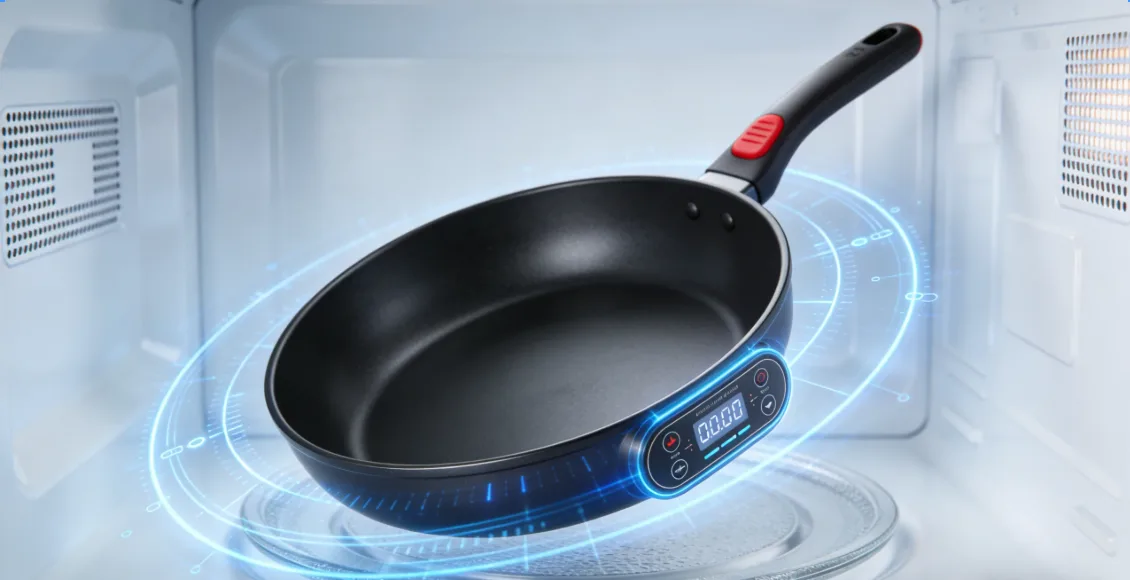
How to Choose a Microwave Frying Pan for Chicken and Meats?
Cooking proteins in a microwave has historically been a culinary “sin.” However, with the right pan, you can achieve Maillard reaction—the chemical reaction between amino acids and reducing sugars that gives browned food its distinctive flavor.
Key Features for Meat Preparation:
- Ridged Surfaces: Look for a “grill” style base. This allows fats to drain away from the meat, ensuring the bottom doesn’t sit in moisture and become rubbery.
- Heat Retention: A heavy-duty base manufactured by a reputable microwave frying pan manufacturer will hold heat longer, providing a consistent sear even when the microwave cycles its power.
- The Role of the Lid: A microwave frying pan with lid is crucial for chicken. The lid reflects microwaves away from the top of the meat (preventing it from drying out) while the base sears the bottom.
Steps to Searing the Perfect Chicken Breast:
- Preheat: Place the empty pan in the microwave for 2 minutes to activate the susceptor.
- Season: Pat the chicken dry (moisture is the enemy of crispiness).
- Sear: Place chicken on the hot pan and cook for 3-4 minutes per side.
- Rest: Keep the lid on for 2 minutes post-cooking to allow juices to redistribute.
What Should You Look for in a Microwave Frying Pan Manufacturer?
When sourcing for retail or personal use, the manufacturing process dictates safety and longevity.
Material Integrity
A top-tier microwave frying pan manufacturer uses high-grade ferritic stainless steel or specialized ceramics coated with non-stick layers that are PFOA and PTFE free.
Certification Standards
Always verify the following certifications:
- FDA/LFGB Approval: Ensures the materials are food-safe.
- BPA-Free Certification: Specifically for the silicone handles or lids.
- Thermal Shock Resistance: The ability of the pan to go from a hot microwave to a cold countertop without cracking.
Is a Microwave Frying Pan with Lid Necessary for Crispy Results?
One of the most frequent questions from consumers is whether they can skip the lid. The answer lies in the “Shielding Effect.”
The Science of the Shielding Lid
In a professional microwave frying pan with lid setup, the lid is often made of metal (counter-intuitively). While you should never put raw aluminum foil in a microwave, these lids are engineered with rounded edges and specific thicknesses that prevent “arcing.”
The Lid’s Function:
- Blocks Direct Microwaves: Prevents the meat from becoming “rubbery” by stopping the waves from penetrating the top.
- Steam Regulation: High-end lids have vents that allow just enough steam to escape to prevent sogginess while retaining enough heat to cook the interior.
- Anti-Splatter: Keeps the microwave interior clean from grease during the “frying” process.
Common Myths vs. Facts: The Truth About Microwave Frying
Myth: Metal can never go in a microwave.
Fact: While thin, crinkled metals cause sparks, thick, smooth, and specially designed metal components (like those in a microwave frying pan) are safe and essential for heat conversion.
Myth: Microwave frying is just “steaming.”
Fact: Thanks to susceptor technology, the surface of the pan reaches temperatures high enough to fry. If you use a microwave frying pan for chicken, you will see actual browning and char marks.
Myth: All pans are the same.
Fact: Cheap imitations often lack the thermal mass required to sear. Only a microwave frying pan manufacturer with R&D in thermal dynamics can produce a pan that truly “fries.”
Maintenance and Longevity: How to Care for Your Microwave Pan?
To ensure your microwave frying pan BPA free coating remains intact:
- Hand Wash Only: The harsh chemicals in dishwasher tabs can degrade the susceptor material over time.
- Avoid Metal Utensils: Use silicone or wooden spatulas to prevent scratching the non-stick surface.
- No Dry Overheating: Never preheat for more than 3 minutes without food, as this can cause the thermal base to warp.
Frequently Asked Questions (FAQ)
Can I use a microwave frying pan in a regular oven?
No, most microwave frying pans are specifically designed for microwave frequencies. The silicone handles or the specific susceptor bonding agents may not be rated for the ambient heat of a traditional convection oven. Always check the manufacturer’s specifications.
Is it safe to cook a microwave frying pan for chicken at high power?
Yes, these pans are designed to be used at the “High” (100%) power setting of most domestic microwaves (usually 800W-1200W). The pan is engineered to manage that energy. However, if your microwave is an industrial 2000W model, you should reduce the power to 70-80%.
How do I know if my microwave frying pan is BPA free?
Look for the “BPA Free” logo on the packaging or the bottom of the pan. Reputable microwave frying pan manufacturers will provide third-party lab results (such as SGS or TUV) upon request to verify that no Bisphenol A is present in the plastic or silicone components.
Why is my food not getting crispy in the pan?
The most common reason is not preheating the pan. Just like a cast-iron skillet, a microwave frying pan needs to be hot before the food touches it. Also, ensure you are using a microwave frying pan with lid as instructed, as the lid helps regulate the internal environment.
Where can I find a reliable microwave frying pan manufacturer for bulk orders?
Reliable manufacturers are typically found in specialized kitchenware hubs. Look for companies that hold ISO 9001 certifications and have a history of producing “active” microwave cookware. Ensure they provide OEM/ODM services if you are looking to brand your own line of microwave frying pan for chicken.