
Yes, a foil pan can sometimes be used in a microwave, but only under limited conditions and only if the microwave manufacturer allows it. Standard advice says metal should be avoided because foil reflects microwave energy and may create sparks. However, some modern microwaves and certain prepared-food packaging are designed to handle small, smooth aluminum trays. Safety depends on foil thickness, pan shape, food coverage, cavity clearance, and oven instructions. According to the U.S. Food and Drug Administration (FDA), cookware and food packaging should be used according to labeled directions. Choosing approved microwave safe cooking pans remains the safest option.
Why Foil Pans Can Be Risky in Microwave Ovens
Microwave ovens heat food by exciting water molecules. Metal surfaces reflect electromagnetic energy instead of absorbing it. Thin foil edges or crimped corners can concentrate electrical charge and create arcing. Arcing appears as sparks and may damage the oven interior.
Common risk factors include:
Wrinkled foil surfaces
Sharp tray corners
Empty foil containers
Pan touching oven walls
Oversized trays blocking rotation
Many households prefer microwave baking pans with lid because they avoid these metal-related risks.
When a Foil Pan May Be Acceptable
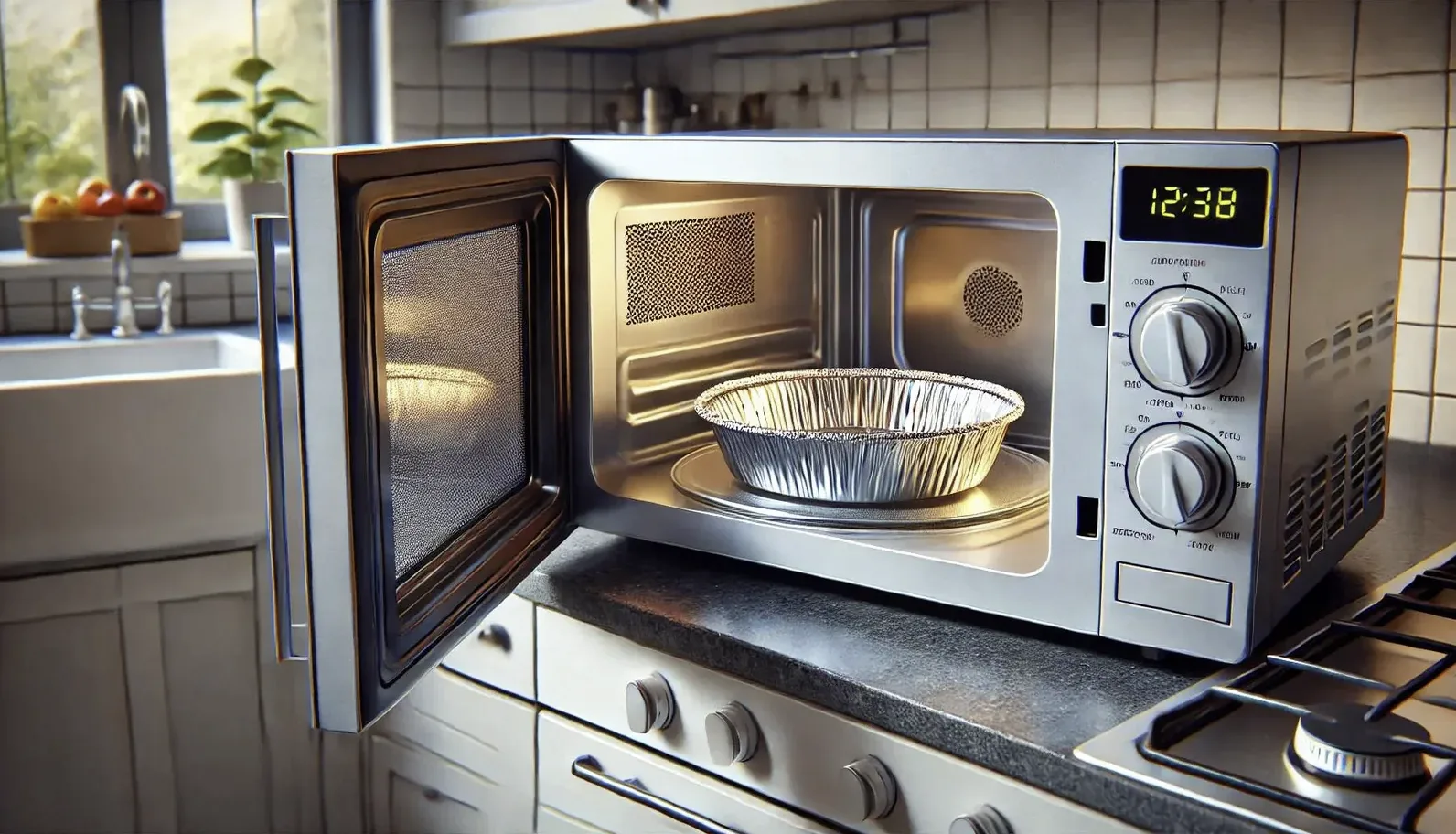
Some manufacturers allow shallow, smooth foil trays when food fully covers the base and sides. Certain ready meals are packaged in tested foil containers designed for specific microwave use. The product instructions must be followed exactly.
| Condition | Better Outcome Reason |
|---|---|
|
Smooth tray walls |
Less arcing risk |
|
Food covering surface |
Absorbs energy |
|
Center placement |
Better clearance |
|
Small tray size |
Less wall contact |
|
Manual approval |
Model compatibility |
According to the USDA FSIS, consumers should follow package heating instructions for prepared foods.
Why Food Coverage Matters in a Foil Pan
A foil pan with food inside behaves differently from an empty foil pan. Moist food absorbs microwave energy and reduces reflection intensity. Empty foil containers have no food load to absorb energy, which increases spark potential.
Best foods for approved foil trays:
Lasagna
Pasta bakes
Casseroles
Cooked vegetables in sauce
Prepared chilled meals
For homemade cooking, many users switch to reusable microwave cookware pans for greater flexibility.
Foil Pan Size and Shape Rules
Tray geometry strongly affects performance. Large foil pans placed close to cavity walls are more likely to arc. Deep trays can shield food from microwave penetration, creating uneven heating.
| Tray Type | Microwave Result |
|---|---|
|
Small shallow tray |
Better potential |
|
Large roasting tray |
Poor choice |
|
Wrinkled foil pan |
Higher risk |
|
Sharp-edged tray |
Higher risk |
|
Rounded tray |
Better than sharp corners |
According to the National Institute of Standards and Technology, electromagnetic behavior changes with shape and spacing, which explains why tray design matters.
How to Use a Foil Pan More Safely
If the microwave manual permits foil use, basic precautions reduce risk. Never improvise without checking instructions first.
Recommended steps:
Confirm the oven manual allows foil trays.
Use only a small shallow foil pan.
Keep at least several centimeters from cavity walls.
Remove foil lids or loose foil sheets.
Stop immediately if sparking begins.
Do not use an empty foil pan.
Many users choose microwave steaming pans instead because they are simpler and reusable.
When You Should Never Use a Foil Pan
Some situations make foil use a poor choice regardless of convenience. Older microwaves with smaller cavities or turntables often provide less safe clearance. Damaged foil pans are also unsuitable.
Avoid foil pans when:
The manual prohibits metal
The tray touches walls or door
The tray is torn or crushed
The food is very small in quantity
The microwave already sparks easily
The U.S. Consumer Product Safety Commission advises avoiding damaged household products that may create hazards.
Better Alternatives to Foil Pans in Microwaves
For most daily cooking, non-metal cookware is easier and safer. Glass, ceramic without metallic trim, silicone, and microwave-safe plastic are widely accepted choices.
| Material | Best Use |
|---|---|
|
Glass |
Reheating, casseroles |
|
Ceramic |
Baking, serving |
|
Silicone |
Cakes, eggs |
|
Microwave Plastic |
Quick reheating |
Many households use non stick microwave trays for snacks and baked foods, while others prefer microwave rice cooker pans for grains.
Can Foil Pans Be Used in Microwave Convection Ovens?
Microwave convection ovens often allow metal cookware in convection-only mode. That does not automatically mean foil pans are safe in microwave mode. Mode selection is critical.
According to the U.S. Department of Energy, appliance efficiency and safety improve when products are used according to intended operating modes.
Many cooks use convection microwave baking pans during convection baking rather than foil.
Final Verdict: Should You Put a Foil Pan in the Microwave?
A foil pan can sometimes be used in a microwave, but only when the microwave manufacturer or food packaging specifically permits it. For general home cooking, glass, ceramic, or microwave-safe cookware is the safer and more practical choice.
FAQ
Can I heat takeout food in its foil tray?
Only if the tray label or food instructions state microwave use is allowed. Otherwise transfer food to microwave-safe cookware first.
Why does foil spark in the microwave?
Sparks usually happen when sharp edges, wrinkles, or wall contact create concentrated electrical discharge.
Is aluminum foil the same as a foil pan?
No. Loose foil sheets are thinner and often riskier than rigid trays because they wrinkle easily and create sharp edges.
Can I use a foil pan in convection mode only?
Usually yes in many microwave convection ovens, because convection mode works like a regular oven. Check the manual first.
What is the safest substitute for a foil pan?
Glass or microwave-safe ceramic cookware is usually the safest substitute for reheating and baking in microwave mode.


