
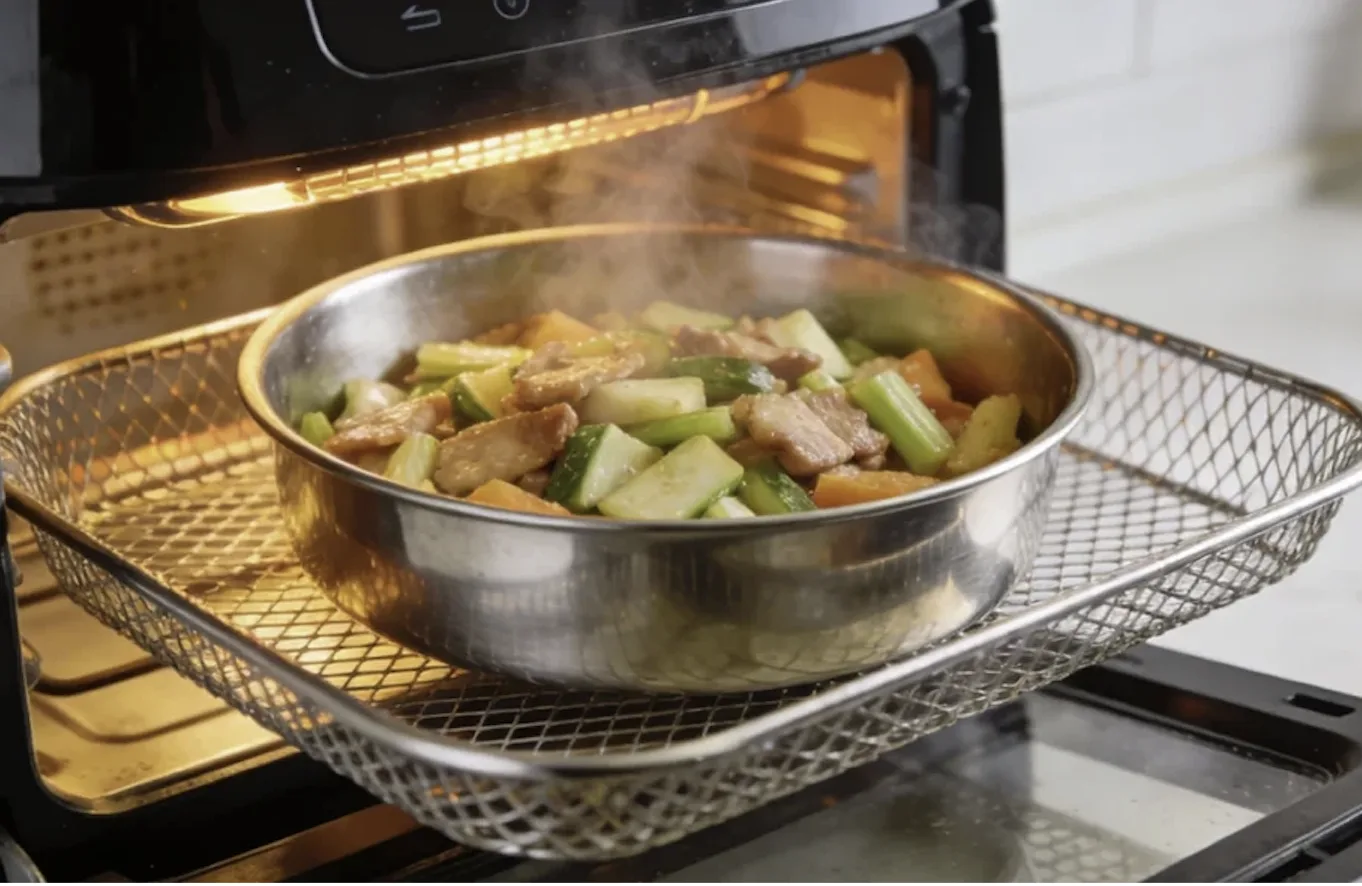
Yes, metal pans can often be used in a microwave convection oven, but only under specific modes and manufacturer guidelines. A microwave convection oven combines two heating systems: microwave energy and convection heat. Standard microwave mode may react badly with some metal cookware, while convection mode usually accepts many oven-safe metal pans. Safety depends on oven design, pan shape, rack position, and whether microwave energy is active. According to the U.S. Food and Drug Administration (FDA), cookware should always be used according to appliance instructions. Choosing proper microwave convection oven pans helps prevent sparking, uneven heating, and surface damage.
Why Microwave Convection Ovens Are Different
A standard microwave heats food using electromagnetic waves that excite water molecules. A convection oven uses heating elements and circulating hot air. A microwave convection oven combines both systems, either separately or together depending on settings.
This creates three common modes:
-
Microwave-only mode
-
Convection-only mode
-
Combination mode
Each mode may have different cookware rules. Many households use multi mode microwave cookware because one appliance performs several cooking tasks.
Can Metal Pans Be Used in Convection Mode?
Yes, metal pans are usually acceptable in convection-only mode because the oven is functioning like a traditional oven. Aluminum baking trays, steel cake pans, and roasting pans often perform well when microwave energy is not active.
| Oven Mode | Metal Pan Use | Main Reason |
|---|---|---|
|
Convection Only |
Usually Yes |
Hot air heating |
|
Microwave Only |
Often No or Limited |
Reflection risk |
|
Combination Mode |
Depends on manual |
Mixed energy system |
Many users choose metal baking pans for convection microwave ovens when baking pastries, pizza, or roasted foods.
Why Metal Can Be Risky in Microwave Mode
Metal reflects microwave energy instead of absorbing it. Sharp edges, thin foil, or pans touching oven walls may create electrical arcing. Arcing can damage the oven cavity, turntable, or cookware finish.
According to the U.S. Consumer Product Safety Commission, appliance misuse can create preventable household hazards.
Common risk factors include:
-
Thin aluminum foil sheets
-
Sharp corners or jagged edges
-
Oversized pans touching walls
-
Decorative metallic trim
-
Unknown cookware materials
Using certified microwave safe grill pans designed for compatible models reduces these risks.
What About Combination Mode with Metal Pans?
Combination mode uses both microwave and convection heat. Some ovens are engineered to allow certain metal trays or racks during this mode. Many manufacturers include a supplied metal rack or crisping tray specifically tested for that model.
Important rule: the user manual has priority over general advice.
According to the NIST engineering resources, electromagnetic performance depends heavily on geometry and spacing, which is why one pan may be safe in one oven and unsafe in another.
Many kitchens rely on combination microwave baking trays supplied or approved for specific appliances.
Best Metal Pans for Microwave Convection Ovens
Not all metal pans perform equally well. Smooth, shallow, rounded-edge pans usually perform better than tall, irregular, or damaged cookware. Darker finishes may brown foods faster in convection mode.
| Pan Type | Best Use | Notes |
|---|---|---|
|
Round Cake Pan |
Cakes, casseroles |
Even airflow |
|
Shallow Tray |
Pizza, fries |
Crisp surface |
|
Muffin Pan |
Cupcakes |
Convection baking |
|
Roasting Pan |
Meats |
Check size clearance |
Many users select non stick convection oven pans for easier cleanup and food release.
When to Use Glass or Silicone Instead of Metal
Glass, ceramic, and silicone can be better choices in microwave-only mode because they generally do not reflect microwave energy. They are often preferred for reheating leftovers, steaming vegetables, or cooking moist foods.
Use non-metal cookware when:
-
Microwave-only reheating
-
Soups or sauces
-
Rice and grains
-
Steamed dishes
-
Delicate custards
Many households keep both metal and microwave baking pan with lid options for different tasks.
How to Use Metal Pans Safely in a Microwave Convection Oven
Safe use requires attention to fit, spacing, and mode selection. A pan that blocks airflow or touches the oven wall can reduce performance.
Recommended steps:
-
Read the oven manual first.
-
Use metal only in approved modes.
-
Leave clearance from walls.
-
Avoid foil unless specifically allowed.
-
Do not stack metal cookware.
-
Stop immediately if sparking occurs.
According to the U.S. Department of Energy, proper appliance use supports efficiency and product lifespan.
Common Mistakes with Metal Pans in Combination Ovens
Most problems come from assuming all metal is banned or all metal is safe. Both assumptions are incorrect. Compatibility depends on appliance design.
| Mistake | Result |
|---|---|
|
Using foil loosely |
Arcing risk |
|
Oversized tray |
Wall contact |
|
Ignoring manual |
Wrong mode use |
|
Damaged pan coating |
Reduced durability |
|
Blocking vents |
Poor convection results |
Choosing the right oven compatible microwave trays helps avoid these common issues.
Final Verdict: Should You Use Metal Pans?
Yes, metal pans can be used in many microwave convection ovens, especially in convection-only mode. In microwave-only or combination mode, use only pans approved by the manufacturer. Mode selection matters more than the pan material alone.
Key conclusions include:
-
Convection mode usually allows metal.
-
Microwave mode may restrict metal.
-
Combination mode depends on model design.
-
Smooth pans are safer than sharp foil.
-
The user manual is the final authority.
FAQ
Can aluminum foil be used in a microwave convection oven?
Sometimes, but only in small amounts and only if the manufacturer allows it. Loose or crumpled foil can spark more easily than rigid cookware.
Why did my metal pan spark in the oven?
Sparking may occur from sharp edges, wall contact, damaged coating, or using microwave mode when the pan was not approved for that setting.
Is stainless steel safe in convection mode?
Usually yes, if the pan is oven-safe and fits correctly. Stainless steel is commonly used in convection-only cooking.
Can I bake a cake in a metal pan inside a microwave convection oven?
Yes, many users bake cakes in metal pans using convection mode. Correct temperature and pan size are important.
What cookware is safest if I am unsure?
If uncertain, use microwave-safe glass or ceramic for microwave mode, or consult the oven manual before using metal cookware.


