
Introduction
Choosing a microwave non-stick grill manufacturer is not just a price comparison; it is a decision that affects product safety, cooking performance, compliance, and long-term supply stability. Because these grills depend on specialized materials and heat-conversion design, small manufacturing weaknesses can lead to coating failure, inconsistent results, and costly returns. This guide explains what OEM buyers should evaluate before committing to a supplier, from technical capability and quality control to certification, customization, and production reliability. By the end, you will have a practical framework for identifying partners that can support both product performance and sustainable margins.
Why the Right Microwave Non-Stick Grill Manufacturer Matters
Sourcing cookware for modern microwave applications requires a strategic approach to supplier selection. Unlike traditional stovetop pans, microwave grilling products rely on specialized susceptor technology to convert microwave energy into conductive heat. Partnering with a competent manufacturer is critical to ensuring that these complex thermodynamic requirements are met consistently at scale.
A poorly selected manufacturing partner can introduce significant operational hazards, ranging from supply chain bottlenecks to severe product safety liabilities. Consequently, establishing rigorous vetting parameters is the foundational step for any original equipment manufacturer (OEM) or private-label buyer looking to enter or expand within this category.
Product performance, brand risk, and margins
The commercial success of microwave cookware is inextricably linked to its functional reliability. Products must achieve and sustain temperatures high enough to sear food—often reaching up to 250°C (482°F)—without degrading the non-stick coating or damaging the microwave interior. Manufacturers lacking advanced material science capabilities frequently produce units that suffer from coating delamination or thermal cracking after fewer than 50 use cycles. Such product failures not only damage brand reputation but also trigger return rates exceeding the industry standard threshold of 2%, rapidly eroding profit margins.
Working with a Reliable Microwave Non-Stick Grill Manufacturer mitigates these risks by ensuring that susceptor formulations and binding agents are engineered for longevity. High-tier suppliers invest in continuous thermal shock testing and adhesion verification, safeguarding the brand against costly recalls and negative consumer sentiment.
Sourcing criteria by buyer type
The criteria for selecting a manufacturing partner vary significantly depending on the buyer's operational scale and market positioning. Enterprise-level retail buyers typically prioritize high-volume production capacity and aggressive unit pricing, often requiring Minimum Order Quantities (MOQs) of 10,000 units or more. For these buyers, a supplier's automated assembly lines and bulk material procurement capabilities are paramount.
Conversely, direct-to-consumer (D2C) brands and specialty culinary startups may require smaller initial runs, with MOQs ranging from 1,000 to 3,000 units. These buyers should prioritize suppliers offering agile production setups, extensive customization options for silicone handles or pan geometries, and robust prototyping support. Identifying a manufacturer whose business model aligns with the buyer's specific volume and customization needs prevents misaligned expectations and production delays.
What OEM Teams Should Verify in a Microwave Non-Stick Grill
Before initiating requests for quotation (RFQs), OEM teams must establish a comprehensive technical dossier. This documentation serves as the blueprint for supplier evaluation, ensuring that all candidate factories are quoting against identical, highly specific product requirements rather than generic industry standards.
Product definition and use cases
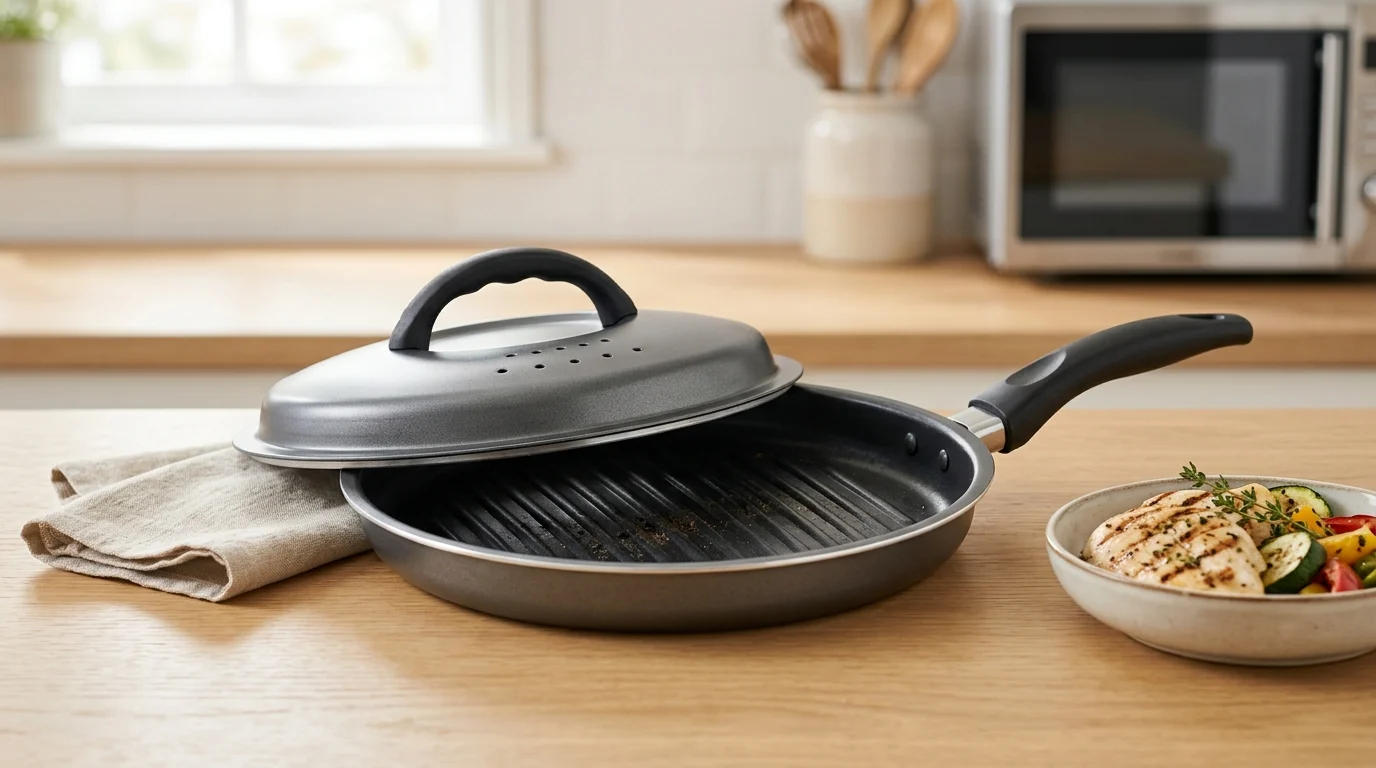
A well-defined product specification begins with outlining the exact use cases the cookware must support. A standard Microwave Non-Stick Grill is typically designed for searing meats, grilling sandwiches, or roasting vegetables. The engineering team must dictate the required pre-heat times (e.g., 2 to 3 minutes at 900W) and the target searing temperatures.
Furthermore, the product definition must account for the physical constraints of standard consumer microwaves. Dimensional tolerances must be strictly defined to ensure compatibility with typical microwave turntables, generally capping the maximum diagonal footprint at 28 centimeters (11 inches) to prevent internal arcing or rotation jamming.
Specifications, coatings, and materials
The core of any microwave grill is its material composition, specifically the susceptor base and the food-contact coating. The base typically consists of a microwave-absorbent ferrite compound encased in high-grade silicone or specialized polymers, coupled with an aluminum or carbon steel cooking plate for optimal heat distribution. The non-stick coating applied to this plate must withstand rapid thermal cycling.
Buyers must specify the exact coating chemistry required, as this directly impacts both performance and unit cost. The following table illustrates common coating options and their typical performance metrics:
| Coating Type | Max Safe Temperature | Durability (Cycles) | Relative Cost Premium |
|---|---|---|---|
| Standard PTFE | 260°C (500°F) | ~150-200 | Baseline |
| Ceramic / Sol-Gel | 400°C (750°F) | ~100-150 | +15-20% |
| Titanium-Infused PTFE | 260°C (500°F) | ~300+ | +25-30% |
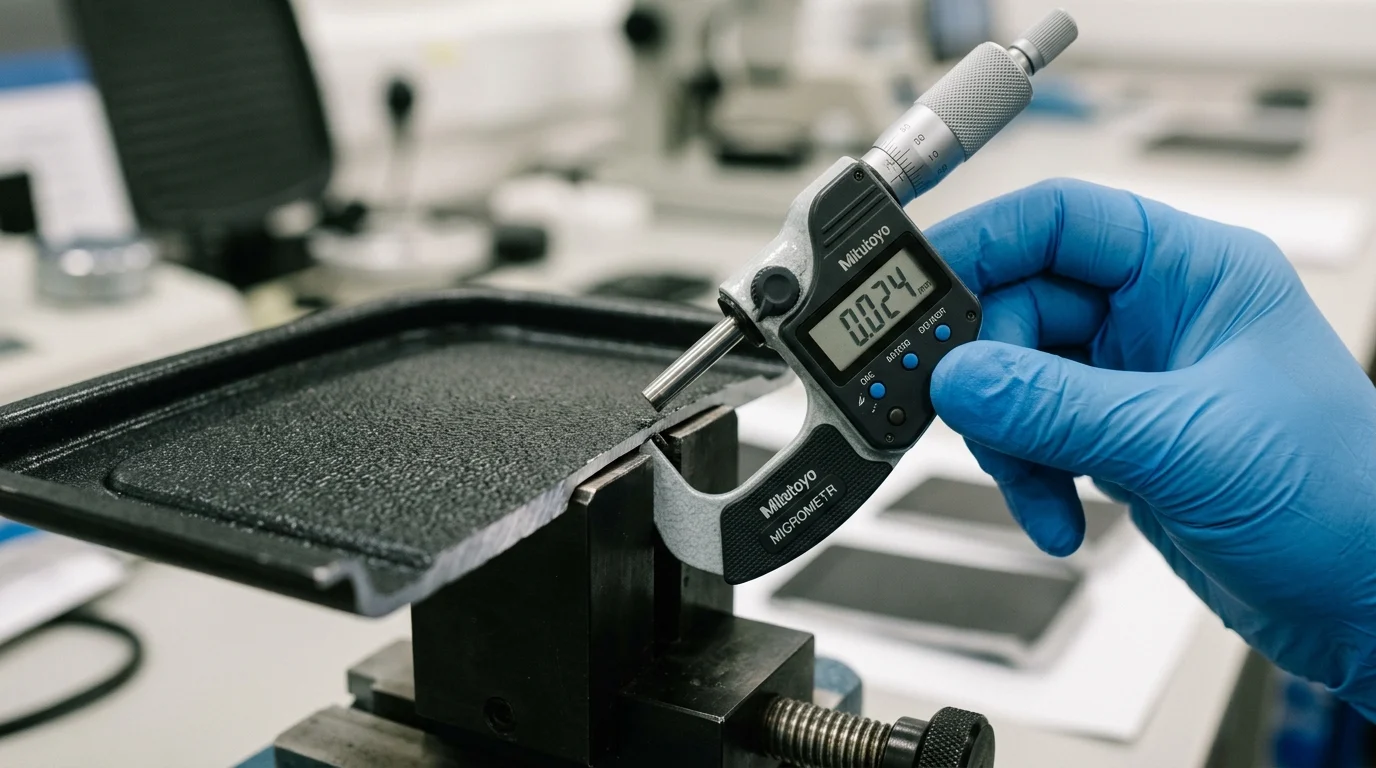
Selecting a Reliable Microwave Non-Stick Grill requires verifying that the supplier applies these coatings at the correct micron thickness (typically 25-35 microns for dual-layer systems) to prevent premature wear.
Supplier comparison criteria
When comparing potential suppliers, OEM teams should evaluate specific technical capabilities rather than just quoted prices. Key criteria include the manufacturer's in-house tooling capabilities, which dictate the precision of custom molds and the speed of prototyping. A supplier that outsources mold creation often introduces a 15- to 20-day delay in the development cycle.
Additionally, historical defect rates are a critical comparison point. Top-tier manufacturers maintain a historical defect rate of under 1.5%. Buyers should request documented yield rates from similar product runs and assess the supplier's ability to trace material batches back to the raw material provider, ensuring accountability throughout the manufacturing lifecycle.
How Buyers Can Assess Quality Control and Compliance
Quality control and regulatory compliance are non-negotiable elements in cookware sourcing. Microwave grills operate at the intersection of electromagnetic appliance safety and food-contact material regulations, requiring manufacturers to adhere to overlapping international standards.
Factory quality systems and inspections
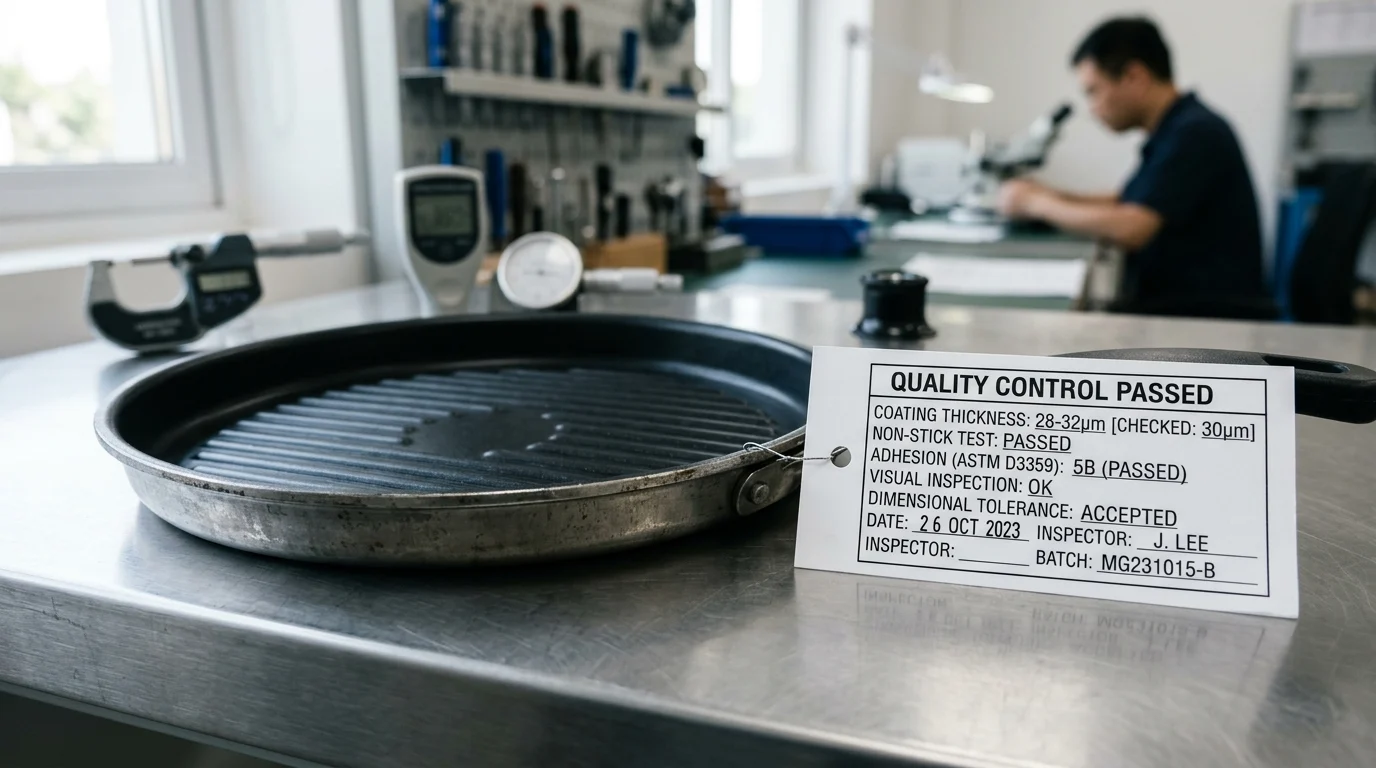
A reliable manufacturer must operate under a formalized quality management system, minimally certified to ISO 9001:2015. Buyers should verify the implementation of incoming quality control (IQC) for raw materials, in-process quality control (IPQC) during assembly, and final quality control (FQC) before packaging.
For mass production, lots should be inspected using the Acceptable Quality Limit (AQL) framework. A standard threshold for premium cookware is AQL 2.5 for major defects (e.g., coating scratches, silicone tearing) and AQL 4.0 for minor defects (e.g., packaging blemishes). Factories should be willing to accommodate third-party inspection agencies to execute these AQL checks prior to container loading.
Food-contact and microwave safety compliance
Because the product directly contacts food at high temperatures, the non-stick coatings and silicone components must pass stringent chemical migration tests. In the United States, materials must comply with FDA 21 CFR 175.300 for resinous and polymeric coatings. For the European market, compliance with the LFGB (Lebensmittel- und Futtermittelgesetzbuch) framework is mandatory, which often requires passing rigorous tests for heavy metal migration, strictly limited to less than 0.01 mg/kg for elements like lead and cadmium.
Additionally, the product must be certified for microwave safety, ensuring that the metallic components are properly shielded to prevent electromagnetic arcing. Suppliers must provide recent, verifiable test reports from accredited laboratories such as SGS, TÜV Rheinland, or Intertek demonstrating compliance with these specific standards.
Audit, sample, and certification red flags
During the vetting process, several red flags can indicate a high-risk supplier. The most prominent is the submission of generic or outdated compliance certificates. Test reports should be less than two years old and must specifically name the exact materials and coatings used in the buyer's intended product, rather than a generic material family.
Another critical warning sign is a factory's reluctance to provide pre-production samples or resistance to unannounced third-party social and technical audits (such as BSCI or SMETA). If a supplier attempts to bypass the sampling phase or insists on using their own unverified testing facilities, OEM buyers should immediately terminate the negotiation to avoid importing non-compliant or hazardous goods.
How OEM Buyers Should Compare Cost and Supply Chain
Effective sourcing requires a holistic view of the supply chain economics. Focusing exclusively on the ex-works (EXW) unit price often masks hidden costs and logistical inefficiencies that can derail a product's profitability once it reaches the target market.
Total landed cost drivers
The total landed cost encompasses the factory unit price, tooling amortization, freight, duties, and warehousing. Tooling for custom microwave grills represents a significant upfront capital expenditure. Depending on the complexity of the silicone overmolding and aluminum die-casting, custom molds typically range from $3,000 to $8,000.
Raw material indices also drive cost volatility. The prices of aerospace-grade aluminum, high-temperature silicone, and PTFE coatings fluctuate based on global commodities markets.
| Cost Component | Typical Percentage of FOB Price | Key Drivers |
|---|---|---|
| Raw Materials | 45% – 55% | Aluminum commodities, Silicone grade |
| Labor & Assembly | 15% – 20% | Automation level, Regional wages |
| Coating & Curing | 10% – 15% | Coating brand (e.g., Whitford, ILAG) |
| Packaging & Overhead | 10% – 15% | Custom color boxes, Manuals |
| Supplier Margin | 10% – 15% | Order volume, Strategic relationship |
Understanding this breakdown allows buyers to negotiate more effectively, indexing price adjustments to verifiable raw material costs rather than accepting arbitrary price hikes.
Lead times, capacity, and logistics
Production capacity and lead times directly impact inventory turnover. A standard production run for microwave grills typically requires a 30- to 45-day lead time following sample approval and mold completion. However, during peak manufacturing seasons (such as the months preceding the Lunar New Year), lead times can extend to 60 days or more.
Logistics optimization is equally critical. Because microwave grills are relatively dense but bulky when packaged with protective inserts, buyers must calculate container yields accurately. A standard 20-foot equivalent unit (TEU) container typically accommodates approximately 4,000 to 4,500 retail-boxed units. Maximizing container space utilization dilutes the per-unit freight cost, which is essential when global shipping rates experience sudden spikes.
RFQ to order sourcing process
The journey from RFQ to final order should follow a structured, phased approach. After shortlisting suppliers based on initial quotes, buyers must initiate the prototyping phase. Producing a functional prototype generally takes 10 to 15 days.
Once the prototype is approved for thermal performance and dimensional accuracy, buyers should mandate a pilot run—typically around 500 units. This small-batch production tests the factory's mass-assembly line and quality control procedures under real-world conditions. Only after the pilot run passes AQL inspections and user acceptance testing should the buyer authorize the full-scale commercial purchase order.
Final Criteria for Selecting a Reliable Manufacturer
Finalizing the selection of a manufacturing partner requires synthesizing technical capabilities, commercial terms, and risk management profiles into a cohesive decision matrix. The ideal supplier is rarely the one offering the absolute lowest price, but rather the one providing the highest predictable value.
Balancing price, compliance, and capability
Procurement teams frequently face the dilemma of choosing between a low-cost provider and a premium manufacturer. While a tier-two factory might offer a 10% to 15% reduction in unit price, this savings is rapidly negated if their products fail to meet LFGB chemical migration standards or suffer from a 5% field failure rate.
Balancing these factors requires viewing compliance and manufacturing capability as insurance policies. A supplier with automated coating lines, robust thermal testing chambers, and impeccable regulatory documentation justifies a moderate price premium by drastically reducing the buyer's liability and post-sale support costs.
First order plan and supplier scorecard
To operationalize this selection, OEM buyers should implement a weighted supplier scorecard. A standard 100-point evaluation matrix might allocate 40 points to quality and compliance history, 30 points to total landed cost, 20 points to production capacity and lead times, and 10 points to communication and engineering support.
Once a supplier achieves a passing score (typically 85 points or higher), the buyer can proceed with the first order plan. This plan should include clear service level agreements (SLAs) regarding lead times, penalty clauses for delayed shipments, and an agreed-upon corrective action plan (CAP) framework should any defects be identified during pre-shipment inspections. Establishing these parameters upfront ensures a transparent, scalable partnership capable of supporting long-term brand growth.
Further reading:
Key Takeaways
- The most important conclusions and rationale for Microwave Non-Stick Grill Manufacturer
- Specs, compliance, and risk checks worth validating before you commit
- Practical next steps and caveats readers can apply immediately
Frequently Asked Questions
What should I verify first when choosing a microwave non-stick grill manufacturer?
Check susceptor technology, coating durability, microwave safety testing, and production capacity. On microwave-grill.com, start by comparing product specs and requesting technical details before asking for pricing.
What MOQ is typical for OEM microwave non-stick grill orders?
MOQ often depends on customization. Many OEM projects start around 1,000 to 3,000 units, while large retail programs may require 10,000+ units. Confirm MOQ early with the factory.
Which coating is best for a microwave non-stick grill?
It depends on your target use. Standard PTFE is cost-effective, ceramic handles higher heat, and titanium-infused PTFE improves durability. Ask the manufacturer for cycle-test data and coating thickness.
How can I confirm a microwave grill fits common home microwaves?
Request exact dimensions and test reports. A practical limit is keeping the diagonal footprint around 28 cm or less so the grill rotates safely on standard microwave turntables.
Can I request custom shapes or private-label packaging from microwave-grill.com?
Yes, OEM buyers usually can request custom pan geometry, silicone handle colors, logos, and packaging. Contact the supplier with your RFQ, target quantity, and design requirements for confirmation.


